Opinions
South Africa Decides 2026 at Local Government Elections: An Election Observer in Observation
Voting is only the beginning, argues Advocate Sipho Mantula: communities must keep watching how councils govern long after the ballots are counted.
6 min read
On 2, 3 and 4 November 2026, millions of South Africans will once again exercise one of the most sacred constitutional responsibilities of citizenship: the power and right to choose those entrusted with governing local communities with ethical conduct and diligence.
While much attention has focused on old and new political parties, manifestos, and campaign rallies, election observers comprehend that democracy or Ubuntucracy is not measured merely by voting day. It is measured by what happens before, during, and after the ballot.
As an election observer with experience and knowledge of the electoral bionetwork, I view the 2026 Local Government Elections as a re-defining moment in South Africa's democratic and ubuntucratic journey.
These elections are taking place against a backdrop of declining public trust in national, provincial and local organs of the state, state owned institutions, rising service delivery frustrations, growing youth unemployment, infrastructure decay in some municipalities, water insecurity, persistent corruption allegations, and increasing demands for accountability and legality.
Downhearted and disgruntled electorates enter polling stations as the site of political power contestation carrying both optimism and disenchantment.
The fundamental question facing South Africa is no longer whether elections will be conducted in a transparent and legitimate way; rather, the question is whether local democracy or ubuntucracy will deliver meaningful governance and rule of law after the votes have been collated and counted.
Democracy and Ubuntucracy Beyond the Ballot
Too often citizens and electorates view elections as the conclusion of political participation and ritual. In reality, elections are only the genesis. The ballot is not a blank cheque granting elected representatives unrestricted authority for five years. It is a social contract between communities and public servants.
When that social contract is broken through organised corruption, incompetence, patronage, or neglect, democratic and state institutions become infiltrated, weakened and tsotsistocracy becomes the order of the day. Looting state resources and deviation is in motion within procurement chains of command.
A municipality, metropolitan or local traditional council exists to serve its communities. It must provide clean water, sanitation, constant electricity, roads, housing support, waste management and recycling, local economic development, and maintenance of community facilities.
Mayors, Mayoral Executive Councils, Speakers and Councillors or Proportional Councillors who forget this fundamental responsibility undermine the constitutional and parliamentary vision and duties of local government as a developmental state serving the people first and not families or friends first.
Communities therefore must understand that democracy cannot survive on nominations and voting alone. It requires constant vigilance and foresight.
The Coalition Era Continues
One of the most significant realities likely to emerge from the 2026 elections is the continued expansion of coalition politics and governance modalities.
Many metropolitans and municipalities may produce fragmented outcomes where no single political party commands outright control. While coalition governments can strengthen democratic inclusion as argued by many electoral experts, they also carry substantial governance, democratic and rule of law risks.
South Africans have for thirty years witnessed metropolitans and municipalities disrupted by shifting alliances, constant motions of no confidence, leadership instability, disruption and delay of basic services, and political bargaining that places party interests above community interests. The danger is clear.
If unregulated coalition agreements are driven solely by political positions and access to state resources rather than developmental or service delivery commitments, municipalities may become brutal battlegrounds for political survival rather than centres of governance and development.
The honest warning to political parties is simple: voters did not elect leaders to negotiate endless power-sharing and tender arrangements while communities remain without water, power, roads, jobs, and housing. Political and economic stability must serve the people, not politicians and their party interest.
Corruption Remains Democracy's Greatest Enemy
South Africa's democratic project faces many challenges, but organised corruption remains among the most dangerous. Every rand stolen from municipal budgets represents a stolen opportunity to repair roads, improve schools, expand infrastructure, create jobs, or provide clean water.
Corruption is not a victimless crime.
Its victims are unemployed youth, struggling families, informal settlement residents, pensioners, and small businesses attempting to survive in difficult economic conditions.
UNISA and many election observers can monitor election campaigns and voting processes, but communities are encouraged and reminded to become permanent observers of governance itself.
Communities as permanent observers in observation must ask difficult questions:
How are budgets reprioritised after these elections?
How are municipal tenders awarded?
Who benefits from contracts?
Why are projects delayed?
Why does infrastructure fail shortly after completion?
Where does public money go?
Community silence creates the conditions for organised corruption to flourish.
The Responsibility of Communities
The future of local government cannot be left solely to elected representatives. Communities have constitutional rights, but they also have democratic responsibilities.
Communities must attend public meetings, participate in Integrated Development Plan consultations, monitor municipal budgets, utilise ward committees, submit petitions, and engage councillors throughout their terms of office (2026-2031).
The culture of political disengagement is dangerous and when communities disappear after elections, accountability also fades. A healthy democracy and ubuntucracy requires active communities capable of asking uncomfortable questions and demanding transparent answers. Ubuntucracy and democracy is strongest when citizens are informed, organized, and engaged.
A Warning Against Electoral Violence
Another concern that warrants serious attention is political intolerance and confrontation in transport services, defacing of election posters. South Africa's constitutional order was built upon principles of human dignity, equality, and peaceful political competition.
Yet election periods can amplify tensions, misinformation, intimidation, and division. Political opponents are not enemies rather are competitors for political power. They are fellow citizens exercising democratic rights.
Political leaders and organisations bear a distinct responsibility to discourage inflammatory rhetoric and reject the temptation to mobilize communities through fear, racial division, ethnic politics, or misinformation.
Where violence enters elections and politics, democracy begins to retreat. The integrity of the election process must therefore be protected not only by law enforcement and electoral authorities but by communities themselves.
Young People Must Shape the Future
Perhaps the greatest test and barometer of the 2026 local government elections lies with South Africa's youth.
Young South Africans face unemployment rates that remain among the highest in the world. Many have grown up hearing promises and lies of revolution while experiencing limited economic opportunities. The danger is that disillusionment may evolve into democratic apathy or election-phobia. When young people stop believing their voices matter, democracy and ubuntucracy loses a significant part of its future.
The challenge for metropolitans and municipalities is therefore clear: local government must become a platform for youth and women inclusion, entrepreneurship, skills development, innovation, sports and arts creativity, indigenous knowledge projects and economic participation. Without economic dignity, political freedom becomes increasingly fragile.
Final Observation
As South Africa approaches the 2026 Local Government Elections, citizens should remember a profound Afrikan truth: a nation cannot vote itself into prosperity without accountability and responsibility.
The success of these local government elections will not be determined by voter turnout statistics alone or political rhetoric of promises. It will be measured by the quality of governance and developmental agenda delivered afterwards.
The greatest threat to democracy and ubuntucracy is not disagreement. It is indifference and greediness.
The greatest threat to local government is not opposition. It is unaccountable and arrogant leadership.
The greatest threat to South Africa's future is not diversity of political opinion. It is the failure to place the community and nation interest above partisan and party-political interests.
As an election observer representing the University of the land (UNISA), my observation is both optimistic and cautionary.
South Afrika stands at a crossroads.
The electorate has the delegated power to renew local democracy and ubuntucracy. Political leaders have the responsibility to honour the people's trust. And citizens have the duty to remain vigilant long after the campaign posters fade and the election results are announced. For democracy survives not because people vote once every five years, but because citizens refuse to surrender their voice between elections and political power contestation.
South Afrika decides on 4 November 2026. What follows thereafter will determine whether local democracy and ubuntucracy merely survives or truly serves the people. Motho ke Motho ka Batho.
ADVOCATE SIPHO MANTULA IS A RESEARCHER AT THE THABO MBEKI AFRICAN SCHOOL OF PUBLIC AND INTERNATIONAL AFFAIRS AT UNISA AND A MEMBER OF THE UNISA DOMESTIC ELECTION OBSERVER MISSION. HE WRITES IN HIS OWN CAPACITY.
Related stories

South Africa
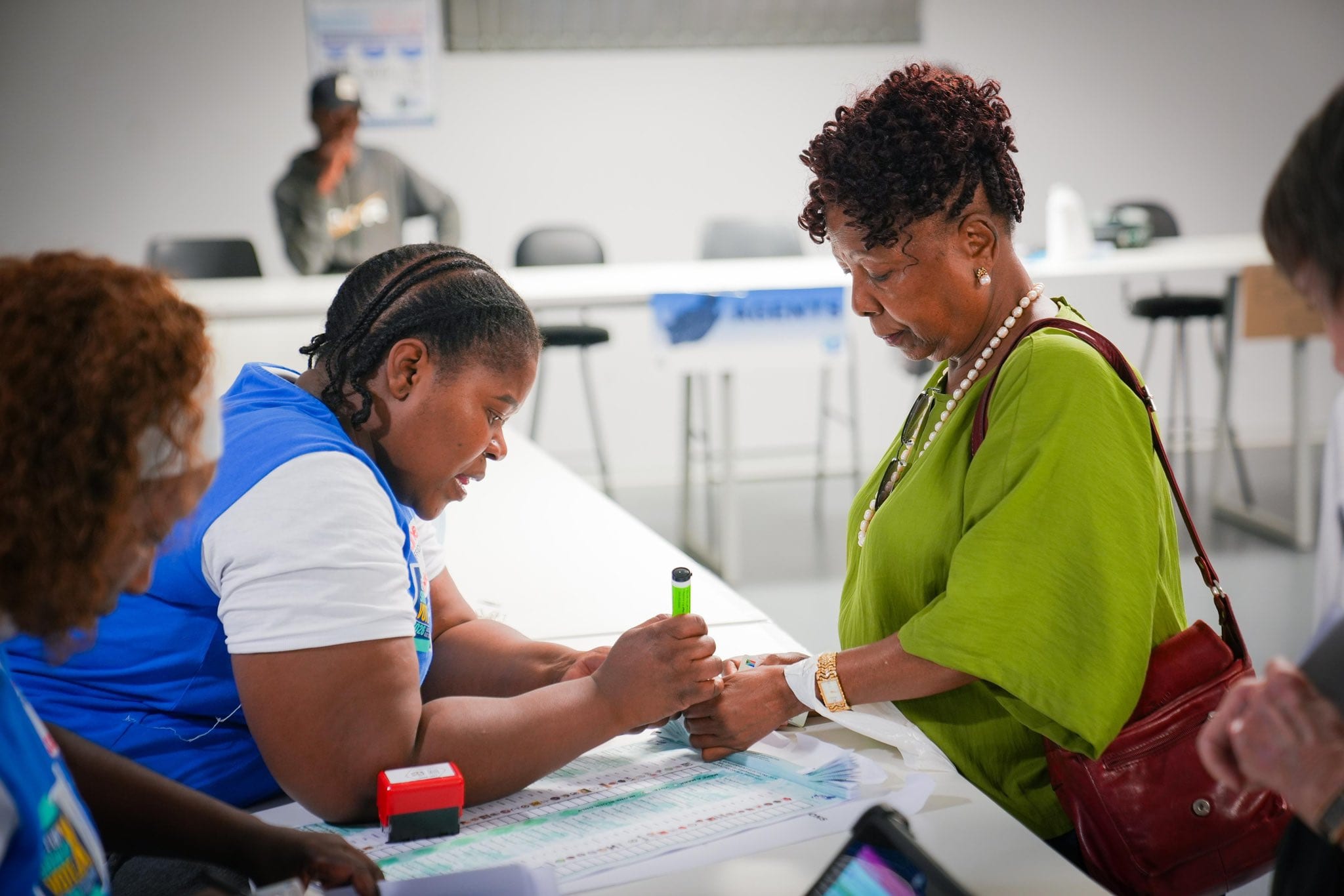
EFF comes out guns blazing over Cape Town ballot paper chaos on first day of special votes
By Mashudu Sadike
More on local government elections 2026
All local government elections 2026 stories2026 Mayoral chain showdown
Ramaphosa vows to hold ANC councillors accountable within 100 days
By Khaza Mathebula
2026 Mayoral chain showdown
DA’s Kingsol Chabalala commits to fix Emfuleni’s sewage crisis, clean up finances
By Mashudu Sadike
Latest from Africa Daily
Today's top stories- Act on fake documents or we will: AG to DCS
- Lebo M organises political debates ahead of elections
- Agrizzi to appeal R1.6 billion confiscation order
- EFF comes out guns blazing over Cape Town ballot paper chaos on first day of special votes
- SAHRC warns Gauteng water crisis requires accountability beyond government plans