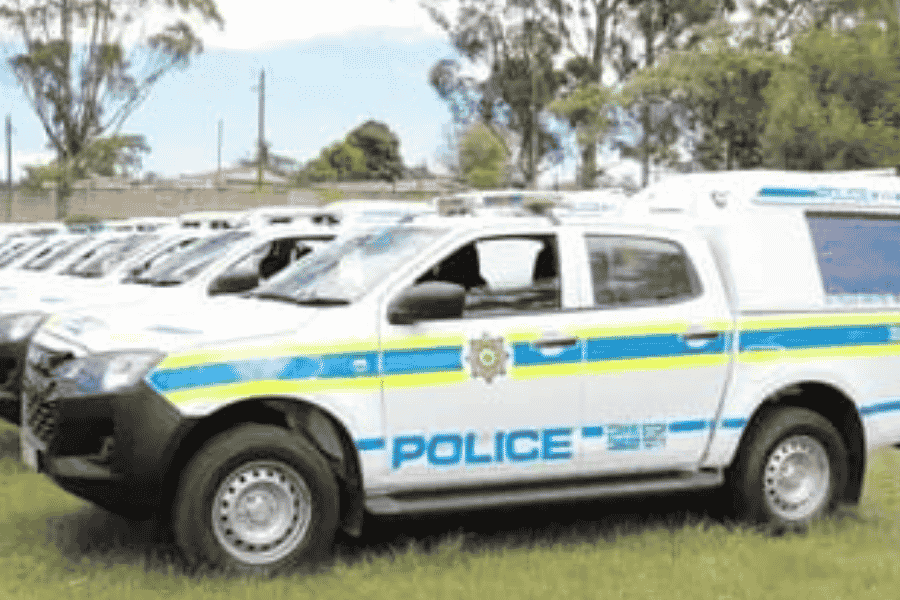
The South African Police Service spent its entire R120.9 billion budget in the 2025/26 financial year but achieved only 52.13% of its predetermined performance targets, raising questions about what the public received for the money.
The figures appear in the police service’s annual report, which was reviewed by Parliament’s Select Committee on Security and Justice on Thursday, 22 October 2026.
The financial year ended with the police receiving their sixth consecutive unqualified audit opinion on their financial statements.
But the clean financial audit did not translate into an equally reassuring assessment of operational performance.
The committee highlighted a 35.71% increase in material findings on reported performance information, from 14 in the previous audit cycle to 19.
It said supporting evidence was frequently missing, leaving reported achievements in areas such as emergency call centres, firearm recovery and detective detection rates overstated, unverifiable or materially inaccurate.
The findings raise a fundamental accountability question: how can the public assess police performance if the institution cannot adequately substantiate some of the results it reports?
Among the concerns raised was a new material irregularity involving the ineffective use and underutilisation of the Investigation Case Docket Management System.
The system is intended to support the management of investigation dockets. Its ineffective use raises questions about the extent to which police investigations are supported by the systems intended to help manage them.
The committee also highlighted ongoing material irregularities relating to forensic examination delays, unlawful detentions exceeding 48 hours and struggling 10111 command centres.
These are different problems, but each has implications for the functioning of the criminal justice system.
Forensic delays can hold up investigations. Failures in emergency call centres can undermine the public’s ability to access police assistance. Unlawful detention raises questions about compliance with legal safeguards.
The committee’s statement did not quantify how many investigations, detainees or emergency calls were affected by these specific problems.
That information is necessary to establish the scale of the consequences for the public.
SAPS’s full expenditure of its R120.9 billion allocation does not, by itself, demonstrate that the money was spent effectively.
The annual performance figures point to a distinction between using the available budget and achieving the results for which it was allocated.
The committee also raised concerns about procurement non-compliance, irregular expenditure and failures to implement effective preventive controls and post-audit action plans.
It called for stronger consequence management and highlighted concerns about vacancies, lifestyle audits and friction between SAPS and the Department of Public Works and Infrastructure.
These weaknesses raise further questions about whether the institution is correcting recurring problems or simply reporting them again in successive oversight cycles.
The committee welcomed the R186 million allocation announced by Finance Minister Enoch Godongwana to strengthen investigative and forensic capacity.
But additional funding alone will not establish whether the problems are being resolved.
The committee said it would monitor how the allocation was spent and requested a post-audit action plan from SAPS covering commitments made during the review.
The effectiveness of that plan will depend on whether it identifies responsible officials, measurable targets and deadlines, and whether progress can be independently verified.