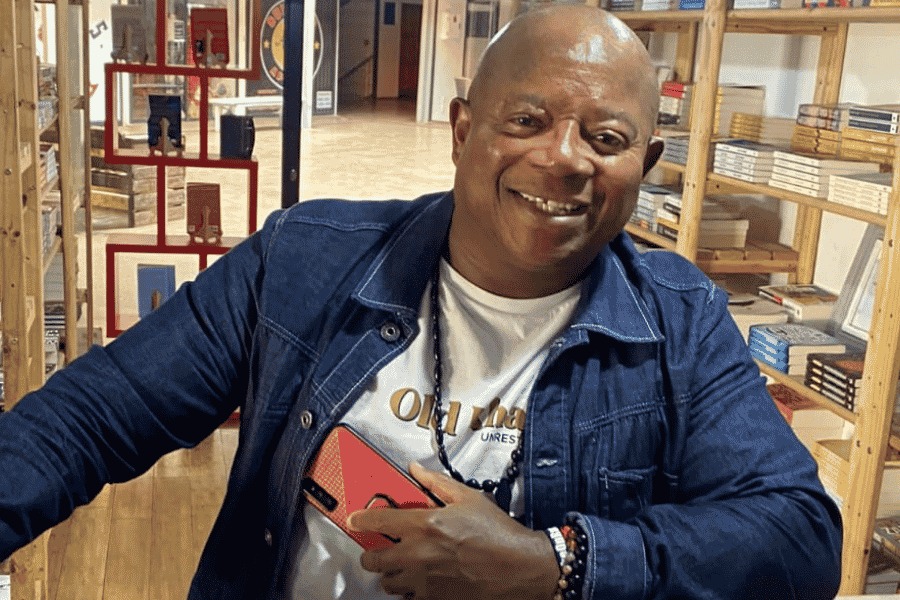
@PhalaneMotale I have read your piece and felt you deserved a response.
On the surface it reads as legitimate concern about our industry. But let us be honest, it points an accusatory finger at self-proclaimed veterans, and we must caution against that tendency, especially in a free and democratic country.
I read it and felt the sting. Because it simplifies a painful, structural reality into a moral failure of individuals.
- On the right to choose a life.
Journalists have, at an individual level, a right to choose what to do with their lives, including to desire a better quality of life. Of course, without compromising the truth or selling out for self-gain.
Not everyone who left the newsroom became a “corporate spin doctor” because they lost passion. Many left because the newsroom could no longer feed their children. Many left because after 20 years of night shifts, banning orders and low pay, they wanted a bond, a car, medical aid. Is that a crime? To want dignity after serving the public?
To ask, “Did you trade your fire to become a spin doctor?” as if everyone had a choice between truth and luxury, is unfair. For many of us, the choice was between truth and unemployment.
- Freedom of the media has always been a myth.
What your piece misses is that freedom of the media, especially so-called Black media, has always been a myth. The media has always been on a capitalist leash.
On 19 October 1977, the apartheid regime needed police to silence the Black press. Today, capital does it more efficiently. The media’s lifeline is advertising. It exists to make money more than to pursue truth. Whatever truth is allowed exists within the perimeter of the economic. It must not threaten the economic infrastructure.
You blame veterans for abandoning the newsroom for corporate insulation. But you must ask: Who owns the insulation? The newsroom itself was already insulated by corporate money long before we left.
- Black unity is also a myth.
The other painful truth your piece does not confront is that Blackness has ceased to be a rallying call. In fact, Black unity is a myth.
You only need to look at the number of platforms today where everybody wants to be a media boss. Not unlike everybody who thinks they too can establish a political party to lead the whole country.
We talk about “Black bosses” as transformation, but many of those bosses quickly learned to protect capital, not journalism. When they became owners, they became harsher than the white owners they replaced.
So do not only blame the reporter who left to write press releases. Blame the Black boss who told him his radical story would scare advertisers.
- I lived the censorship you describe – from inside.
As a journalist I experienced censorship in the newsroom first-hand. My articles were ripped off the pages at Sunday World, thrown into the bin at City Press. Not by the apartheid police. By my own Black editors, under instruction from management.
Worse, I was fired for allegedly being “unpredictable.” Concern was expressed that my writing was radical and frightened the market. And nobody defended me. Not SANEF. Not the fraternity. Not the young journalists who now call us sellouts on Twitter.
And that is how I ended up in government. Not because I looted the ship. Because I was thrown overboard.
So before you say we “successfully looted the ship before it sank,” ask who was throwing whom off the ship.
- So what is the solution?
The telling of personal stories is the best way to address your accusation. And this we must do.
You ask: “What structural mechanisms have you actually implemented to change, build, or protect the journalism fraternity?”
My answer: We tried. We formed the Forum of Black Journalists. Before that, the Media Workers Association of South Africa. We were banned on Black Wednesday. We were detained. Some died. When we tried again in the 90s, we were told there is no money for mentorship, no time for sub-editing, because Google and Facebook had taken the advertising.
What structural mechanisms did capital allow us to implement? None. Because real mechanisms – a training fund paid by advertisers, a pension for journalists, a legal defence fund for those fired for telling the truth – would threaten the balance sheet.
So yes, newsrooms are juniorised. Yes, they are decimated. Yes, graduates are overworked feeding a digital machine. That is true.
But that is not because all veterans are passengers. That is because the owners – new and old, Black and white – made a business decision to replace expensive experience with cheap content.
Today we are expected to write for free. We have to be voluntary slaves.
Do not blame the passenger for the ship sinking when the captain sold the lifeboats.
In closing:
I accept your anger. It is legitimate. The newsroom spine is broken. Corporate capture is real. Juniorisation is a crisis.
But let us not make veterans the scapegoat for a systemic failure of capital. Let us not trade the fires of Black Wednesday for another fire – where we burn each other to please the same market.
If you want respect for elders, ask for their stories, not their apologies. Ask how their article was ripped up. Ask how they were called unpredictable. Ask how they ended up in government when they wanted to stay in journalism.
Those stories, told honestly, will tell you more about capture than any inquiry report.
We did not all loot the ship. Some of us were made to walk the plank.
SANDILE MEMELA IS A JOURNALIST, NOVELIST, CULTURAL CRITIC REPUTED TO BE AN INTELLECTUALLY PROVOCATIVE WRITER, HE WRITES IN HIS OWN CAPACITY.