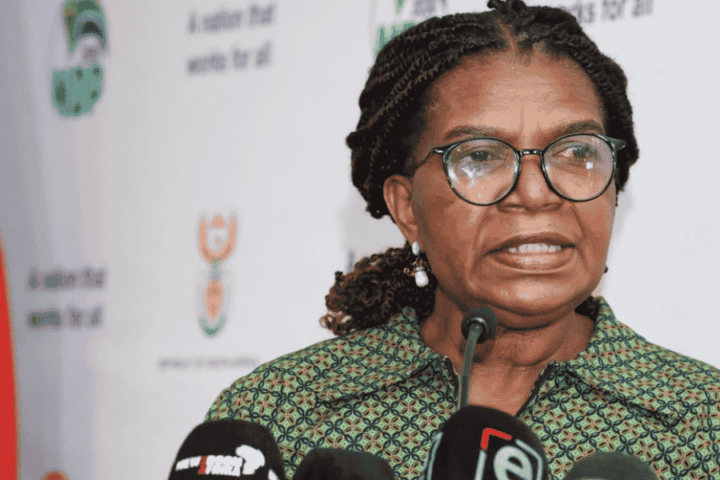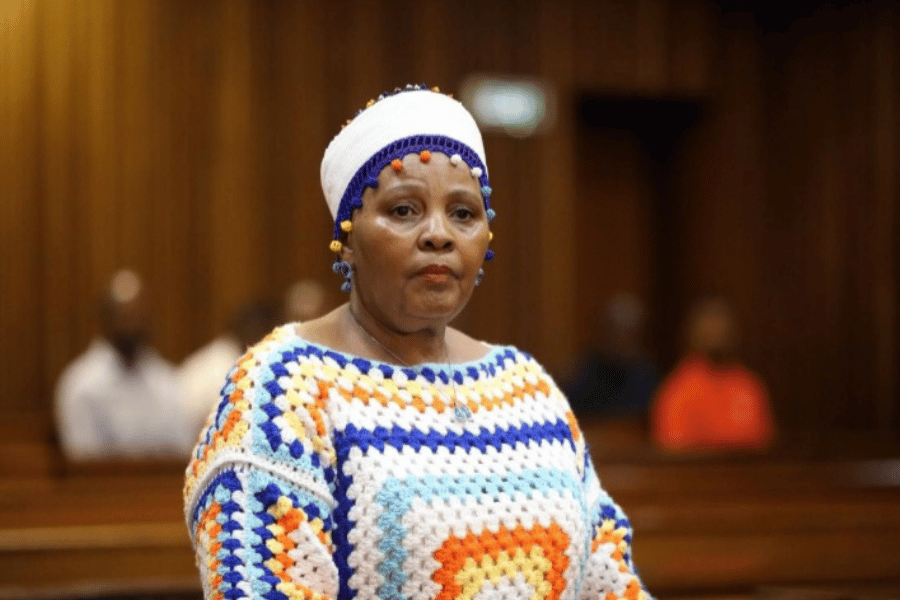
Former defence minister Nosiviwe Mapisa-Nqakula has given an account of the cash payments used to fund extensive renovations at her home in Bruma, Johannesburg.
Mapisa-Nqakula is facing 12 counts of corruption and one count of money laundering linked to her time as defence and military veterans minister between 2016 and 2019.
The state alleges that she solicited R4.5 million in bribes from SANDF logistics contractor Nombasa Ntsondwa-Nahlovu in exchange for helping secure and retain government tenders.
According to the allegations, about R2.1 million of the money was paid to Mapisa-Nqakula in cash.
The state further claims that Mapisa-Nqakula used the alleged kickbacks to finance improvements to her home.
Interior designer Nomsa Shabangu, who oversaw the renovation project, previously told the court that she received cash payments amounting to almost R1.8 million to cover construction, renovation and labour costs.
While testifying in the Pretoria High Court on Wednesday 9 September, Mapisa-Nqakula confirmed that she moved into the Bruma property in 2004, when Shabangu became involved in managing renovations at the house.
She said the initial work included removing carpets to make way for wooden flooring and changing the colour of the wardrobes.
More renovations were carried out in 2010, including work on the kitchen, replacing the stove, repainting the cupboards and knocking down some walls.
During 2015 and 2016, additional walls were demolished to turn two bedrooms into a master suite, while pillars were removed and glass was installed.
In 2016, a security assessment conducted after an incident at the property identified a vulnerability at one of the home’s exits, resulting in the area being sealed off.
Further renovation work was carried out during 2018, 2019 and 2020.
Mapisa-Nqakula told the court that Shabangu handled the renovation project because she did not personally know any builders.
She said she paid for the work using both cash and her bank card.
When questioned about where the cash came from, Mapisa-Nqakula said it was accumulated from her daily subsistence and travel allowances earned during international trips.
“Myself and my husband work and earn a salary. We also travel.
“When you travel, you keep what you have at home. You ask the officials responsible for S&T to exchange foreign currency back into rands,” she said.
Mapisa-Nqakula also told the court that her husband, Charles Nakula, served as an ambassador between 2012 and 2015, which she said provided additional income alongside her own travel allowances.
Explaining why cash was used to pay contractors, Mapisa-Nqakula said she was not familiar with electronic funds transfers.
“I’m not an EFT person. Ever since they did away with cheques, I’ve struggled. It took me a long time to learn how to use EFT — I’m only learning now,” she said.
She said the contractors also preferred cash payments and did not work with banks or cheques.
“The workers wanted cash on Fridays, not cheques. That’s why we used cash when it was available. If no cash was available, we gave Shabangu my bank card,” she said.
According to Mapisa-Nqakula, Shabangu also purchased the building materials because she herself was unfamiliar with the materials needed for the renovations.
She said Shabangu deducted her fee from the overall renovation budget.
“I never worried myself about how much her portion was, but she would mention how much she was taking after paying the contractors,” Mapisa-Nqakula testified.
She also rejected allegations that she had spent hundreds of thousands of rands on curtains purchased overseas.
“I don’t have curtains worth R600,000 or even R200,000. What kind of curtains cost that amount of money?” she said.
Mapisa-Nqakula said she could not remember the exact amount paid for the curtains but maintained that they were not expensive.