The queue starts before the tanker does.
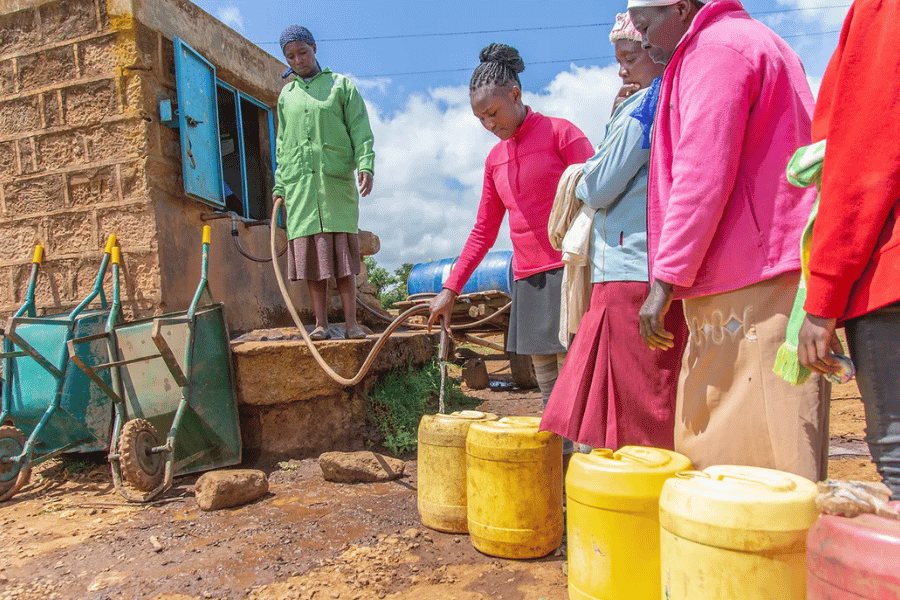
By 9am on Saturday, more than a hundred yellow and blue buckets were already lined up in the dust outside Dan Kutumela Secondary School in Zithobeni, Bronkhorstspruit.
Pensioners sat on upturned crates. Mothers shifted babies on their backs. Learners in grey school uniforms held empty 25-litre containers after classes.
They were waiting for water they say they can no longer drink from their taps.
More than 500 residents of Zithobeni have been treated for gastrointestinal illness in the past week after municipal water supplied by the City of Tshwane was distributed without adequate chlorination, according to clinic staff.
The City had not issued a formal statement by Friday afternoon on when the supply was compromised or when it was restored.
Residents said the first signs appeared about two weeks ago. Tap water began to smell foul and turned brownish. Kettles were left with a residue. Despite complaints, many continued to drink it until clinics began filling up with patients suffering diarrhoea, vomiting and dehydration.
At Zithobeni Clinic, nurses said the surge has been most severe among children and elderly people. The waiting room was crowded on Friday, with some patients holding clinic cards showing return dates for oral rehydration treatment.
Banele Motomane, 34, was admitted for three weeks after drinking tap water.
“I was admitted because of this water. I was trying to clean my system and I drank a lot of water, thinking I was flushing my system, and that is when I became seriously ill,” he said, standing outside the clinic with a medical discharge note in his hand.
“I was in hospital for three weeks. This is affecting the whole community, many members are being affected.”
At Dan Kutumela, the mood was tense. When the first tanker arrived just after 10am, residents surged forward before marshals restored order. By 11:30am, it was empty. A municipal worker closed the valve, leaving about 40 containers still in line.
“We were told to boil water, then we were told not to drink it at all. Then they sent tankers, but one tanker is not enough for this whole area,” said a resident in the queue.
A woman who had waited three hours with a baby on her back said she left with half a bucket, just enough to cook for the night.
“We live in Tshwane but we have to queue at a school for water. We must use electricity we cannot afford to boil water that we already pay for,” she said, pouring the water carefully to avoid spilling.
Sources inside the municipality said the failure occurred at the Bronkhorstspruit Water Treatment Works, where chlorine dosing was interrupted after a chemical supply contract lapsed and a dosing pump was not serviced. As a result, water that did not meet SANS 241 drinking water standards was pumped into the network that supplies Zithobeni, Ekangala and Rethabiseng.
Residents and clinic staff said no formal boil-water notice was posted or broadcast.
Zithobeni falls under Region 7 in the far east of Tshwane, about 50 kilometres from the Union Buildings. While suburbs in the west have largely stable supply, communities in the east rely on a fragile system of ageing pipes and tankers. The area has experienced repeated water quality failures, linked to the Bronkhorstspruit, Roodeplaat and Temba systems.
That history weighs heavily here. In 2023, more than 30 people died in Hammanskraal after the City supplied contaminated water from the Temba plant. The South African Human Rights Commission found that Tshwane had violated residents’ rights to safe water and dignity.
“What happened in Hammanskraal started with stomach illnesses and complaints about water. We are seeing the same pattern here,” a community organiser said as he helped an elderly woman lift her container onto a wheelbarrow.
Inside the clinic, a nurse was writing health education notes on a whiteboard: “Boil water for 1 minute. Let it cool.” On the counter, boxes of oral rehydration salts were half-empty.
The City of Tshwane had not responded to questions sent on Friday about the cause of the chlorination failure, whether a warning was issued, when safe supply was restored, and whether it will assist residents with medical costs.
By 3pm, the school gate was locked and the buckets were still there, lined up for the next tanker.
Motomane said he will not drink from his tap again until he is certain it is safe.
“Even if they say it is clean now, I am scared to drink it. We have no choice, but we also have no trust left,” he said.