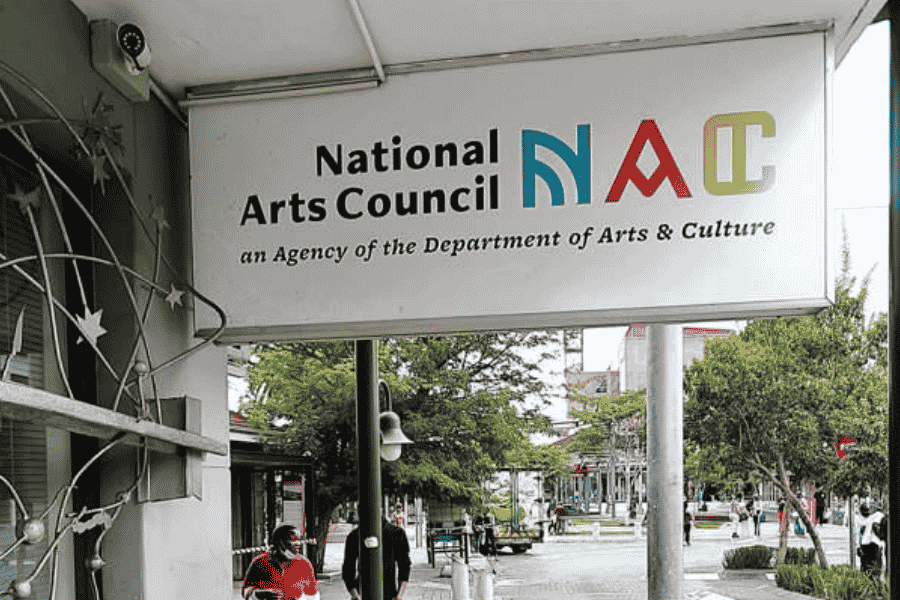
The National Arts Council (NAC) has suffered another legal defeat in its battle with senior manager Tshepo Mashiane.
The council dismissed him, but its own internal appeal overturned that decision. Despite being cleared to return to work, Mashiane was kept away.
The Labour Court in Johannesburg dismissed the council’s application to review and set aside a Commission for Conciliation, Mediation and Arbitration (CCMA) award in favour of Tshepo Mashiane, who was left without a salary despite being cleared to return to his position.
In a judgment delivered on 14 September 2026, the court found that the CCMA commissioner’s decision “falls within the range which a reasonable decision-maker could make.”
It is the third defeat for the NAC in the Mashiane dispute, first in its internal appeal process, then at the CCMA, and now in the Labour Court.
The judgment records how the council refused to implement the outcome of its own appeal process, leaving Mashiane in limbo while it pursued further legal action.
It also records a letter from then acting chief executive Julie Diphofa to the head of human resources advising that Mashiane “should not be reloaded on the payroll.”
According to the judgment, Mashiane had not received a salary since November 2022, even after his dismissal was overturned and he attempted to return to work.
Mashiane was the NAC’s programme manager for capacity building when the council dismissed him on 10 November 2022.
The dismissal followed a disciplinary process in which he was accused of participating in his own allegedly irregular appointment.
In a report dated 26 May 2023, the appeal chairperson, Advocate SB Nhlapo, found in Mashiane’s favour and directed that he return to his position.
“It thus follows that Mashiane’s appeal succeeds. Mashiane should therefore return to his position of Programme Manager: Capacity Building with effect from the date of his dismissal,” Nhlapo wrote.
But the favourable appeal outcome did not translate into Mashiane’s return to work.
The CCMA commissioner subsequently noted that the appeal process had taken about five months, despite the NAC’s own policy requiring appeals to be dealt with within seven days.
On 29 May 2023, Mashiane met Diphofa, who told him to return to work on 5 June.
Two days later, however, the council sent him a letter stating that it was still considering the appeal outcome and seeking legal advice. He was instructed not to report for duty until further notice.
Mashiane nevertheless reported for work on 7 and 8 June.
He found someone else occupying his office and was instructed to work from the boardroom.
On 9 June, Diphofa wrote to him again, saying she would meet with the council on 12 June and directing him to remain away from work until then.
With his employment status unresolved, Mashiane referred the dispute to the CCMA on 22 June 2023.
“The applicant refuses to implement the appeal outcome but instead forces me to abscond from work since 30 May 2023,” he stated in his referral.
Rather than simply implementing the appeal outcome, the NAC approached the Labour Court on 7 July 2023 to have the result of its own internal appeal process set aside.
It argued that Mashiane remained dismissed while that separate case was pending.
On 25 August 2023, CCMA commissioner Zanele Sibiya ruled against the council.
Sibiya found that the NAC could have rejected the appeal chairperson’s recommendation and maintained the dismissal if that was its intention.
Instead, it had left Mashiane without clarity about his employment status.
“The Respondent had an option to simply reject the recommendation made by the chairperson at the appeal hearing and dismiss the Applicant if that was their intention,” she said.
“However, it cannot be right for them not to pronounce their decision but rather keep the applicant in limbo in relation to his employment (status) for an undefined period… I therefore view the conduct of the Respondent to be a suspension of the applicant without cause.”
Sibiya ordered the NAC to reinstate Mashiane and lift what she described as an “unlawful suspension”.
She also questioned why the council needed the Labour Court to intervene in its internal processes.
“It remains unclear on why the Labour Court would have to decide for the Respondent on its internal processes,” she said.
The NAC challenged that award, arguing that Mashiane had never been suspended and that there was no evidence to support a finding of unfair suspension.
“There was simply no evidence before the third respondent to warrant that the applicant has suspended, let alone unfairly suspended the first respondent,” the council argued in its court papers.
The Labour Court rejected the council’s challenge, finding that the CCMA commissioner’s decision fell within the range of decisions a reasonable decision-maker could make.
The judgment also referred to section 143(1) of the Labour Relations Act, under which a CCMA arbitration award is final and binding and may be enforced as if it were an order of the Labour Court.
Despite the latest ruling, important questions remain unanswered.
The judgment does not establish whether Mashiane has since been reinstated or received the salary withheld during the dispute. Nor does it determine whether his original appointment was proper.
The council’s separate application to review the outcome of the internal appeal process, case number J1228/23, also remains without a reported outcome.
The financial implications of the dispute have attracted scrutiny.
In September 2025, an insider estimated that the matter had cost the NAC about R6 million.
In November 2025, a figure of R1.5 million was reportedly given to Parliament in relation to the matter.
In 2022, the NAC said Mashiane had been dismissed after a disciplinary hearing found him guilty of serious charges.
Questions were sent to the NAC seeking comment on the judgment, Mashiane’s employment status, any outstanding salary and the costs associated with the litigation.