Moja Love has confirmed that Love-Love, the young woman at the centre of controversial remarks by King Somnala on Umndeni SomNala, was an adult when the events discussed in the programme took place, after the episode triggered concern among viewers on social media.
The broadcaster also says her age was established before she participated in the production and that she consented to appear on the programme.
The response comes after Somnala was heard discussing his sexual relationship with Love-Love, saying she had approached him asking him to have sex with her and “deflower” her.
He also said he had sex with her, that she subsequently became pregnant, and that he would no longer pay “damages” in relation to her.
The remarks prompted questions online about Love-Love’s age, the circumstances surrounding the relationship.
Moja Love has now sought to clarify one of the most significant questions.
“Love-Love was an adult at the time of the events referred to in the programme. She was not a minor,” said Moja Love spokesperson Nonzwakazi Cekethe.
Cekethe said Love-Love’s age had been established “as part of the production process prior to her participation in the programme”.
The broadcaster said its production team was aware of Somnala’s account of the relationship, including his claim that Love-Love had approached him about having a sexual relationship with him.
“The programme was produced on the basis of accounts provided by the participants,” Cekethe said.
“We do not represent allegations or statements made by participants as independently established facts unless they have been independently verified.”
This distinction is important because the statements made by Somnala during the programme are his account of what happened.
Moja Love has not presented his version as independently proven.
The broadcaster said the statements were understood in the context of the relationship described by the participants, including the assertion that sexual relations had taken place and that Love-Love subsequently became pregnant.
It also said participants’ circumstances and consent form part of its normal editorial and production process.
“Moja Love takes the welfare and safeguarding of participants seriously,” Cekethe said.
She said productions involving potentially vulnerable individuals were subject to “appropriate editorial and production considerations”, including obtaining consent and assessing the circumstances in which participants were filmed.
According to Moja Love, Love-Love consented to participate and, because she was an adult, parental or guardian consent was not required.
The broadcaster’s confirmation that Love-Love was an adult removes one of the most serious questions raised by reactions to the episode.
But it does not resolve all the questions surrounding the broadcast.
The episode still raises questions about how intimate and potentially sensitive claims are handled when they form part of reality television programming, particularly where the programme involves a significant power imbalance or a person described as young.
Moja Love also acknowledged that the episode had generated public concern.
Cekethe said the broadcaster was reviewing feedback received about the episode and did not want to provide an inaccurate figure for the number of complaints while that process was ongoing.
“The episode has been brought to the broadcaster’s attention following public reaction, and the relevant editorial considerations are being reviewed,” she said.
The response raises another question: what happens after a controversial episode has already aired?
Moja Love says it is now reviewing the public reaction, but it has not indicated whether the editorial review could result in any action relating to the episode, whether further information will be provided to viewers, or whether the broadcaster has identified any shortcomings in its production process.
The controversy comes against the broader backdrop of scrutiny surrounding reality television and the extent to which broadcasters should intervene when programmes deal with intimate relationships, family disputes, sexual conduct and potentially vulnerable participants.
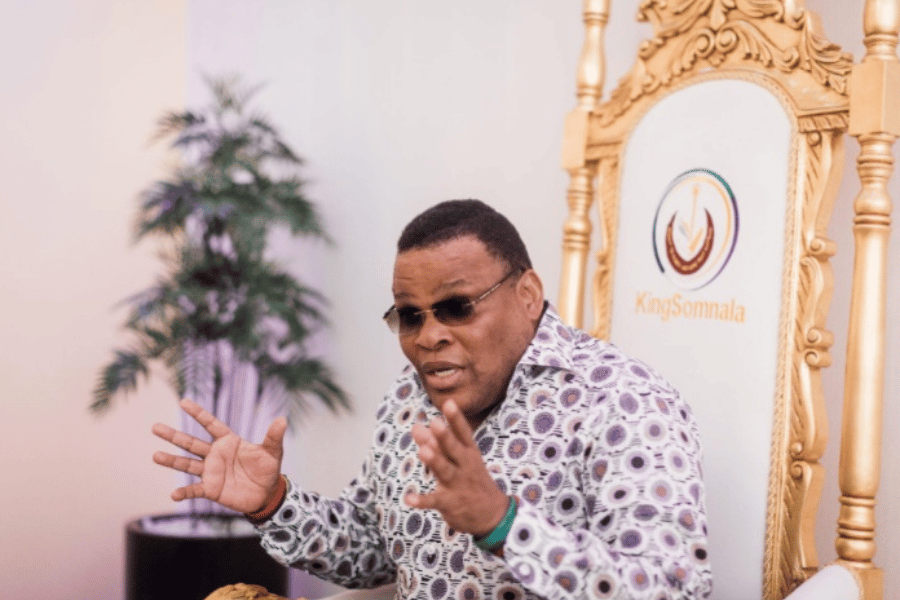
Umndeni SomNala follows the household and relationships of King Somnala, a prominent religious figure associated with Nala Mandate and known publicly for his polygamous lifestyle.
Somnala’s own public biography describes him as having nine wives, more than 20 children and more than 10 grandchildren.
His polygamous household has previously been presented as part of his public identity and religious philosophy.
The latest controversy, however, is less about polygamy itself than about the editorial treatment of a highly personal sexual account involving a young woman.
Moja Love’s position is that the woman was an adult, that her age was established before filming, that she consented to participate and that safeguarding and editorial considerations formed part of the production process.
For viewers who questioned the episode, those assurances provide an answer to the question of whether Love-Love was a minor.
They do not necessarily settle the broader debate about how broadcasters should handle intimate claims made by participants, particularly when those claims involve sex, pregnancy and potentially sensitive customary practices and whether the public interest in broadcasting such material outweighs the potential harm to those involved.