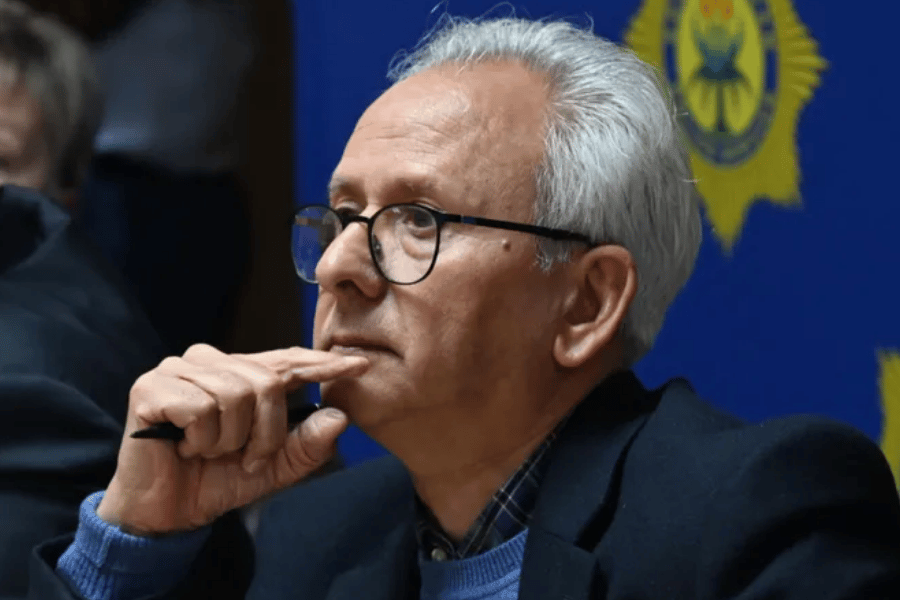
Acting Police Minister Firoz Cachalia has announced that 140 of South Africa’s highest-crime police station precincts will become the first sites for an overhaul aimed at restoring public confidence in the South African Police Service (SAPS).
The move marks the official implementation of government’s national policing reform programme, shifting it from planning to execution.
Speaking after the Police MINMEC meeting on Saturday, Cachalia said national and provincial leaders had unanimously endorsed the Police Reset Agenda, describing it as a coordinated plan to rebuild professionalism, integrity and operational effectiveness within SAPS.
“The Police Reset Agenda is no longer a reform proposal. It has entered the implementation phase,” Cachalia said.
He said the strategy sought to reposition SAPS as “a modern, intelligence-led, community-centred and technology-enabled police service” capable of restoring public trust while improving the fight against crime.
The resolutions adopted by the meeting will see the 140 priority police stations receive targeted operational support, infrastructure upgrades, additional resources and stricter performance monitoring.
“They will serve as demonstration sites where communities begin to experience measurable improvements in policing and service delivery,” Cachalia said.
The implementation forms part of a broader policing reform programme agreed to by national government, provincial MECs responsible for community safety and municipalities.
Among the immediate priorities is the rollout of a National Organised Crime Strategy under the leadership of KwaZulu-Natal Police Commissioner Lieutenant-General Nhlanhla Mkhwanazi.
Cachalia said the strategy would strengthen intelligence-led policing and improve coordination across provinces in tackling organised crime syndicates, illicit economies and violent criminal networks.
Government also resolved to strengthen Community Policing Forums and deepen partnerships with civil society, business, traditional leaders, faith-based organisations and community structures, arguing that policing alone could not solve South Africa’s crime challenges.
“Sustainable safety cannot be achieved through law enforcement alone. Communities must become active partners in policing, crime prevention and social cohesion,” he said.
The meeting further adopted a five-year implementation framework for the Community Patrollers Programme, which is intended to improve visibility in communities while supporting — but not replacing — police officers.
Recognising the role alcohol plays in violent crime, the meeting also adopted the National Liquor Action Plan, which will be implemented through closer cooperation between the Justice, Crime Prevention and Security Cluster, provincial liquor authorities and municipalities.
Cachalia said policing reforms would also focus on strengthening anti-corruption measures within SAPS through lifestyle audits, enhanced vetting, stricter accountability mechanisms and stronger consequence management.
Crime Intelligence and detective services would continue to be rebuilt as government seeks to establish a more proactive, intelligence-driven policing model.
Technology also forms a central pillar of the reform programme, with SAPS continuing efforts to modernise police stations, digitise policing systems, improve investigative capabilities and reform procurement processes in partnership with National Treasury.
The immediate operational priorities include improving service delivery at the 140 targeted police stations, strengthening responses to organised crime, gang violence and gender-based violence and femicide, intensifying enforcement against illegal liquor outlets and expanding community policing initiatives.
Cachalia said implementation of the reforms had already begun.
He pointed to improved intelligence-led operations targeting illegal firearms, drug trafficking and organised crime, while noting that critical vacancies across Crime Intelligence and operational policing were being filled.
He also announced that the Acting National Commissioner, together with provincial premiers and MECs, would soon announce the appointment of four provincial police commissioners as part of efforts to stabilise SAPS leadership.
Recruitment under Project 11 000 is also progressing, with 5 500 new police constables expected to begin training at SAPS academies in the coming months.
“The decisions adopted during this MINMEC send a clear and unequivocal message that we have moved decisively from diagnosis to core implementation,” Cachalia said.
“South Africans expect more than commitments. They expect results. They expect safer communities. Above all, they expect a police service they can trust.”
He said the success of the Police Reset Agenda would ultimately depend on coordinated implementation across all spheres of government, together with municipalities, communities and the police service itself.
“We have agreed on a common national reform agenda. We have established mechanisms for accountability and, importantly, implementation has already begun,” Cachalia said.