The civilian surveillance witness who had followed a Mercedes-Benz Viano through Kew was later brought to the roadside where its occupants were being detained and asked to identify them, the Johannesburg High Court heard on Monday, 3 August.
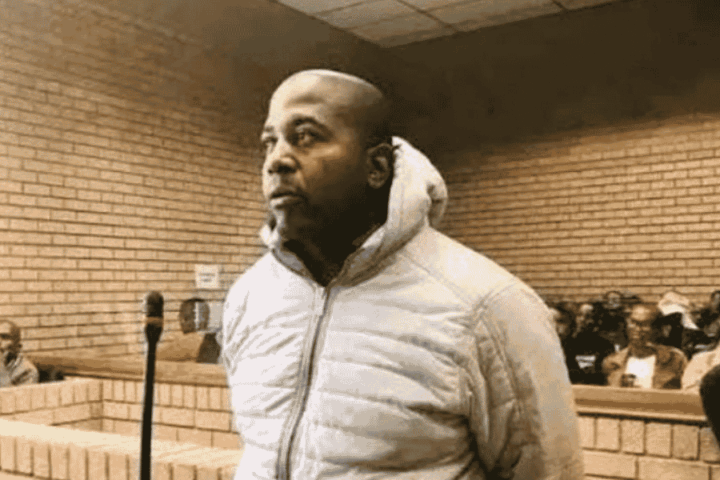
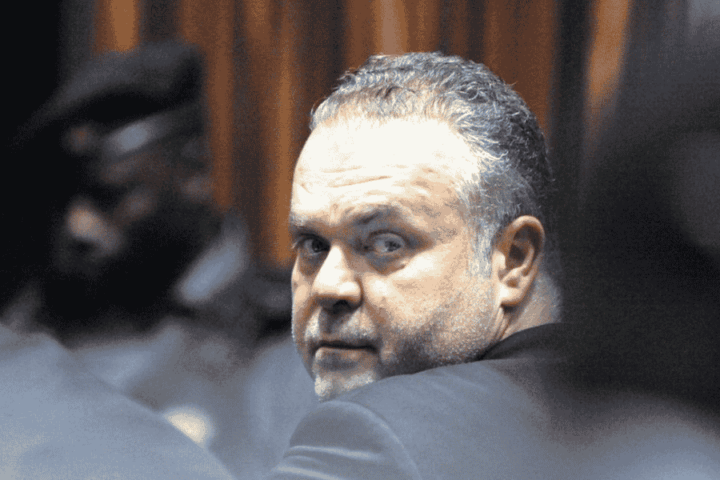
Testifying in the attempted murder case involving crime kingpin Vusimuzi “ Cat “ Matlala, Lieutenant Colonel Tumelo Thomas Tsotetsi, the State’s fourth witness in the trial-within-a-trial, gave the most detailed account of the events leading to the arrest of accused No. 1, Musa Kekana.
His evidence goes directly to one of the defence’s central challenges, whether police had reasonable grounds to arrest the accused without a warrant.
Much of Tsotetsi’s testimony corroborated the evidence of Captain Phimi Alfred Sekgobela on several key aspects of the operation.
On one important point, however, the two officers’ versions differ.
Tsotetsi described Kekana being transported between the arrest scene and the Kew property, a sequence Captain Sekgobela repeatedly denied during cross-examination.
Tsotetsi testified that, at the time, he was a captain attached to the Gauteng Tactical Response Team.
On the morning of 17 April 2024, while travelling to work at about 08:00, he received a call from Captain Sekgobela.
Sekgobela told him there had been a murder in Vereeniging, that the suspects were travelling in a Hyundai i20 and a Mercedes-Benz, and that both vehicles had been located in Kew. He then sent Tsotetsi the location in Bramley by cellphone.
Sekgobela sent him a location by cellphone and he drove there. The location was in Bramley. When he arrived at the location the briefing was already under way.
At that briefing, he said, Sekgobela told the team that the suspects had entered a house in Kew, that they were driving the i20, and that there were two of them.
As the team was preparing to move, Sekgobela received a call telling him that the suspects had switched vehicles and that they were leaving the property in a white Mercedes-Benz Viano.
The officers drove in convoy behind Sekgobela, who was taking directions from Sheppard by phone.
They found the Viano parked on the right-hand side of a road in 8th road, Kew, facing oncoming traffic, Tsotetsi said.
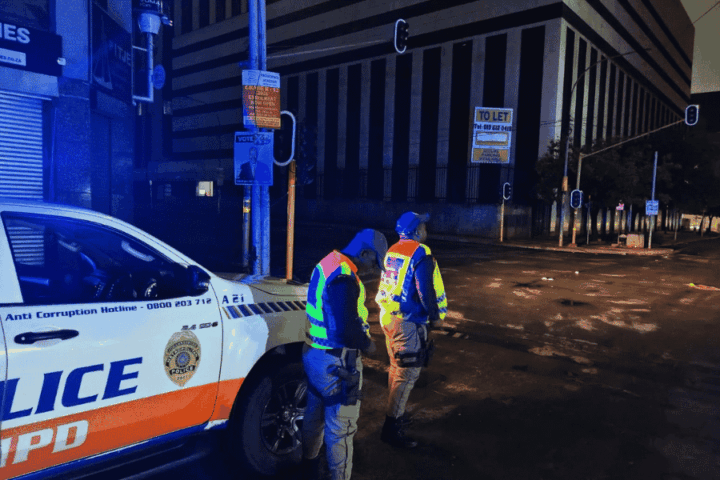
The convoy passed the point where Sheppard was parked and switched on blue lights and sirens to identify themselves as police.
Two men were sitting in the front of the Mercedes Benz. A third was standing outside, at the driver’s door.
All three were ordered to raise their hands, get out and lie down. The officers were armed.
Tsotetsi listed the vehicles at the scene, an unmarked BMW he was travelling in with two colleagues, a Golf driven by Sekgobela, and a BMW hatchback and a second Golf used by traffic officers. He had arrived at the briefing in a marked police Polo and left it there.
The three men were handcuffed. Tsotetsi testified that Sekgobela informed them police were investigating a murder in Vereeniging and asked for permission to search them. According to Tsotetsi, all three consented and were searched.
The men were then asked to identify themselves. The first gave his name as Musa Kekana, the second as Michael Tau, and the third identified himself by the surname Matlou.
Sekgobela then called Sheppard to the scene to say whether these were the men he had seen.
Tsotetsi told the court that Sheppard identified Kekana and Tau as the same two men he had earlier seen at the Kew property and later followed in the Mercedes-Benz Viano.
He said the third man had not arrived with the Viano, and had come out of a yard carrying a mag rim.
Only after that, on Tsotetsi’s account, were the men told they were being arrested as suspects in the Vereeniging murder.
Under cross-examination last week, Sekgobela was repeatedly challenged on what gave him reasonable grounds to arrest the accused. His evidence relied largely on information about a Vereeniging murder broadcast over the police radio, a transmission for which no recording or contemporaneous record has been produced, and which the defence contends amounts to hearsay.
Tsotetsi’s evidence adds a further element. According to his testimony, before the arrests were effected, Sheppard was brought to the scene and identified Kekana and Tau as the two men he had earlier observed during the surveillance operation.
Kekana then complained that he was uncomfortable and that he was ill, asking to be positioned properly, Tsotetsi said. He asked Sekgobela to alter the handcuffs and the position was changed.
According to Tsotetsi, both men were then informed of their rights and they said they understood.
Within about ten minutes, Sekgobela left with Kekana’s residence, house number 34, 5th road, Kew and where the i20 was, with Kekana seated in the back of Sekgobela’s Golf, accompanied by other members.
Tsotetsi testified that he remained in charge of the first scene in 8th Road, Kew, where he had been stationed since about 08:50. He cordoned off the area and called the Local Criminal Record Centre (LCRC), whose members arrived at about 09:50. Primer residue samples were taken from Tau who had remained at the scene.
When the LCRC arrived, they requested that Kekana be brought back so that primer residue samples could also be collected from him.
Tsotetsi said he relayed that request to Captain Sekgobela. According to his evidence, Sekgobela responded that Kekana would be returned, but that an ambulance had first been called because Kekana was coughing blood.
This is where the two officers’ accounts differ. Under cross-examination last week Sekgobela twice rejected the suggestion that Kekana had been moved between the properties.
Tsotetsi’s evidence is that Kekana was brought back and primer residue was collected. He could not recall who returned him, but said Sekgobela was not among them.
A medic then attended, arriving in an unmarked black Fortuner. Kekana was given an oxygen mask at some point, and officers waited for a private ambulance, which took over his treatment. All of that happened at the arrest scene, Tsotetsi said.
According to Tsotetsi, the ambulance travelled with Kekana back to the Kew property because police had almost finished processing the arrest scene and were still waiting for a police escort to hospital. The escort had been requested from Bramley SAPS, as the incident fell within that station’s jurisdiction.
When Tsotetsi moved to Kekana’s house, the ambulance was parked outside the gate and Kekana was inside the property, standing with Sekgobela beside the i20. The LCRC took over from there. He put his arrival at between 13:00 and 14:00, and thought the ambulance left for hospital at about 15:00 or 16:00.
Tsotetsi said he had not been surprised to hear Kekana was coughing blood. Kekana had told him he had chest problems, and had been coughing constantly.
That supports evidence Sekgobela gave last week and which Advocate Gissing challenged as newly invented from the witness box.
On the clothing, Tsotetsi said Kekana was wearing an orange sweater top, black jeans and black sneakers when he first saw him. But when he was brought back to the scene for prime residue he was wearing a black top.
Gissing’s instructions, put to Sekgobela, were that a blood-stained mustard long-sleeved top was removed and replaced with a black one. Sekgobela said he asked Kekana to remove it in the ambulance and gave him the black top himself.
Tsotetsi also rejected the assault allegations. He said he would not have allowed it. He denied that Kekana was at any point forced out of the ambulance, and said no shots were fired at the arrest scene.
The matter was adjourned to Tuesday, 4 August.