Politics
IEC faces revolt as ballot disputes pile up before deadline
Parties from Tshwane to Polokwane are challenging the IEC count over missing ballots, locked-out agents and tallies that do not add up.
By Mashudu Sadike and Zama Nteyi
3 min read
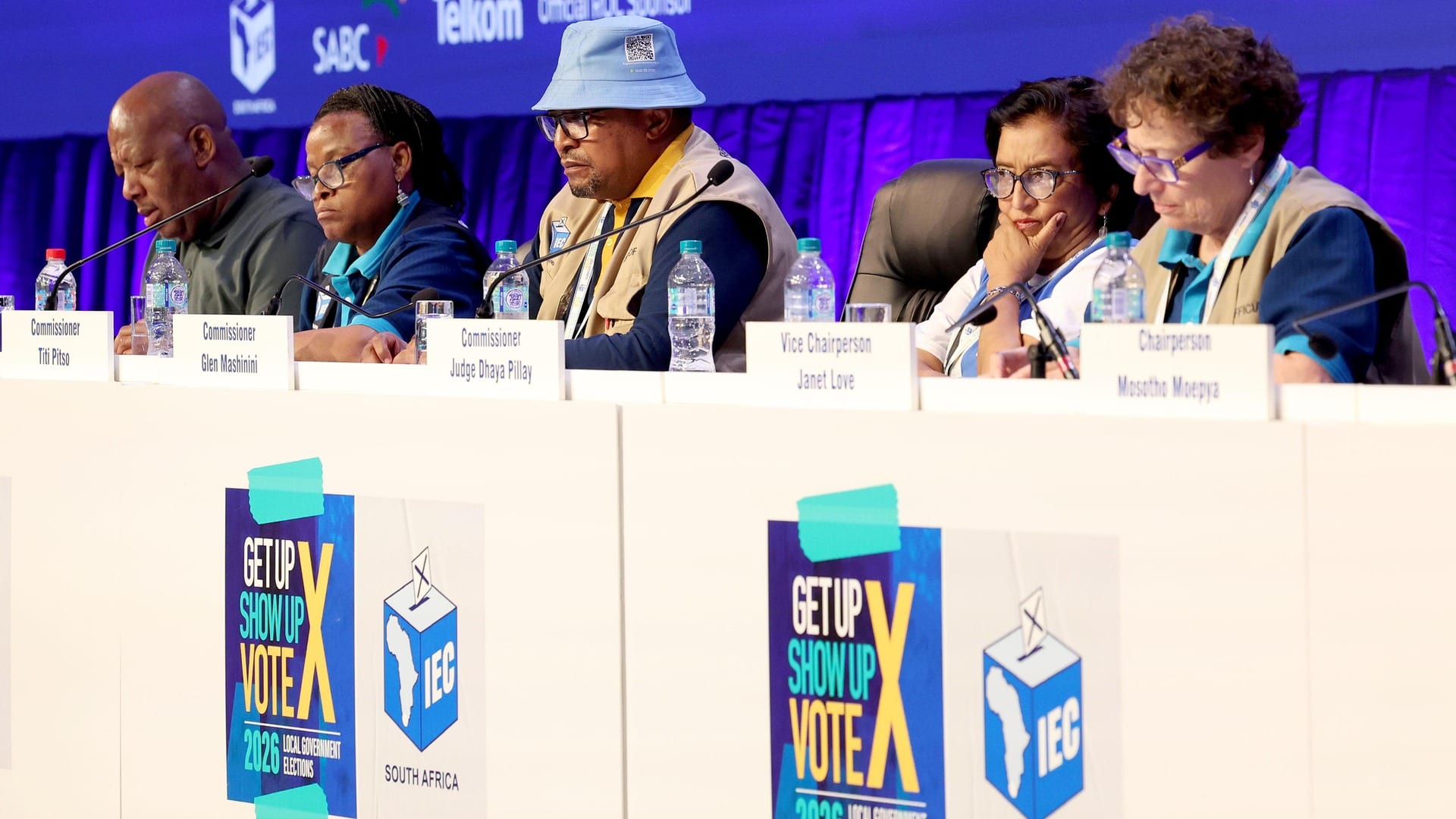
The IEC's count is no longer just about numbers, it is about trust — from Tshwane to Polokwane, parties that beat the odds on election day are now challenging the process that produced those results, accusing the Commission of missing ballots, locked-out agents and counts that do not add up.
They filed before the 5pm deadline on Friday. They are not alleging the same incident. They are alleging the same failure: that the IEC must prove, station by station, that the vote can be believed.
The South African Communist Party did not go to the Electoral Commission alone.
It went with six other political parties to lodge a joint objection in the City of Tshwane, warning that missing ballot papers, party agents thrown out of voting stations, and numbers that do not tally had compromised the integrity of the count.
SACP legal representative Thabo Mokoena confirmed the move at the national Results Operations Centre in Midrand.
"I'm sure you are aware that in the City of Tshwane, we have an objection there. There are six political parties together with the SACP that have lodged an objection and so we are busy monitoring that but also engaging the IEC around those details," Mokoena said.
The objection was filed under Section 65 of the Local Government: Municipal Electoral Act — the formal mechanism for challenging voting and counting where an irregularity could materially affect the result.
"We are still going to get full details because our team was actually handling that from counting. But then the IEC, we have engaged with them. They have actually made a commitment that all those issues will be attended to and we responded to them immediately after five," he said.
At the heart of the joint objection were three recurring problems.
"Of course, it's about the ballot papers missing. In other areas, we have a situation whereby the party agents were taken outside of the voting station and we also have incidents where the numbers are not entirely tallying. We are trying to address those issues," Mokoena said.
For the SACP, the stakes are high. Contesting in its own name for the first time in 76 years, it won 78 council seats nationally in preliminary results, including nine ward seats, and emerged as a potential kingmaker in hung councils.
It is not alleging a national rigging conspiracy. It is alleging localised failures that, taken together, could affect specific wards in Tshwane, a metro where no party won outright and where every seat will decide who governs.
"We are busy monitoring that," Mokoena said. "We are engaging the IEC around those details."
In Polokwane, ActionSA has entered the same dispute, but with its own figures.
Its agents recorded 1,315 votes at MP Malatjie Primary School, even though records show only 1,100 ballot papers were issued there.
"Our agents recorded 1,315 votes at the voting station, while records indicated that only 1,100 ballots had been released," said ActionSA Limpopo provincial chairperson Victor Mothemela.
"The difference amounts to 215 ballots. We demand an investigation and an explanation for the disputed ballots."
ActionSA further alleges that a sealed ballot box was delivered to the station without police officers or accredited observers present.
EFF, Afrika Mayibuye Movement and SACP agents also questioned the ballots in that box, according to the party. ActionSA claims IEC officials went ahead with the count anyway, backed by ANC agents.
"The party called on the IEC to apply electoral legislation consistently and ensure that no political party received preferential treatment," Mothemela said.
None of those claims have been independently verified.
A gap in ballot figures alone does not prove fraud. Special votes cast on 2 and 3 November were counted with election-day ballots, and voters receive either two or three ballot papers depending on the municipality.
ActionSA argues that this is exactly why a transparent probe is required, and why the IEC should consider a fresh election at the station if the result's credibility cannot be confirmed.
By Thursday evening the IEC had received more than 800 complaints from contestants, mostly over claims that party agents were blocked from observing voting and counting. About 106 were still unresolved.
Deputy Chief Electoral Officer Masego Sheburi has drawn a line between a complaint and a Section 65 objection. A complaint can be raised with a presiding officer, while an objection must be filed in writing, spell out the irregularity, cite the law relied on, set out the relief sought, and show it could change the outcome.
Parties that missed Friday's deadline would need to apply for condonation or approach the Electoral Court.
For the IEC, the task is now twofold: finish the count, and persuade doubting parties that the count can be trusted.
No final results will be declared until objections that could affect the outcome have been dealt with.
Related stories
2026 Mayoral chain showdown
Municipal skills crisis raises questions about readiness of incoming councillors
By Justine Dumont


More on IEC
All IEC storiesPolitics
Shivambu: let the leading parties govern, we will not play childish coalition games
By Mashudu Sadike and Zama Nteyi
Politics
MK Party Claims First Municipality, Warns: "We Will Not Be Robbed Again"
By Mashudu Sadike and Zama Nteyi
Politics
Mantashe Blames 'Spoilers' And Media As ANC Support Drops To 32%
By Mashudu Sadike and Zama Nteyi