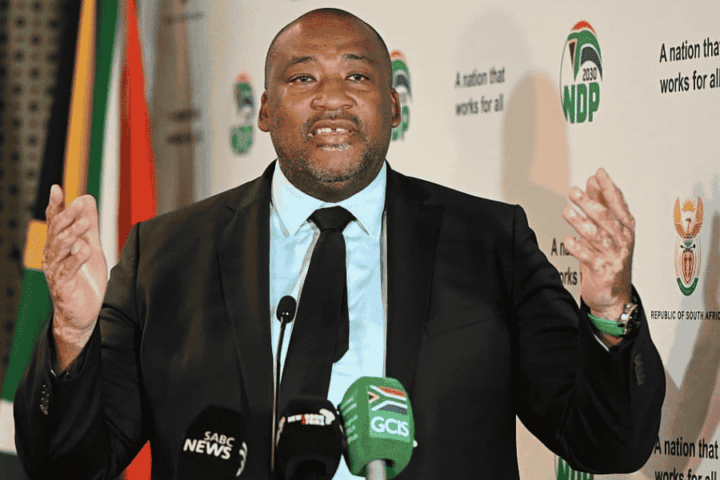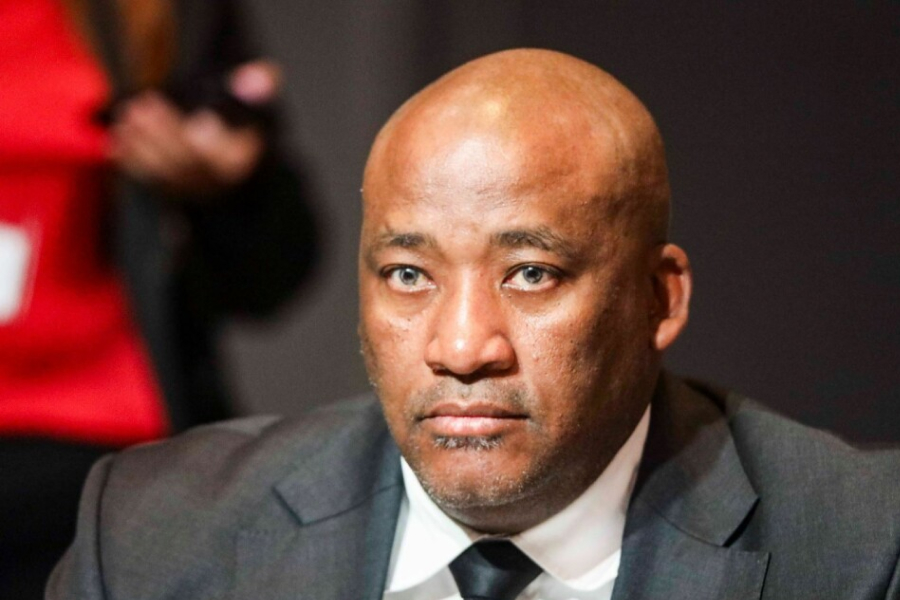
Sport, Arts and Culture Minister Gayton McKenzie broke with his own Department’s forensic report on Tuesday, telling Parliament he does not accept that only two people are implicated in the mismanagement of more than R51 million channelled to the Cultural and Creative Industries Federation of South Africa over ten years.
“Some told me the organisation is corrupt and some told me it’s good. But listening right now, I don’t think only two people are implicated as per the report. I’m sure there’s more within the department. We need to investigate and dig deeper,” said McKenzie.
Members of the Portfolio Committee also agreed that the forensic report is incomplete.
The Gobodo Forensic investigators told the Portfolio Committee on Sport, Arts and Culture that its scope had been limited.
The exchange came during a sitting that turned repeatedly on a single question the committee could not resolve: how a federation that never submitted audited financial statements continued to receive public money for the better part of a decade.
According to Gobodo’s presentation, CCIFSA concluded a series of memoranda of agreement with the former Department of Arts and Culture and its successor, the Department of Sport, Arts and Culture, between the 2014/15 and 2023/24 financial years, receiving a total of R51,841,153.09.
The money moved through three streams, namely:
CCIFSA operations – R27,263,700
Down Town Music Hub – R13,077,453.09
USIBA Ministerial Awards – R11,500,000.
The first agreement was signed on 1 September 2014, with two addenda following in February 2015 and March 2016.
Gobodo found the March 2016 addendum irregular. It was not procedurally approved, there was no justification for the increase in value, and the resulting increase of R772,884 was therefore irregular.
Further agreements followed in May 2021 (R2.5 million), April 2022 (R5 million) and October 2023 (R5 million), each concluded, on the investigators’ account, against a compliance record that had not been rectified.
The mechanism that allowed this became the sitting’s central thread.
Sub-clause 8.8 of the applicable MoA required CCIFSA to submit audited financial statements.
Gobodo found that CCIFSA submitted unaudited statements, and told the committee that the financial statements had been reviewed, not audited.
Committee member Matsholo Moletsane pressed the department on how funding continued in the absence of audited statements.
Zwelakhe Mbiba, for DSAC, struggled to account for the pattern, telling the committee that CCIFSA would ordinarily submit a business plan on a yearly basis.
Gobodo’s forensic team also found that a brief executive summary report for the 2017/18 financial year submitted by CCIFSA contained misleading information, with amounts presented as operational cost funding when they related to a separate programme altogether.
The auditors also identified an unused balance of R5,438,900.35 at the end of the 2016/17 financial year that should have been returned to the department. It was not.
CCIFSA continued to use the funds for its operational expenditure beyond the contract period, conduct the investigators classified as non-compliance with the MoA.
Nine years on, the report’s recommendation is not that the money be recovered, but that the Director-General, Cynthia Khumalo, consider corrective action against officials for having failed to recover it.
In October 2018, DSAC appointed CCIFSA as implementing and fiduciary agent for the Down Town Music Hub.
The appointment was made through a quotation system, with quotations sourced from SAMRO and CCIFSA.
No formal Bid Specification or Bid Evaluation Committee was constituted.
Gobodo found the procurement process flawed and not in accordance with National Treasury SCM Instruction Note 3 of 2016.
A single bank account was then used for both the Down Town Music Hub and CCIFSA funds. The investigators found this commingling created a risk that money intended for one party could pay the expenses of the other, and that the failure to ring-fence the programme’s funds resulted in poor governance, maladministration and financial irregularities.
Gobodo recommended that DSAC consider declaring the full R13,077,453.09 paid to CCIFSA for administering the hub as irregular expenditure.
The USIBA Ministerial Awards were launched in April 2018, with an MoA for R12 million concluded on 20 April 2018, which entitled CCIFSA to a 10% administration fee.
Gobodo found that CCIFSA irregularly entered into a partnership agreement with Mirror Events (Pty) Ltd and subcontracted the bulk of the work to it.
The MoA made no provision for subcontracting to third parties. Of a first tranche of R10 million paid into CCIFSA’s account, R8.5 million was transferred onward to Mirror Events.
An expenditure report accounted for R8,853,154 spent on the conference and awards, leaving R1,146,846 unaccounted for, alongside a breach of sub-clause 8.11 for the non-submission of supporting invoices and vouchers.
EFF member Eugene Mthethwa told the committee that Mirror Events was owned by the late Zanele Mbokazi.
He said that Mbokazi and the wife of former CCIFSA president Tony Kgoroke were later appointed by DSAC.
The claim triggered the sharpest exchange of the day.
“Hold on, this man just mentioned my wife,” Kgoroke objected.
Mthethwa maintained that the arrangement had generated significant objection at the time, to the point that Mbokazi and Kgoroke’s wife had to be removed from the department.
Beneath the financial findings sat an unresolved question of who currently speaks for CCIFSA at all.
Mthethwa told the committee that there has been no elective conference since 2019.
Joy Mbewana told Parliament there had been no proper handover, and that financial reports were rejected.
Yvonne Chaka Chaka, appointed interim chairperson in 2014/15 by then Arts and Culture Minister Paul Mashatile, told the committee her involvement had been limited, saying she was usually occupied with her United Nations work.
“Our duty was to have roadshows and put up a document to ensure all sectors are represented, as well as to take the federation to Mangaung. We did everything that was expected of us. About R5 million was allocated to us,” she said.
Gobodo’s own presentation set out the limits of what it was able to establish.
The investigation was hampered by the unavailability of key documents, what it described as lacklustre and slow cooperation from some DSAC officials and former CCIFSA board members, and the fact that former board members and management no longer had access to records to substantiate their statements.
CCIFSA’s offices, the investigators noted, had been closed following a dispute with the property owners.
Read alongside the Minister’s scepticism, those constraints suggest R51.8 million may represent a floor rather than a ceiling.
The report itself, which contains the list of implicated employees, has not been made public.
The report was finalised at the end of May 2026 and handed to the Minister.
It was subsequently released to members of the Portfolio Committee under an explicit undertaking of confidentiality.
Pressed on publication, McKenzie’s position shifted over the course of the sitting.
He first questioned whether there was any real prejudice in releasing it, noting that implicated parties would be notified within days in any event, and pointing out that “the state’s money was spent to investigate this matter.”
Later he set a condition: the department would notify implicated parties first, and “maybe in the next sitting, we can release the report.”
“There is no reluctance whatsoever to release the report,” he told the committee.
“The department is actually eager to release the report.”
ANC member Kgabo Kgaolathle put the delay squarely at the Minister’s door, telling the committee that the report had been finalised at the end of May and that responsibility for publication lay with him.
“The person who was supposed to have made the report public is the minister. He has correctly captured the fact that we have used public funds to conduct these investigations, and it’s in the interest of the public to understand what the outcomes of the report are,” he said.
Kgaolathle also noted that Khumalo had indicated the department was already implementing the report’s recommendations, meaning corrective steps are underway against officials who have not been publicly named, arising from a report the public cannot read.
He proposed that the committee seek an opinion from its legal team confirming that it may engage the contents of the report, warning that refusing to do so would deny members their oversight function.