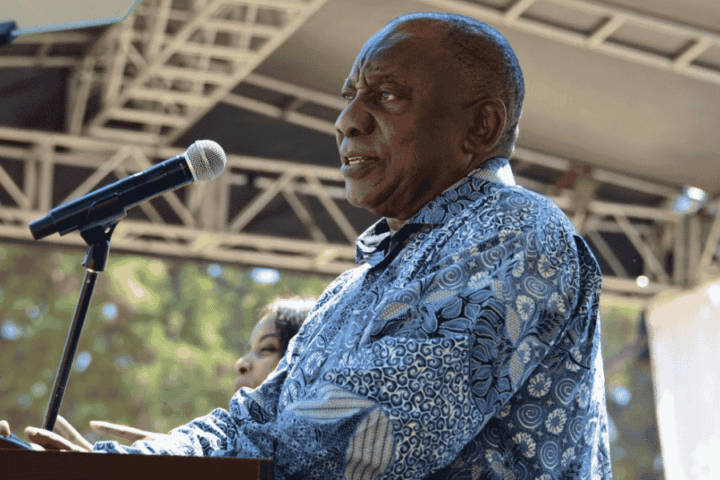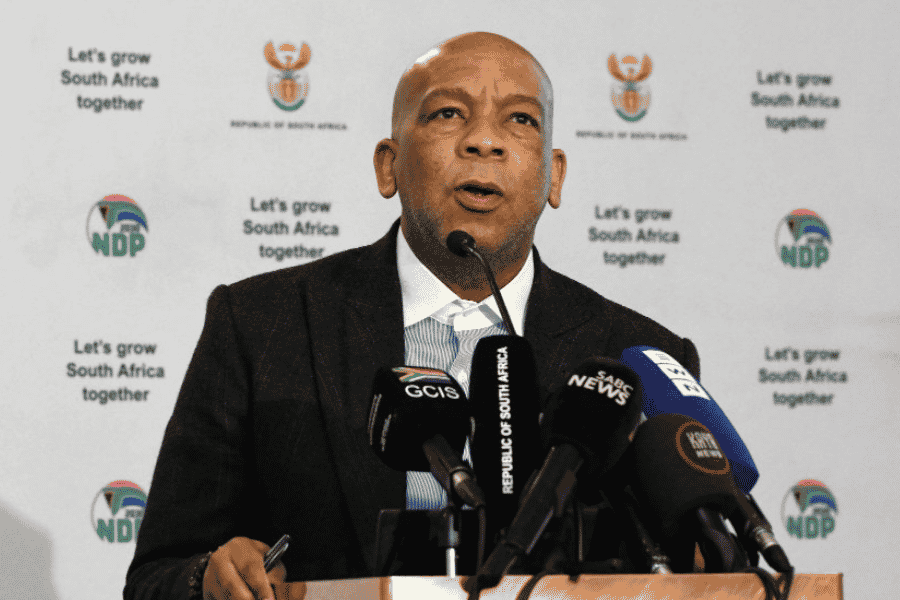
Electricity and Energy Minister, Kgosientsho Ramokgopa has told Parliament that Eskom will not release its forensic investigation report into the controversial diesel procurement and storage contracts, even though his written response indicates that he has not personally seen the report.
Ramakgopa was answering parliamentary question from DA MP Kevin Mileham. In his reply he revealed that the report has not reached his own desk.
He said that the report, commissioned from forensic firm Itsamaya, would be withheld in full because Eskom has referred the matter to the Directorate for Priority Crime Investigation, the Hawks.
“The forensic report and related material, including annexures, will not be made available. Following the findings of the independent investigation, Eskom referred this matter to the Directorate for Priority Crime Investigation (DPCI), in accordance with section 34 of the Prevention and Combating of Corrupt Activities Act (PRECCA),” he said.
“Given the ongoing law enforcement processes and the need to preserve the integrity of any further investigations, Eskom is not in a position to disclose the report or related material. Eskom will continue to cooperate with the relevant authorities and will refer matters for investigation where evidence warrants further action.”
Buried in the same document is a line that undercuts the confidence of that refusal.
On the question of who has received the report Ramakgopa said: “The report has been received by Group Security and Investigation, and the Legal Department…. The report is in the process of being shared with the Minister.”
On the reply’s own account, Ramokgopa told the National Assembly the contents of a report he had not read.
The reply’s central assertion is that nothing is missing. “The verification included the reconciliation of diesel purchased, delivered, consumed, stored and available when scheduled, together with site inspections, inventory records, stock certificates, supplier confirmations and related contractual documentation.
“The verification confirmed that diesel volumes paid for by Eskom remained available in storage facilities operated on behalf of suppliers and were supported by inventory and stockholding records maintained by the terminal operators, and/or available for scheduled delivery when required by Eskom, i.e., there is no missing diesel,” said Ramakgopa.
He added that Eskom appointed external legal advisers to assess the forensic findings, and that their assessment “did not sustain allegations that the procurement award process under Tender MWP2197GX was compromised.”
Yet the same reply confirms a section 34 PRECCA referral to the Hawks.
Eskom has not said what offence was reported, by whom, on what date, or under what DPCI case number. Nor has it named the firm that conducted the “independent” verification it is now relying on to displace the forensic findings.
The diesel is said to be sitting in facilities operated on behalf of suppliers, supported by inventory and stockholding records maintained by the terminal operators, records kept, in other words, by parties within the scope of the investigation.
Mileham’s question asked for the date, scope and contract value of the forensic appointment, the date the draft and final reports were received and the structure they went to; and whether Eskom had issued preservation instructions over SAP, payment, procurement, email, Teams, Board, forensic, system change-log, user and chain-of-custody records.
The reply supplies the scope. It gives no appointment date and no contract value. That omission is conspicuous, because the value is already public.
On preservation, RamaKgopa told Parliament that “the transactional evidence is preserved in our SAP system” and that it complies with document management protocols and legal retention requirements.
He did not confirm that a single preservation instruction was issued and he did not address the change-log or chain-of-custody records Mileham specifically asked about, the records that would show whether anything had been altered.
Pressure on Eskom over the diesel contracts has been building since April, when AfriForum’s Private Prosecution Unit, led by advocate Gerrie Nel, went public on behalf of a whistleblower.
Nel alleged that Eskom held a completed Itsamaya report making adverse findings, and criticised the utility for referring it to a law firm rather than acting on it. AfriForum listed relaxed bid criteria, prepayments to suppliers said to lack working capital, rebate arrangements, and instances in which Eskom allegedly supplied storage facilities to suppliers while being billed for the same facilities.
The identity of the five companies awarded the supply and storage work was placed on the record by AfriForum. None has been found by any court or regulator to have acted unlawfully, and Ramakgopa’s reply states that its legal advisers did not sustain the allegation that the award process was compromised.
A Hawks referral does not convert a corporate forensic report into a police docket, and section 34 of PRECCA creates a reporting duty, it confers no confidentiality and grants no exemption from parliamentary oversight.
Section 55(2)(b) and section 56 of the Constitution empower the National Assembly to require institutions to report to it and to summon persons to produce documents, backed by the Powers, Privileges and Immunities of Parliament Act.
A minister’s written reply does not remove that power, a portfolio committee resolution can compel production and an in-camera briefing is the ordinary compromise where a criminal investigation is genuinely live. Eskom has not offered one.