News
Court exposes years of eThekwini sewage failures
By Zama Nteyi
5 min read
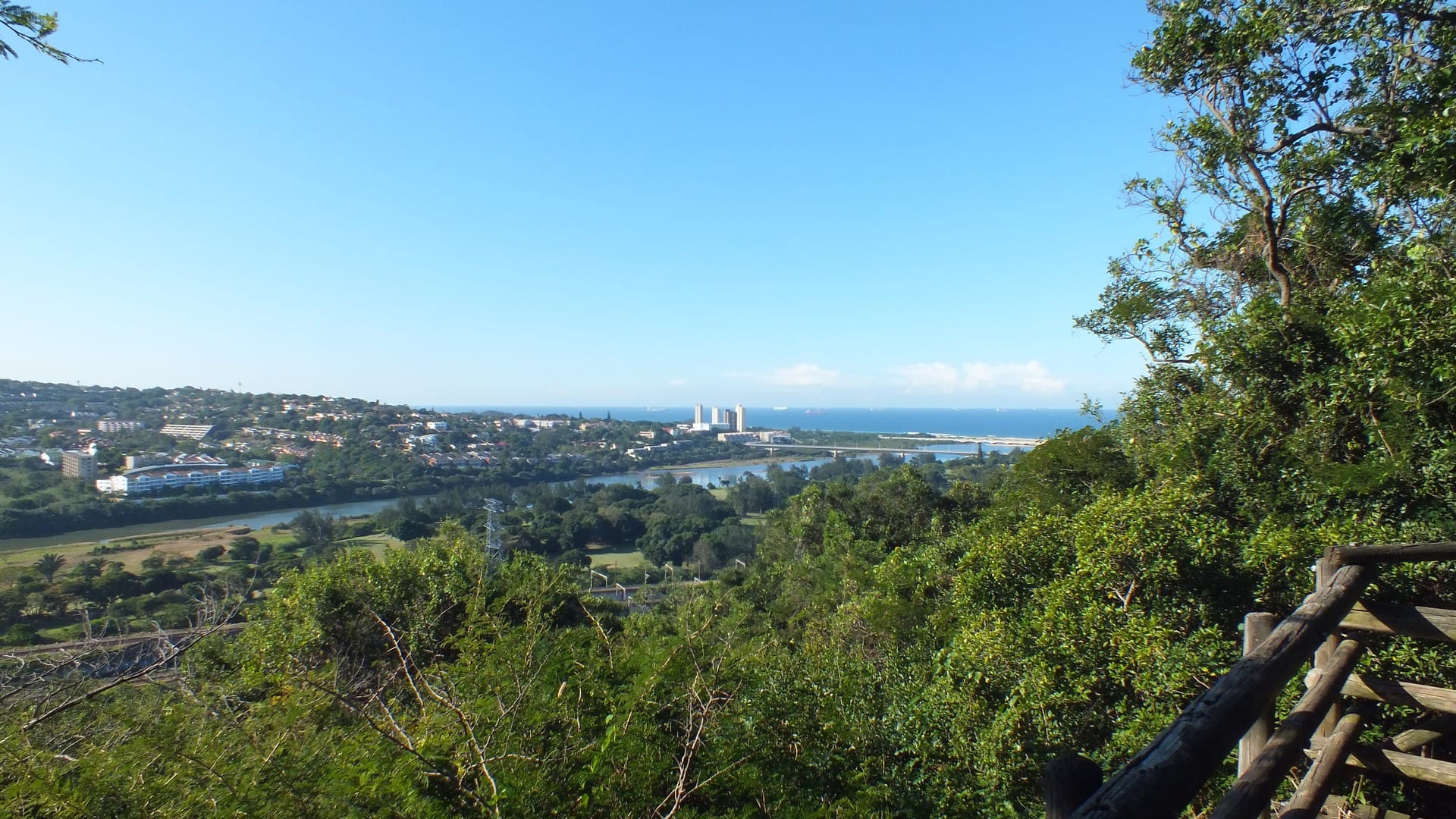
The eThekwini Municipality has lost its bid to appeal a ruling that it let raw sewage pour into Durban's rivers and onto its beaches.
On Friday, 6 November, a full bench of the Pietermaritzburg High Court threw out the city's application for leave to appeal to the Supreme Court of Appeal.
The court found the city ignored repeated government orders to stop the pollution. It also broke a promise to fix a damaged pump station within five weeks.
The city and its executive mayor must pay ActionSA's legal costs, including the costs of two counsel.
Judge Mbuzeni Mathenjwa wrote the judgment. Judge President Thoba Poyo-Dlwati and Judge Peter Olsen agreed with him.
The court said the dirty water spoke for itself.
"The persistent pollution affecting rivers, beaches, public areas, and private residences, having detrimental effects on both the environment and human health, illustrates the first applicant's failure to take reasonable measures to halt and prevent pollution," the judgment reads.
The city argued that a lack of money had kept it from stopping the pollution. The court shot this down, repeating what it said when the city lost a similar bid in the DA's case:
"The applicant's assertion that it had done what could be expected of it, despite the established shortfalls in outcomes, is based fundamentally on alleged financial constraints. That is a difficult defence to sustain absent a clear analysis of the allocation of the municipality's funds to other spheres of activity. The underlying facts, or data, concerning that are within the knowledge and control of the applicant, and without that data a court is left with no option but to assess what is reasonable by looking principally at outcomes; especially such as are indubitably unacceptable by reason of the challenges they pose to public health."
The judgment shows the city was warned again and again.
On 8 June 2022, the KwaZulu-Natal MEC for Economic Development, Tourism and Environmental Affairs issued a pre-directive under the National Environmental Management Act. It ordered the city to stop sewage from flowing into several rivers.
The court said the city responded to the directive but did not comply with it.
On 17 October 2022, the MEC issued another pre-directive. This one was about the Ohlanga River, which was being polluted by damaged infrastructure at the Ohlanga pump station.
"Despite an undertaking by the first applicant that the pump station would be repaired within five weeks, it failed to repair the pump station and the pollution continued. Subsequently the seventh respondent had to lay criminal charges against the first applicant based on its various contraventions of NEMA," the court said.
The Minister of Water and Sanitation also stepped in. On 13 May 2022, the minister issued a directive under the National Water Act. It ordered the city to stop pollution from its wastewater treatment works, which were malfunctioning after the April 2022 floods.
"Despite engagement the first applicant failed to comply with the directive," the judgment reads.
The minister also flagged sewage overflowing from the main trunk sewer line in Umlazi into the Mlazi River, and sewage entering the Ohlanga River. The court said the city failed to deal with these complaints too.
The city tried to blame the floods. But the court pointed to the city's own papers.
"Additionally, according to the first applicant's own version, challenges associated with aging infrastructure were present even before the April 2022 floods occurred. Thus, it can be concluded that unrepaired aging infrastructure existed prior to those floods."
The city also argued that the facts were in dispute. The court disagreed.
"The first applicant did not adhere to these directives. Consequently, there is no material or genuine dispute of fact regarding the first applicant's non-compliance with directives aimed at halting and preventing pollution."
The city had promised fixes in an action plan, but the court found the plan went nowhere.
"The court found that although the matters related to the WWTW and pump stations were addressed in the action plan, it was not followed through. Consequently, the court mandated that amendment be made to the action plan, as the deadlines for actions outlined in it had passed without any implementation."
The city also fought the order to publish E. coli readings every week, saying there was no evidence to back it. The court called this argument meritless.
"It is widely acknowledged that numerous beaches were closed due to these high E. coli levels. The presence of untreated raw sewage entering rivers and beaches, stemming from malfunctioning WWTW and pump stations, clearly indicates that high E. coli levels at the beaches continued to pose a threat to the environment and human health. Consequently, the court's directive for weekly reporting on E. coli was grounded in evidence presented during the proceedings."
On costs, the court said the city had brought the litigation on itself.
"It is important to note that the pollution problem caused by the first applicant's defective WWTW was highlighted to the first applicant, yet it neglected to address it for an extended period. The first respondent would not have faced litigation costs had the first applicant responded to the complaint regarding the pollution when it was initially raised."
The court also found no reason for a higher court to hear the matter.
"I have demonstrated that the applicants lack any reasonable prospects of success based on the grounds of appeal presented. Furthermore, there are no compelling reasons for the matter to be heard by an appeal court since our courts have previously addressed similar issues concerning the duty of various spheres of government in fulfilling their constitutional obligations."
ActionSA did not walk away untouched. In February, the court ordered the party to pay the legal costs of the national ministers and provincial MECs it had also sued. ActionSA cross-appealed that costs order, and the court dismissed the cross-appeal with costs.
"The fact that the first respondent does not challenge the court's finding that it failed to establish any cause of action against the respondents aligns with the finding that its litigation was both frivolous and vexatious. In my view, the fact that this case pertains to constitutional litigation against an organ of state does not negate its frivolous nature. The litigant pursued relief without establishing a valid cause against the State," the court said.
ActionSA went to court over the sewage crisis in November 2022. On 9 February 2026, the full bench found that eThekwini had violated its constitutional mandate by failing to maintain, repair or replace infrastructure, leaving sewage to pollute beaches and waterways. The court dismissed the case against every other respondent.
The DA brought a separate case over the same crisis and won it in December 2025. On 30 September this year, the same court refused the city leave to appeal in that matter.
Related stories
More on ActionSA
All ActionSA storiesPolitics
Beaumont confirms ActionSA is talking to ANC, dodges question on two-metro offer
By Mashudu Sadike
Politics
ANC mulling over dumping DA for ActionSA to survive 2026 local government elections
By Mashudu Sadike
Latest from Africa Daily
Today's top stories- ANC Joburg says it learnt of Thuthukile Zuma's resignation on social media
- BMA intercepts 18 vehicles worth estimated R10m at Beitbridge through new targeting system
- DA, Helen Zille reject Malema's apology demands: 'See you in court'
- Knives out for Ramaphosa after salary hikes for political elite
- NAC's R65m scandal: CFO cannot explain who authorised the transfers