Politics
Voters have had their say: IEC declares final 2026 local election results
3 min read
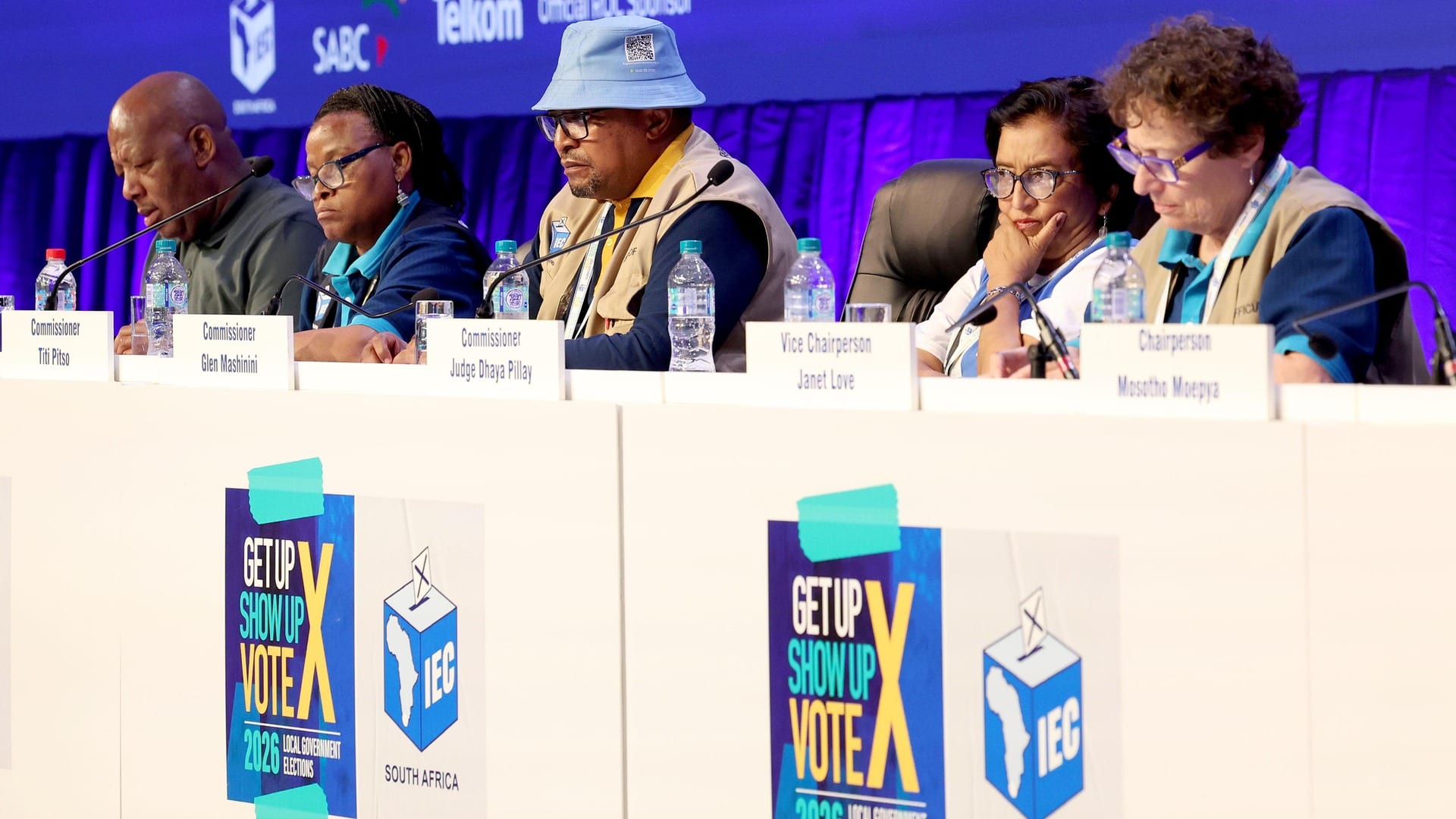
The votes have been counted, and the Electoral Commission of South Africa has declared the results of the 2026 local government elections, closing a contested count that stretched days beyond voting day and setting the stage for weeks of coalition bargaining in South Africa's biggest cities.
The declaration on Sunday night came after the IEC dealt with formal objections lodged under Section 65 of the Municipal Electoral Act. Deputy Chief Electoral Officer Masego Sheburi had earlier made clear that no final results would be declared until objections that could affect the outcome had been considered.
That process followed a week in which the credibility of the count itself became part of the political contest. By Thursday evening, the IEC had received more than 800 complaints from contestants, most alleging that party agents were prevented from observing voting and counting. About 106 remained open at that stage.
Parties had until 5pm on Friday, 6 November, to lodge formal Section 65 objections. The SACP lodged a joint objection with six other parties in Tshwane, citing missing ballot papers, agents removed from voting stations and numbers that did not tally. ActionSA lodged a separate complaint in Polokwane over an alleged discrepancy of 215 ballots at MP Malatjie Primary School.
In declaring the results, the IEC stressed the scale of the exercise behind election day itself.
"The work of running an election is often judged by what happens on election day but the truth is that election day is only the culmination of an enormous amount of work undertaken over many months and in this instance no less than two years," the Commission said.
The final national picture confirms a fragmented local landscape in which the ANC remains the largest party, but no longer dominates as it once did.
The ANC received 30.76% of the vote and secured 3,246 council seats. The Democratic Alliance received 24.64% of the vote and secured 1,695 council seats. The uMkhonto weSizwe Party received 9.76% of the vote and secured 785 council seats. The Economic Freedom Fighters received 6.22% of the vote and secured 588 council seats. ActionSA received 5.67% of the vote and secured 313 council seats.
Political parties and independent candidates collectively outside the top five received 22.97% of the vote and secured 1,695 council seats, a share that underlines how much support has moved away from the established parties toward smaller formations and independents.
In terms of municipal council outcomes, the ANC achieved outright control in 53 municipalities and is the leading party in 128 municipalities. The DA achieved outright control in 12 municipalities and is the leading party in 32 municipalities. The Inkatha Freedom Party achieved outright control in five municipalities and is the leading party in 19 municipalities. The uMkhonto weSizwe Party achieved outright control in three municipalities and is the leading party in 19 municipalities. RISE Zanansi communities achieved outright control in one municipality.
Of the 213 municipalities, only 74 councils have a party that secured an outright majority. In the remaining 139, councils will have to be governed through coalitions or minority arrangements.
That reality is sharpest in Gauteng and KwaZulu-Natal.
In Johannesburg, no party secured an outright majority in the 270-seat council. In Tshwane, the DA leads ahead of the ANC, with ActionSA, the EFF and the SACP holding seats in a 214-seat council. In Ekurhuleni, the ANC leads, followed by the DA and the EFF, in the 224-seat council. In eThekwini, the ANC leads, followed by the DA, the IFP and the MK Party in the 222-seat council.
In the Western Cape, the DA retained control of Cape Town, while the ANC remains the official opposition. The DA also leads in a number of municipalities in the province. In Limpopo, the ANC retained Polokwane, while in Mpumalanga and North West, the ANC leads in a number of municipalities.
One of the most significant developments is the performance of the SACP, contesting in its own name for the first time in 76 years. The party won 78 council seats nationally, including nine ward seats, a result that gives it a foothold in councils where the ANC and its former alliance partner may now sit on opposite sides of coalition negotiations.
ActionSA won 313 seats nationally, while the Patriotic Alliance, GOOD, the Freedom Front Plus and independent candidates also picked up seats.
Related stories
Politics
ANC loses outright majority in Polokwane as opposition parties gain ground
By Nakampe Lekwadu
More on 2026 Local Government Elections
All 2026 Local Government Elections storiesPolitics
Malema to question credibility of IEC results at national ROC as EFF trails
By Mashudu Sadike
2026 Mayoral chain showdown
Municipal skills crisis raises questions about readiness of incoming councillors
By Justine Dumont
Latest from Africa Daily
Today's top stories- Ramaphosa declares 2026 elections free and fair as results are announced
- Landlord tells court why he will not refund Kabza De Small rental deposit
- Collen Mashawana Foundation faces liquidation over unpaid legal bill
- DJ Shimza fired from Kunye Records over 'financial misconduct'
- Cape Town City and Magesi stumble as three rivals close in