I never expected Saint Petersburg, Russia, of all places, to be such a charming city. But from the moment I arrived, it stole my heart and made me fall in love with it.
One of the things I had been told about Russia was that its rivers were supposedly “flowing with vodka.” Instead, when we arrived at the Angleterre Hotel, overlooking the golden dome of Saint Isaac’s Cathedral, we were welcomed with glasses of juice, a welcome relief for me as a non-alcoholic.
The four-star hotel, which officially opened its doors in 1991, has 192 luxury rooms, including five suites. From the moment you walk through its doors, it gives you that unmistakable feeling of being treated like royalty.
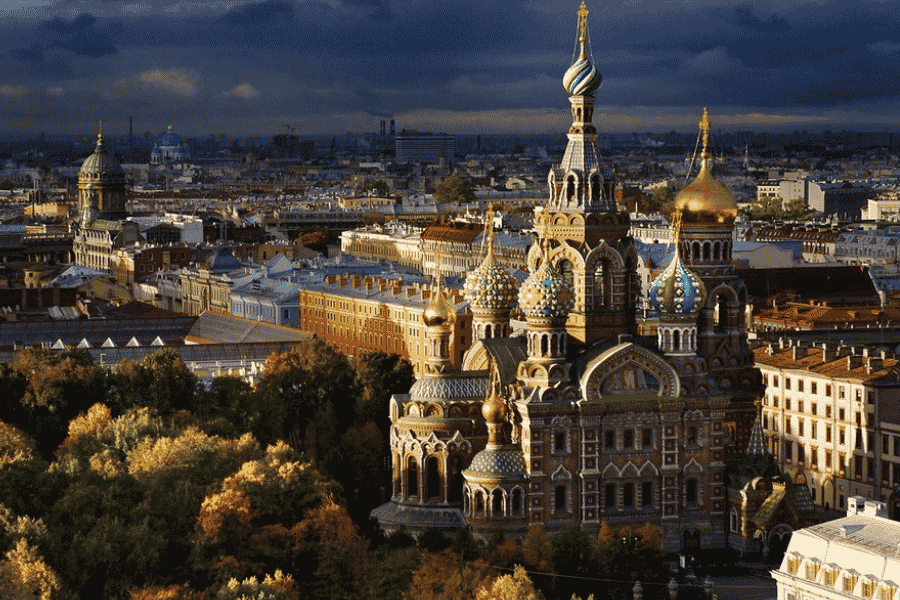
But Saint Petersburg is more than just a beautiful city. It is a living fountain of Russian history, a cultural hub and a melting pot where architecture, art, music and history meet at almost every corner.
Peter the Great founded Saint Petersburg in 1703 during the Great Northern War, as Russia pushed towards the Baltic Sea. He did not simply build a city; he created a legacy that continues to shine centuries later.
You see that legacy everywhere.
Take Peterhof Palace, a breathtaking 414-hectare estate in Petergof, on the outskirts of Saint Petersburg. The palace and its magnificent gardens celebrated their 300th anniversary in 2021. From its golden gates and grand palaces to its fountains, sculptures and perfectly manicured gardens, Peterhof is a spectacular reminder of the scale of Peter the Great’s ambition.
Saint Petersburg has so many palaces, museums and historic landmarks that it can sometimes feel as though Peter the Great is following you everywhere.
And perhaps he is.
When you are in Saint Petersburg, you hear his name repeatedly. He founded, inspired or transformed so much of what became central to the city’s identity, from its cultural institutions to its architecture and grand public spaces.
Peter the Great was not only a visionary; he also had a taste for the finer things in life. The results of that taste are still there for everyone to see, in the museums, palaces, parks, gardens and magnificent buildings he left behind.
They offer glimpses of a life of extraordinary luxury that many of us, even in this modern age, can only dream about.
In a city shaped by rivers and canals, Peter the Great seems almost like a fish in water. His magnificent Peterhof Palace is surrounded by spectacular fountains, many of them powered by ingenious water-engineering systems rather than modern pumps. Golden statues rise from the fountains, surrounded by extraordinary architecture and gardens.
The landscape looks like something straight out of a romantic movie.
It is Saint Petersburg’s own Garden of Eden, only without Adam and Eve.
One thing that struck me during my five days in Saint Petersburg was how little people seemed interested in discussing politics. People were far more comfortable talking about the beauty of their city, its history, food, football and culture.
Whenever I raised a political question, I was often met with a silence that needed no translation, an unmistakable, unwritten message that said: Don’t even go there.
Then there is the Lakhta Center.
If the United Arab Emirates has the Burj Khalifa, Saint Petersburg has the breathtaking silhouette of the Lakhta Center rising above the Gulf of Finland. At 462 metres and 87 floors, it is the tallest building in Russia and Europe.
I was fortunate enough to reach the 83rd floor, and the view from up there was simply spectacular. Looking down over Saint Petersburg and towards the Gulf of Finland felt like being given a glimpse of a little piece of heaven.
Then came football.
I was fortunate to watch a Russian Premier League match between Lokomotiv Moscow and the local giants, Zenit Saint Petersburg, at the 68 000 capacity Krestovsky Stadium, also known as Gazprom Arena.
The atmosphere was electrifying.
It was different from the football atmosphere I am accustomed to back home. It had its own character and rhythm but it was still football, and football has a universal language.
Zenit won 2–1, which, of course, made the experience even sweeter for the home supporters.
Getting into the stadium was surprisingly easy, although security was understandably tight. Just over 27 000 fans attended the match that day, leaving plenty of room inside the enormous stadium.
And then there is the food.
Saint Petersburg’s restaurants offer more than delicious cuisine. Many of them also serve up a generous helping of music and atmosphere. You can find yourself tapping your feet while enjoying some wonderfully prepared dishes.
As we say in isiZulu: “Ingoma emnandi iyaphindwa” a beautiful song is worth repeating.
And Saint Petersburg is certainly a song I would happily hear again.
I arrived expecting to discover a city in Russia.
Instead, I discovered history, culture, architecture, football, food, music and people, all woven together into a city with a personality of its own.
Saint Petersburg did not simply welcome me.
It stole my heart.
And I am looking forward to returning one day, this time with my family, so that they too can see, feel and experience the magic I discovered during my five unforgettable days in this beautiful city.
Mzilikazi Wa Afrika is an award winning investigative journalist and founder of Unpopular Opinion podcast.