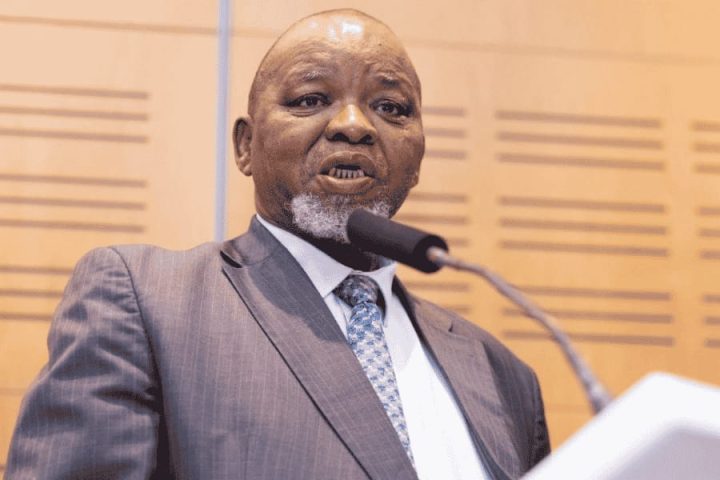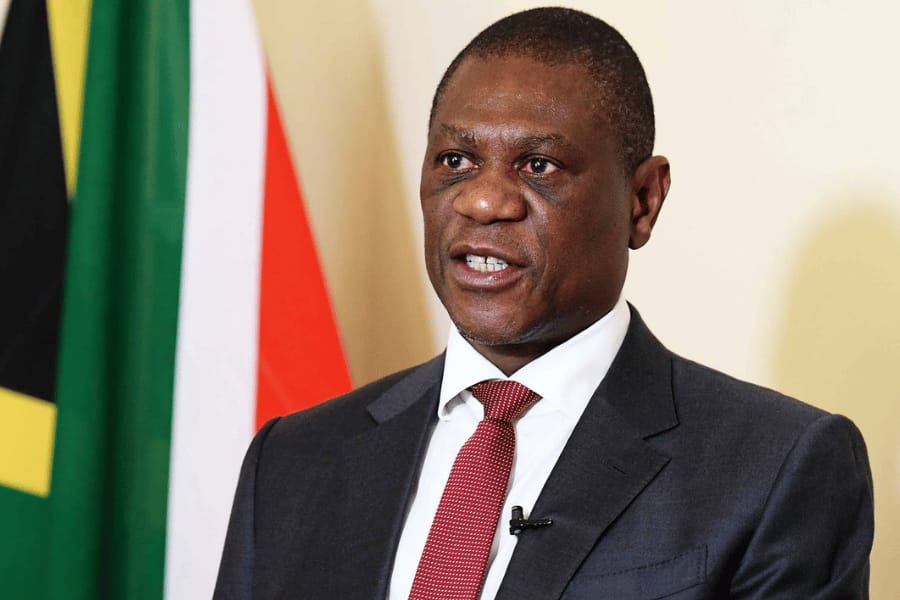
Deputy President Paul Mashatile has called for stronger accountability in the water sector, saying Africa cannot solve its growing water and sanitation crisis without fixing how water is managed, maintained and paid for.
Mashatile made the call on Monday while delivering the keynote address at the 2nd Annual AWSISA Africa and Global South Water and Sanitation Dialogue at the Inkosi Albert Luthuli International Convention Centre in Durban, KwaZulu-Natal.
Addressing government leaders, policymakers, water-sector institutions, investors and international partners, Mashatile said water security should be treated as a central pillar of development, not as an isolated sectoral concern.
The five-day dialogue is being held under the theme, “Accelerating Climate-Resilient Water and Sanitation Solutions for Africa and the Global South – Every Drop Counts!” It brings stakeholders together to discuss water security, climate-resilient infrastructure, investment and improved access to water and sanitation services.
Mashatile, who chairs the Water Task Team, acknowledged that South Africa and other countries across the continent continue to face ageing infrastructure, deteriorating water quality, high water losses, prolonged droughts and increasing pressure on municipal water systems.
He said South Africa’s central challenge was not simply the availability of water, but how it was managed and accounted for.
“Having water resources is one thing. Managing them effectively, protecting them sustainably and distributing them equitably is another,” Mashatile said.
He stressed that government could not continue investing in new infrastructure while allowing existing water systems to deteriorate.
He called for greater attention to maintenance, the modernisation of existing infrastructure and the strengthening of wastewater treatment systems.
Accountability, he said, must run through all three spheres of government. He called for stronger coordination between national, provincial and local government, saying decisions taken at national level must translate into tangible improvements in communities.
He said institutional weaknesses needed to be addressed and municipalities strengthened to ensure that water institutions had the resources, expertise and accountability to fulfil their responsibilities.
On investment, Mashatile said the scale of infrastructure development, rehabilitation and maintenance required across Africa could not be financed by the public sector alone.
He called for private capital, development finance and innovative funding mechanisms to complement government resources, adding that investment should prioritise projects that expand access, improve efficiency and deliver long-term value.
The Deputy President further highlighted the importance of climate-resilient infrastructure and alternative water solutions, including wastewater reuse, groundwater development, rainwater harvesting and desalination where appropriate.
He said emerging technologies such as digital monitoring systems, smart metering, artificial intelligence and data-driven planning could help detect leaks, improve efficiency and support better investment decisions — and strengthen accountability for water losses.
Mashatile also called for greater investment in skills development and the professionalisation of the water sector, arguing that infrastructure programmes would struggle to deliver lasting results without skilled professionals and capable institutions.
He urged African countries to strengthen regional cooperation, particularly because many water resources and climate-related challenges cross national borders.
“The people of Africa are not waiting for more declarations. They are waiting for practical solutions, reliable services and visible progress,” he said.
He called on delegates to ensure that the dialogue resulted in practical commitments and measurable outcomes, rather than further declarations.
The discussions are also expected to contribute towards the achievement of the United Nations Sustainable Development Goal 6, which seeks to ensure access to safe drinking water and adequate sanitation for all.
Mashatile said collective action was necessary to build sustainable water systems and ensure that communities across Africa had access to safe drinking water and dignified sanitation.