Singer Simphiwe Dana has agreed to join the March and March movement’s next demonstration.
This after its leader, Jacinta Ngobese-Zuma, publicly appealed to her to lend her voice to the campaign, amid growing pressure on South African celebrities to speak out in support of the movement’s Abahambe demands.
Dana initially indicated that while she supported the movement, she was reluctant to put herself at the centre of another protest after her experience with the Fees Must Fall movement, where she said her involvement had been overshadowed by accusations about her motives.
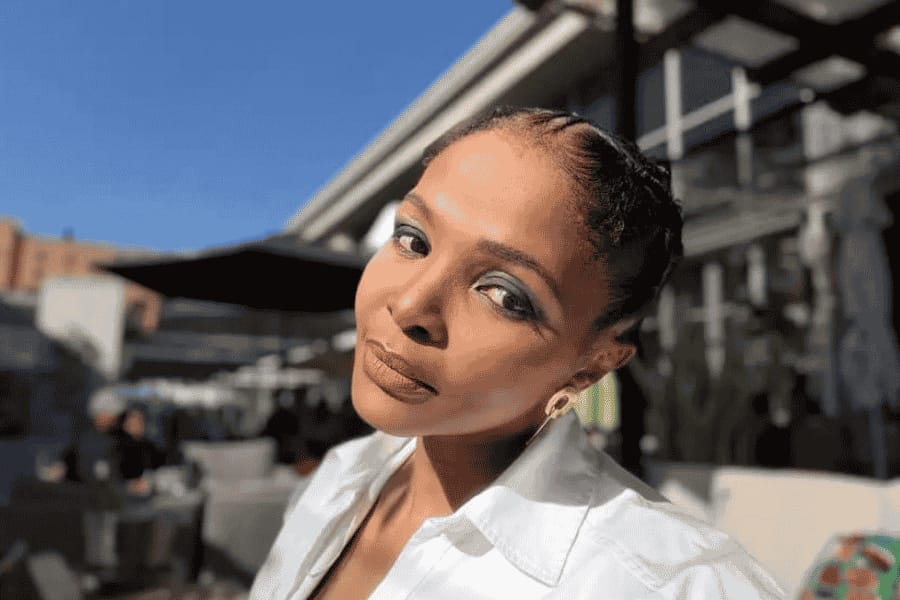
She took it to her Facebook page and wrote: “I would have marched with March and March. But my experience with FeesMustFall taught me a lot. It became about me. And my love for country was extremely misunderstood. I was accused of wanting relevance. Relevance that I have and don’t need more of.
“Recently I was accused by 2 people of my role in the FeesMustFall protests. That I lied. One of them is a supposed journalist. No proof forwarded, just their conviction. I forgive them. Steve Bantu Biko said if we don’t fix the enslaved mind of the African we are lost. I see this all the time. So now I will not show my face anywhere. Just know I support you. I’m here. And I know ordinary SAns aren’t used when someone who doesn’t need to be involved jumps in. I know my relevance. Still ndiliqaba. I’m chasing 50 years now. I’ve seen a lot.
“Fellow artists, your silence is a huge indictment. I would have suffered less if you also spoke out. But you’re silent while your people are suffering. Because wena you’re safe. Shame, I’m disappointed in you. But you can pay your bills. Good for you.”
However, following an appeal from Ngobese-Zuma and an outpouring of responses from supporters, the award-winning singer changed her position.
Ngobese-Zuma responded: “Sisi we need you and we don’t care what people say!”
And Dana responded: “You’ve convinced me to join the next March and March. I will come just tell me when and where.”
Dana’s initial post offered a glimpse into the difficult relationship between public figures, activism and public expectations, particularly when celebrities are expected to use their influence to take a position on contentious national issues.
Her remarks come amid growing pressure from March and March supporters on prominent South Africans, particularly musicians and entertainers, to publicly support the movement and its demands.
The exchange also highlighted an increasingly uncompromising attitude among some supporters towards celebrities who have not endorsed the campaign.
In a response to Dana, Rhoda Middleton suggested that the singer’s decision to engage had set a standard for other celebrities, warning that those who ignored supporters’ calls for solidarity risked becoming unpopular.
“Sis wethu … u must also accept that u have just set a standard for the rest of these celebrities… if they blue tick us we make them unfashionable, we are saving the country not just for march and march but for south Africans… we appreciate you. We will vote for you,” Middleton wrote.
Her comments suggest that support for the movement is increasingly being framed not simply as a political or civic position but as a test of public figures’ loyalty to ordinary South Africans.
March and March, led by Ngobese-Zuma, has grown into one of the country’s most visible anti-illegal immigration movements, organising demonstrations demanding stricter immigration enforcement, stronger border controls and the prioritisation of South African citizens in access to employment and public services.
The movement’s slogan, “Abahambe”, meaning “they must leave”, has become a rallying cry at demonstrations, with protesters demanding the removal of undocumented foreign nationals.
However, the movement has also attracted considerable criticism over its rhetoric and activities, with opponents warning that its mobilisation risks fuelling xenophobia, intimidation and hostility towards foreign nationals.
The debate has become increasingly contentious as demonstrations have spread beyond KwaZulu-Natal into other parts of the country.
In September, March and March demonstrations in Durban were accompanied by reports of assaults and confrontations, while critics questioned the use of a gender-based violence march to advance anti-immigration messaging.
The movement’s activities have also faced legal scrutiny. In October, the Durban High Court granted an interim order restricting March and March and its leaders from engaging in violent conduct, intimidation and other activities linked to protests.
Despite the controversy, the movement has continued to attract support from South Africans who say government has failed to address undocumented immigration and enforce existing laws.
Dana’s decision to attend its next demonstration could therefore place her among the most prominent entertainment figures to publicly associate themselves with the movement.
Her criticism of fellow artists also raises a broader question about the expectations placed on South African celebrities to use their public platforms to engage with politically and socially divisive issues.
For some March and March supporters, remaining silent is no longer being viewed as neutrality but as a refusal to stand with the communities they claim to represent.