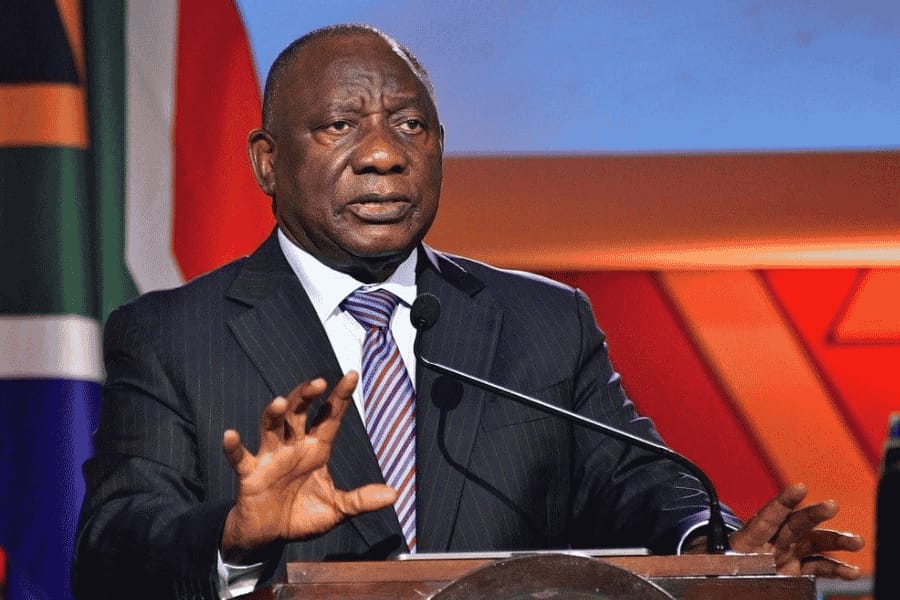
President Cyril Ramaphosa says government will draw up an AI Action Plan after his week-long trip to Silicon Valley. This was announced on Monday, 23 November via his newsletter.
The announcement does not say when the plan will be ready, it also does not say who will write it or what the trip cost.
“Following this visit, we will therefore be developing an AI Action Plan that outlines a set of immediate priorities that will guide South Africa’s participation in the rapidly evolving AI ecosystem. The plan will translate the lessons learned on the visit into practical outcomes,” Ramaphosa said.
He admitted the trip was a reality check.
“The visit to Silicon Valley has been both encouraging and challenging. Although the adoption of AI in South Africa by both businesses and individuals continues to grow, a successful shift to AI will require more than just access to the tools,” he said.
He said the country cannot sit this one out.
“As a country, we must stake our claim in the next technological frontier so that we can more effectively confront our developmental challenges. It is precisely because of the depth of these challenges that the next generation must be exposed to the technologies, ideas and networks that can help us overcome them,” he continued.
He also flagged the dangers and said: “In doing so, we have to manage both opportunity and risk. We must ensure that the development of advanced AI systems is accompanied by effective safeguards, independent evaluation and appropriate governance. We need to strengthen our own cybersecurity capabilities and protect our critical national infrastructure.”
Ramaphosa said sponsors paid for the students who travelled with him.
“Through the generous support of sponsors, we were able to include 30 students from universities and TVET colleges in the delegation. We were also able to include a group of tech start-up founders and entrepreneurs developing cutting-edge solutions in the local AI ecosystem.”
The letter does not name the sponsors.
The group visited Sacramento State University and the headquarters of Cisco, Palo Alto Networks, Google and Alphabet.
Ramaphosa said one young founder got a face-to-face meeting at Google.
“One young founder who has developed a local AI-powered educational platform had the opportunity to pitch his company to a Google executive face-to-face, making a valuable connection that could potentially help him scale his business in the future.”
Ramaphosa had earlier defended the size of the delegation. It was his largest ever, with 300 people travelling with him. He said the trip was not extravagant: “We’ve spent some money, but not too much money.” He did not disclose the total cost. He said sponsors and companies that were part of the visit would carry most of the costs.
During the trip, TechCentral reported, Ramaphosa called for practical AI initiatives to be identified within 90 days of the delegation’s return.
The publication also reported that South Africa still has no national AI policy. The draft was withdrawn in April, and the redraft is only due before Cabinet by March 2027
“As we draw on their experiences, learn from their successes and setbacks and adapt our own approach accordingly, we will build a future in which the extraordinary power of technology is placed at the service of all our people,” he said.