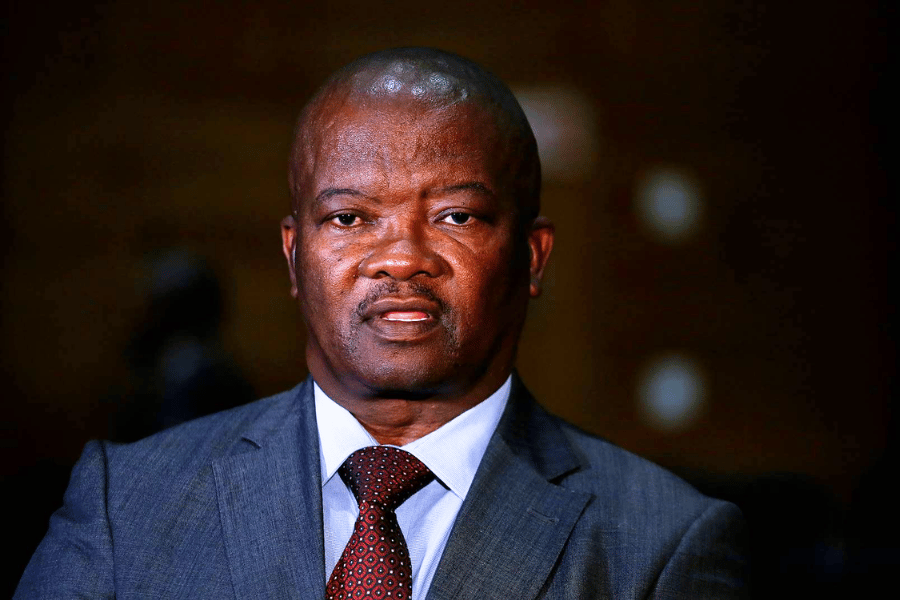
Deputy Defence and Military Veterans Minister Bantu Holomisa has called for the use of public-private partnerships (PPPs) to modernise South Africa’s ageing military infrastructure.
Holomisa argued that government can no longer rely solely on the national treasury to reverse the decline of the country’s defence capabilities.
Speaking at the Defence Industry Lekgotla on Tuesday, Holomisa said the Department of Defence had to adopt innovative financing models to address deteriorating military bases, ageing equipment, inadequate housing and other critical infrastructure while protecting national security.
“The question before us is not whether the problems exist,” Holomisa said.
“The Department cannot simply assume that every infrastructure backlog, every equipment requirement and every modernisation project will be fully funded through additional allocations from the National Treasury. That is not a realistic assumption.”
His proposal comes despite Cabinet recently approving what government has termed the Journey to Greatness programme, under which defence spending is expected to increase over time to about 1.5% of gross domestic product, in line with President Cyril Ramaphosa’s directive to halt years of declining defence funding.
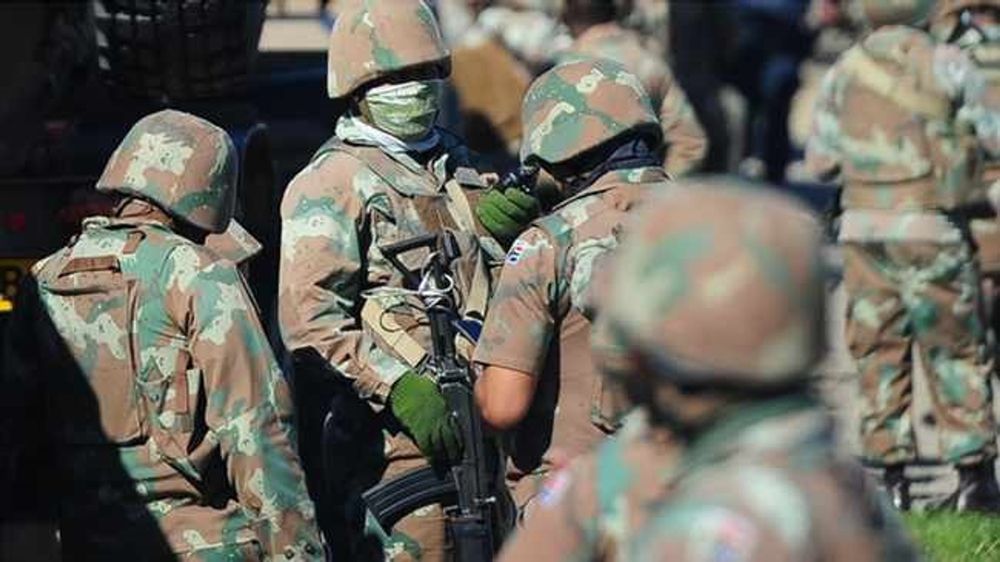
Holomisa however stressed that public-private partnerships should not be viewed as a means of privatising the South African National Defence Force (SANDF) or selling off strategic state assets.
“I am not speaking about selling military land to the highest bidder. I am not speaking about compromising national security,” he said.
Instead, he argued that carefully structured partnerships could allow government to retain ownership of strategic assets while drawing on private-sector capital, technical expertise and long-term operational capacity.
Holomisa said the SANDF controls about 500 000 hectares of state-owned land, creating opportunities to develop military housing, hospitals, logistics facilities, training infrastructure and the rehabilitation of military bases through partnership models.
“The question is whether we can use our existing assets more intelligently to support the defence mission,” he said.
He singled out military housing as one of the department’s most pressing concerns, saying many soldiers continued to live far from their units or in inadequate accommodation.
“A soldier who serves the Republic should not be expected to live indefinitely in conditions that undermine his or her dignity,” he said.
Holomisa suggested that private developers, financial institutions and institutional investors could partner with government to address the military housing backlog, with the State providing access to land while private partners financed and constructed the infrastructure.
Among his more ambitious proposals was the creation of an integrated “military city” in Pretoria.
Holomisa questioned the various defence institutions and administrative functions, currently scattered across different sites while government continues to spend millions on for rented accommodation.
“Can we create a modern, integrated military precinct that brings together appropriate military, administrative, training, housing and support functions?” he asked.
He said such a development could be designed using modern planning techniques and artificial intelligence-enabled technologies to improve efficiency and sustainability.
Holomisa also called for greater involvement by institutional investors, including the Public Investment Corporation (PIC), in financing long-term defence infrastructure, provided projects met strict national security, affordability and governance requirements.
“No such arrangement should be entered into merely because money is available,” he cautioned.
“Every proposal must be tested against national security requirements, value for money, affordability, ownership and control, procurement law and the broader national interest.”
Beyond infrastructure, Holomisa argued that partnership models should also be explored to improve border security, naval facilities and the acquisition and maintenance of prime mission equipment.
He questioned whether the SANDF currently possessed equipment capable of supporting future external deployments following the conclusion of its mission in the Democratic Republic of Congo.
“One gets worried that should the SANDF get a deployment outside of our borders after our SAMIDRC withdrawal, would we have equipment that is in line with the mission requirements?” he asked.
Holomisa said institutions such as Armscor, Denel and the Council for Scientific and Industrial Research (CSIR) would play a central role in strengthening local manufacturing, maintenance, repair capabilities and defence research.
He also urged greater investment in young South Africans, saying emerging technologies such as artificial intelligence, robotics, cybersecurity and autonomous systems were reshaping modern warfare.
“My engagements with countries including Pakistan, India, Türkiye, the United Kingdom, France and Ethiopia have reinforced one lesson: countries that take defence seriously invest in their youth, technology and research,” he said.
Holomisa further argued that international defence partnerships should be structured to create meaningful opportunities for black-owned businesses and young entrepreneurs through technology transfer, skills development and access to global markets.
In addition , he proposed that the Department of Defence develop a practical public-private partnership ,action plan identifying priority projects, potential investors, funding models, responsibilities and implementation timelines.
He said the department had already established a dedicated team to align prospective projects with National Treasury’s PPP framework before engaging the defence industry.
“The objective is to move from broad discussions to specific, structured and implementable opportunities,” he said.
Holomisa also urged Parliament’s Portfolio Committee on Defence and Military Veterans and the Joint Standing Committee on Defence to make public-private partnerships implementation a standing agenda item to ensure the discussions produced measurable results rather than becoming “another talk shop.”
“The Department of Defence is not going anywhere. The SANDF is not going anywhere,” he said.
“As long as South Africa exists as a sovereign state, it will require a defence capability.”