President Cyril Ramaphosa has taken a hard line on failing municipalities, warning that persistent collapse in service delivery can no longer be tolerated and announcing far-reaching reforms that will strip non-performing councils of key responsibilities.
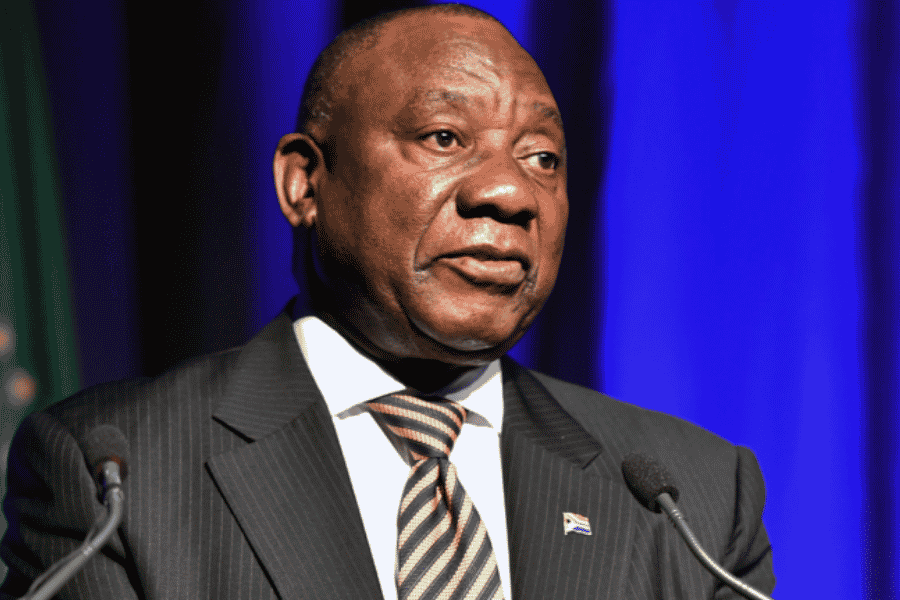
Speaking at the launch of the Revised White Paper on Local Government at Birchwood Hotel in Ekurhuleni on Thursday, Ramaphosa delivered a blunt admission that local government is in crisis.
“We must therefore acknowledge, without qualification, that too many of our municipalities are failing to meet the needs and expectations of the people they are meant to serve,” he said.
The Revised White Paper, the first fundamental rewrite since the original 1998 policy, proposes a ruthless reconfiguration of how municipalities are structured, financed and held accountable.
At the centre of the reforms is a new differentiated system that will link municipal powers directly to size, financial health, capability and performance. Municipalities that cannot perform will lose powers.
“Where a municipality is unable to carry out a particular responsibility, that responsibility should be assigned elsewhere,” Ramaphosa said.
He said some services would be better delivered regionally or through partnerships and concession arrangements, while the roles of service authority and service provider will be separated. All water and electricity providers will require compulsory licensing.
Ramaphosa reserved his harshest warning for municipal financial mismanagement. With municipalities owing Eskom more than R120 billion and many also in arrears to water boards, he said government will now ring-fence all revenue from water and electricity sales for infrastructure maintenance.
“Going forward, revenues from the sale of electricity and water will be ring-fenced and used to maintain infrastructure before anything else,” he said.
He said municipalities can no longer build new projects while existing networks collapse.
“Maintenance must become a planned, funded and monitored obligation,” he said.
Ramaphosa said while access to basic services has expanded since 1994 – with more than 90% of households now having electricity and more than 87% having piped water, up from 9.2 million households in 2004 to just under 16 million in 2025 – communities continue to live with unreliable power, dry taps, pothole-ridden roads and raw sewage.
He blamed overlapping mandates, unequal revenue bases, a lack of technical skills and, crucially, politicised appointments.
In a direct warning to municipal officials and politicians, he said the era of no consequences is over.
“There must be consequences when public resources are stolen, procurement is manipulated or public duties are neglected,” Ramaphosa said.
The reforms will be driven by a time-bound Local Government Transition Management Body involving the Department of Cooperative Governance and Traditional Affairs, the Presidency and National Treasury. A single transition plan will set out responsibilities and track implementation, with some changes requiring new legislation and even constitutional amendments.
With local government elections set for 4 November, Ramaphosa told political parties to stop using council disagreements to sabotage service delivery.
“A disagreement in council must never become an excuse for an unapproved budget, an abandoned project or the collapse of an essential service,” he said.