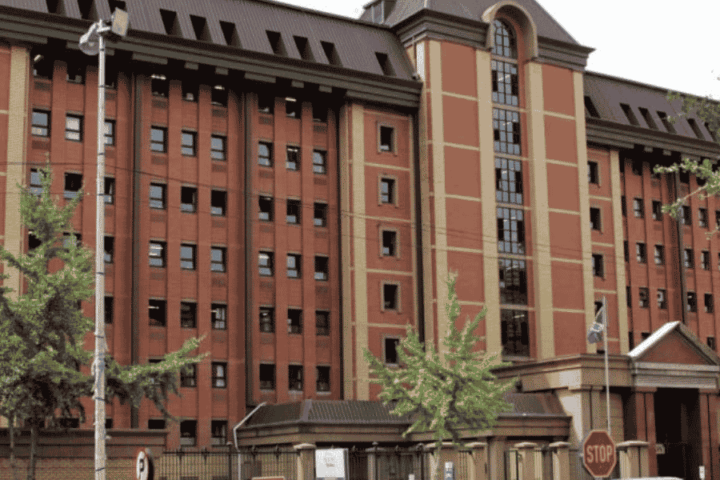
A Potchefstroom gynaecologist who failed to respond in writing to two opportunities to address concerns raised by Mediclinic has lost his urgent High Court bid to regain access to the private hospital and restore his patient-admission privileges.
The North West High Court in Mahikeng dismissed Dr Christian Kagiso Seipei’s application for interim relief on 19 October, ordering him to pay Mediclinic Potchefstroom’s legal costs.
Seipei, an obstetrician and gynaecologist, had operated his private practice from consulting rooms at the hospital for about eight years before Mediclinic cancelled his lease and revoked his admission privileges with immediate effect on 25 August 2026.
He was instructed to vacate his rooms by 30 September. Although he could complete the treatment of patients already admitted, he was prohibited from admitting new patients.
Mediclinic raised four concerns, Seipei’s conduct towards nursing staff during a maternity incident, the clinical management of that incident, his attendance at Mother and Baby Collaborative meetings, and his use of an anaesthetist who allegedly lacked the required credentials and hospital admission privileges.
Seipei disputed the hospital’s account of the maternity incident and maintains that he exercised clinical judgment in a high-risk situation.
Judge Petersen made no finding on whether the clinical allegations were justified or whether Seipei was unsafe to practise.
“I make no finding that the applicant is unsafe to practise,” the judge said.
The judgment shows that Seipei attended two of six collaborative meetings in 2024, three of six in 2025 and one of four in 2026 up to June. He did not materially dispute those figures.
He also acknowledged using the anaesthetist, explaining that the practitioner had previously worked at the hospital and that he did not know the practitioner lacked the required privileges. He said he sought clarification after being informed of the problem.
The judge’s decision also turned on Seipei’s failure to respond substantively to the hospital’s concerns before the cancellation.
A letter dated 25 June set out the concerns and gave him 10 business days to respond in writing. He did not respond.
In July, Seipei requested a meeting with the hospital’s directors at which he could be legally represented. Mediclinic declined to convene the meeting but gave him another 10 business days to submit a written response, warning that it would make a decision based on the information available if he failed to do so.
He did not submit a response on that occasion either.
“His request for a particular form of hearing did not amount to a substantive response to them,” Petersen said.
Seipei also relied on an earlier email as evidence that he had attempted to engage with the hospital. However, he accepted that the email had been sent to the wrong address. The judge found that the failure to use the two opportunities to respond weighed against Seipei’s procedural challenge.
It did not, however, amount to an admission that every allegation made by the hospital was true.
Seipei approached the court seeking to suspend the cancellation and compel Mediclinic to restore his access and admission privileges while he pursued further proceedings challenging the decision.
Petersen assumed in Seipei’s favour that he had established a prima facie right to relief, meaning a right that appeared to exist on the evidence but remained open to doubt. The judge nevertheless found that the balance of convenience favoured the hospital.
The court accepted that losing access to the hospital had serious consequences for Seipei’s established private practice. It rejected Mediclinic’s argument that he would suffer no prejudice because he could practise elsewhere, noting that his work at a public hospital did not eliminate the disruption to his private practice.
But the judge said the order sought would force the hospital to continue a clinical relationship while concerns about governance and credentialling remained unresolved.
“Patients and staff are not parties to this commercial dispute, but their interests are directly implicated in an order compelling hospital admissions and access,” the judge said.
The ruling does not amount to a finding that Seipei committed clinical negligence or professional misconduct. Nor does it finally determine whether Mediclinic lawfully cancelled his lease and revoked his admission privileges.
The judge also made clear that the cancellation notice did not entitle the hospital to evict Seipei physically without following lawful process.
“The cancellation notice does not itself authorise physical eviction without lawful process,” Petersen said.
Seipei remains entitled to challenge the cancellation in further proceedings. The papers before the court did not establish that those proceedings had already been instituted.
The court dismissed his application for interim relief and ordered him to pay Mediclinic’s legal costs. He was also ordered to pay the hospital’s wasted costs for 9 October, when the matter could not proceed because his legal team had not properly uploaded the papers to the court’s online system.