South Africa does not have to be this poor.
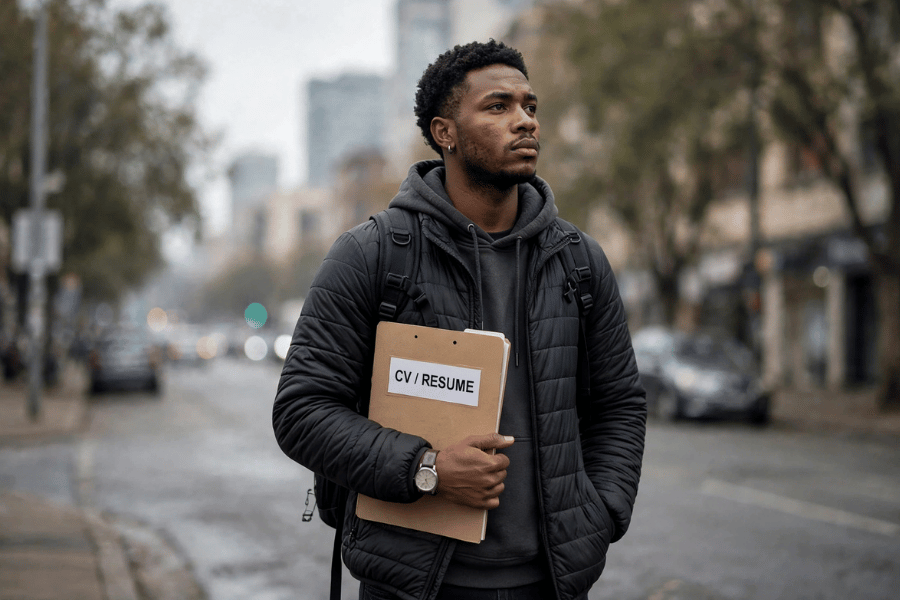
We do not have to accept a country where millions of young people leave school, earn qualifications and acquire skills, only to spend years standing in queues, submitting CVs and begging for opportunities.
We do not have to accept a country where a young South African can be told that there is “no opportunity” while businesses close, factories disappear, corruption drains billions from the economy and government continues to create obstacles for the very entrepreneurs who could create jobs.
Our unemployment crisis is not simply an unfortunate consequence of history. It is increasingly man-made.
One of the greatest failures of our government has been its inability to recognise that small and growing businesses are the engine of employment.
Instead of making it easier for an entrepreneur to start a business, hire their first employee and grow, we have created layers of bureaucracy, regulation, compliance , lawlessness and uncertainty.
Large corporations can employ lawyers, accountants, human-resource departments and consultants to navigate this environment. A small business owner cannot.
For many entrepreneurs, hiring an additional worker is not simply a business decision. It means navigating labour legislation, compliance requirements, tax obligations, bargaining arrangements and the fear that if the business gets into difficulty, restructuring its workforce could become an enormously complicated and expensive process.
We should never confuse protecting workers with making it impossible to employ workers.
A country with 47.4% youth unemployment cannot afford a labour market designed primarily around protecting existing employment while doing too little to create new employment.
For decades, South Africa was an industrial economy.
We manufactured.
We built.
We processed.
We exported.
Factories provided livelihoods not only to workers, but to entire communities. I am not oblivious to the fact that black people were exploited during the period of South Africa’s industrialization .
Today, we watched one industrial operation after another retrench workers, scale down or close. When a factory closes, the damage does not end at the factory gate.
The local transport operator loses customers. The informal trader loses customers. The landlord loses a tenant. The small supplier loses a contract. The family loses an income. And the municipality loses economic activity and revenue.
This is how unemployment becomes poverty, and poverty becomes inequality.
The people who fought apartheid cannot now defend economic exclusion. There is something deeply disturbing about the South Africa we have created.
The generation that fought apartheid fought against a system that deliberately excluded Black people from economic opportunity.
The apartheid state used legislation, geography, race and bureaucracy to determine who could live where, work where, trade where and participate in the economy.
Today, the system is obviously not identical to apartheid. We have a Constitution that guarantees equality and political rights. But we must be honest enough to acknowledge that economic exclusion remains deeply entrenched.
For millions of Black South Africans, the promise of liberation has not translated into meaningful economic freedom. And this is where the governing party must answer difficult questions.
What happened to the movement that once promised economic emancipation?
What happened to the political leaders who once spoke so passionately about creating jobs, building industries and transforming the economy?
Too many leaders have become comfortable with political power while ordinary South Africans remain trapped in unemployment and poverty.
The struggle against apartheid cannot have been about changing who sits around the table while leaving millions of people outside the economic system.
Corruption has become a job killer. Every rand stolen through corruption is a rand that cannot be invested in infrastructure. Every corrupt tender is an opportunity denied to an honest business.
Every inflated contract means fewer roads, fewer clinics, fewer schools and fewer economic opportunities.
Corruption is therefore not simply a governance problem. It is an unemployment problem.
When corruption becomes normalised , investors lose confidence. Entrepreneurs become discouraged. Businesses choose other jurisdictions. Public money is diverted from productive investment. And ordinary citizens pay the price.
We cannot create millions of jobs while allowing corruption to consume the resources required to build the economy.
Illegal immigration cannot be ignor ed. There is another uncomfortable conversation South Africa must have.
It is possible to defend the dignity of foreign nationals while insisting that our immigration laws must be enforced. These positions are not contradictory.
The problem is not simply the foreign national looking for work. The problem is also the employer who deliberately exploits undocumented workers because they are cheaper and easier to control.
That employer is not only exploiting a migrant. They are also undermining a South African worker. Government must therefore enforce immigration and labour laws equally and consistently.
No business should be allowed to employ undocumented workers simply because they can be paid less. No South African worker should be discriminated against.
We need lawful immigration, proper documentation, fair competition and ruthless enforcement against employers who exploit undocumented workers.
There is also a serious problem with illicit trading. South Africans who run legitimate businesses are expected to register, comply with municipal by-laws, pay taxes and carry the costs of doing business legally. Yet illicit operators, including undocumented foreign nationals who trade outside the formal economy and do not meet the same tax, licensing and regulatory obligations, can undercut compliant South African businesses. This is not fair competition. It comes at the expense of South African entrepreneurs, workers and taxpayers, and government must enforce the law against anyone operating outside it.
The real debate is whether South Africa is sufficiently developing and retaining its own academic talent. That is the real debate.
A country that invests billions in developing its human capital must have a deliberate strategy to ensure that South Africans have meaningful access to opportunities.
This applies to universities. It applies to factories. It applies to construction. It applies to agriculture. It applies to retail.
And it applies to every sector of our economy.
We are becoming more une qual not less. South Africa remains one of the world’s most unequal societies. Our unemployment crisis deepens that inequality.
Those with capital can survive economic shocks. Those with jobs can plan. Those with assets can borrow . Those with connections can sometimes access opportunities that ordinary citizens never hear about.
But for the unemployed, particularly young people, the future becomes increasingly uncertain.
We cannot build a stable democracy when millions of citizens feel permanently excluded from the economy.
And we cannot expect young South Africans to believe in a future that they cannot see.
Our population continues to grow while the economy is failing to create jobs at the pace required to absorb new entrants into the labour market.
The arithmetic is cruel: too many people are entering the labour market while too few opportunities are being created. This is not inevitable.
The greatest lie we can tell South Africans is that unemployment is simply a problem that must be managed.
No. It must be defeated.
We need a government that understands that every policy decision must ultimately answer one question:
Will this create jobs or destroy jobs?
We need to cut unnecessary red tape for small businesses. We need a labour framework that protects workers while encouraging hiring. We need reliable electricity, functioning ports, safe communities , affordable public transport system and efficient municipalities.
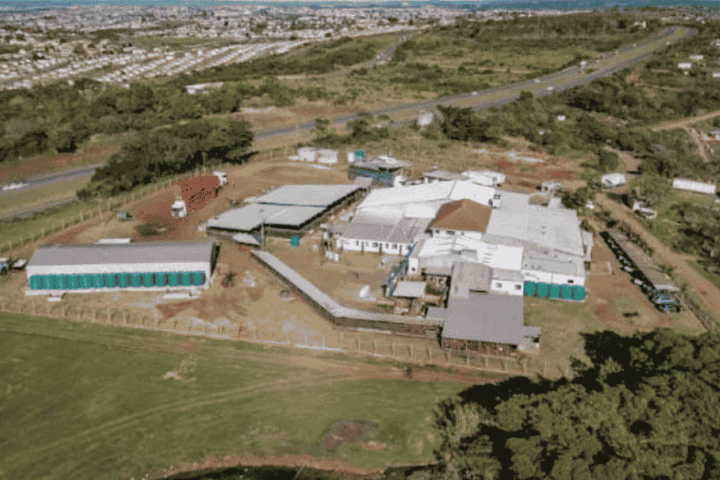
We need to rebuild manufacturing. South Africa is the only country on earth with massive industrial parks, owned by the state, that sitting idle and being daily vandalized . We need to attract investment instead of frightening it away. We need to professionalize the public service.
We need to prosecute corruption. We need to enforce immigration laws. We need to stop employers from exploiting undocumented workers.
And we need to make South Africans competitive through better schools, stronger vocational training and practical skills.
COJ can show South Africa what is possible. This is particularly important in the City of Johannesburg.
Johannesburg is the economic heart of South Africa. Yet the city is failing to realise its enormous potential because of declining infrastructure, unreliable services, corruption, crime, poor planning and an environment that too often makes doing business unnecessarily difficult.
As Mayor, I would make economic growth and job creation central to the City’s mission.
We cannot employ every unemployed South African at City Hall. But we can create an environment in which thousands of businesses can employ them.
That means fixing roads. Keeping the city clean. Ensuring reliable electricity and water. Making approvals faster. Reducing bureaucratic obstacles , o pening municipal procurement to genuine entrepreneurs. Cracking down on corruption.
And making Johannesburg a city where investors want to put their money and entrepreneurs want to build their businesses.
The greatest tragedy of our unemployment crisis is not simply the number of people without jobs. It is the number of people who have stopped believing that they will ever have one.
A democratic government should give people hope. It should create the conditions in which a young person can say:
“If I work hard, I can build a life here.” That is the South Africa we should be building.
We did not defeat apartheid so that millions of South Africans could become politically free but remain economically trapped.
We cannot continue blaming history, global conditions, employers, workers or migrants for a crisis that government policies have helped to create and sustain.
South Africa’s unemployment crisis is man-made.
And because it is man-made, it can be undone by human beings willing to make different choices.
The choice before us is simple.
We can continue managing decline. Or we can build an economy that works.
I chose the latter.
South Africa’s Unemployment Crisis Is Man-Made

Related Posts
Latest from Blog