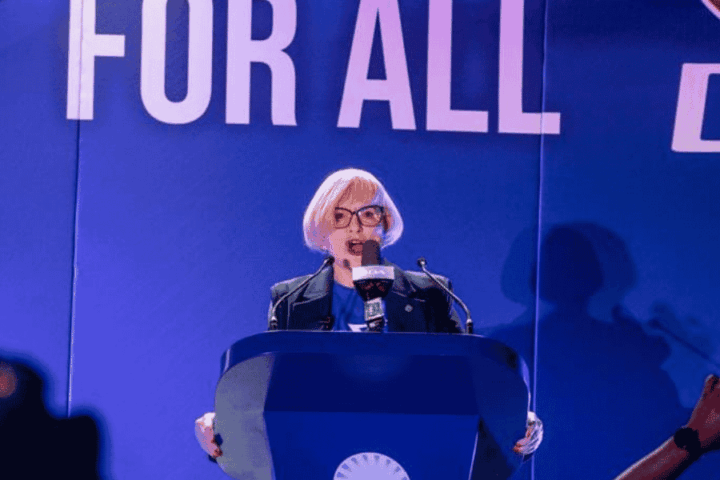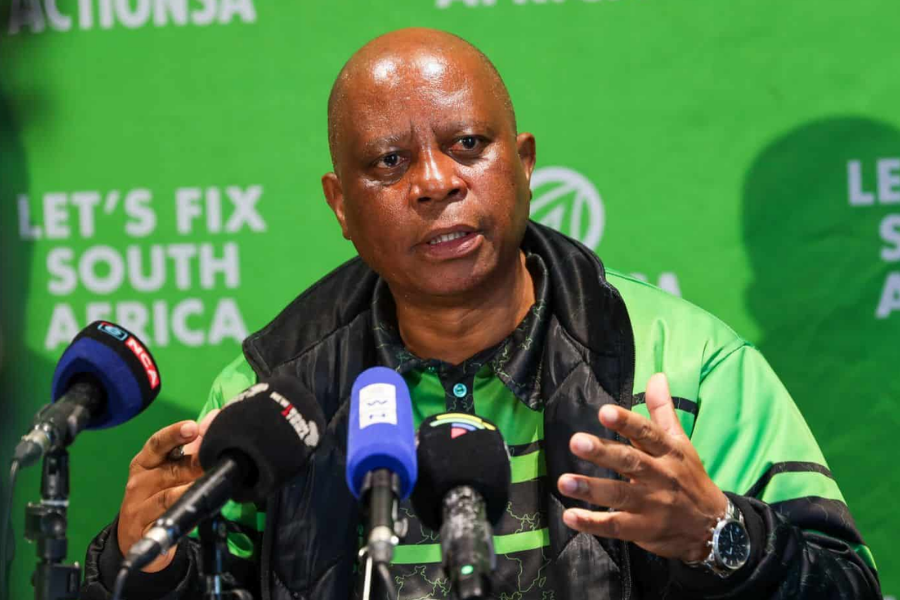
South Africa’s unemployment crisis is the result of policy failures, excessive bureaucracy and an economy that has failed to create enough opportunities for its growing population, according to ActionSA leader Herman Mashaba.
Mashaba, who is a candidate for mayor of the City of Johannesburg, says this in an opinion piece he sent to Africa Daily.
In the piece Mashaba says the country cannot continue to accept high unemployment while millions of young people leave school, gain qualifications and acquire skills only to spend years searching for work.
He argues that the government has failed to recognise the role played by small and growing businesses in creating employment, while instead creating layers of regulation, compliance requirements, licences and uncertainty that make it increasingly difficult for entrepreneurs to establish and expand their businesses.
According to Mashaba, large corporations can employ lawyers, accountants, human resources departments and consultants to navigate the regulatory environment, but small business owners often cannot afford the same support.
“For any entrepreneur, hiring an additional worker is not simply a business decision,” Mashaba argues, saying employers must navigate labour legislation, compliance requirements, tax obligations and bargaining arrangements.
He says this environment can make expanding a workforce an expensive and complicated process, discouraging businesses from taking on additional employees.
Mashaba also points to South Africa’s industrial decline, arguing that the closure of factories has consequences that extend beyond the workers directly affected. When a factory closes, he says, local transport operators lose customers, informal traders lose income, suppliers lose contracts, families lose earnings and municipalities lose economic activity and revenue.
He believes this cycle contributes to rising poverty and inequality, while weakening communities that depend on businesses and industries for their livelihoods.
Mashaba further argues that corruption has become an obstacle to economic growth. He says every rand lost through corruption represents resources that could otherwise be invested in infrastructure, services and economic development.
He also warns that widespread corruption damages investor confidence, discourages entrepreneurs and pushes businesses to consider operating in other jurisdictions.
On immigration, Mashaba says South Africa needs stronger enforcement of its immigration laws while ensuring that legitimate businesses and documented foreign nationals are treated fairly. He argues that undocumented workers should not be exploited by employers simply because they can be paid less.
At the same time, he says South African workers should not be discriminated against and that the government must ensure immigration and labour laws are enforced consistently.
Mashaba says the solution to unemployment cannot simply be to protect existing jobs while doing little to create new ones. He calls for reliable electricity, functioning ports, safe communities, affordable public transport and more efficient municipalities.
He also wants government to reduce unnecessary red tape, make procurement more accessible to genuine entrepreneurs and crack down on corruption.
Johannesburg, he says, has a particularly important role to play because of its position as South Africa’s economic centre. The city needs to create an environment where investors can put their money into businesses, entrepreneurs can grow their operations and companies can create employment.
Mashaba argues that South Africa’s unemployment crisis is ultimately a political problem that requires political action.
He says the country cannot build a stable democracy while millions of citizens remain permanently excluded from meaningful participation in the economy.
For him, the choice facing government is straightforward: continue managing decline or implement reforms that allow businesses to grow, attract investment and create jobs.
“Unemployment is man-made,” Mashaba says, arguing that the country has the ability to change course if there is sufficient political will.
For more information, read Mashaba ‘s opinion piece on our Opinion Pages.