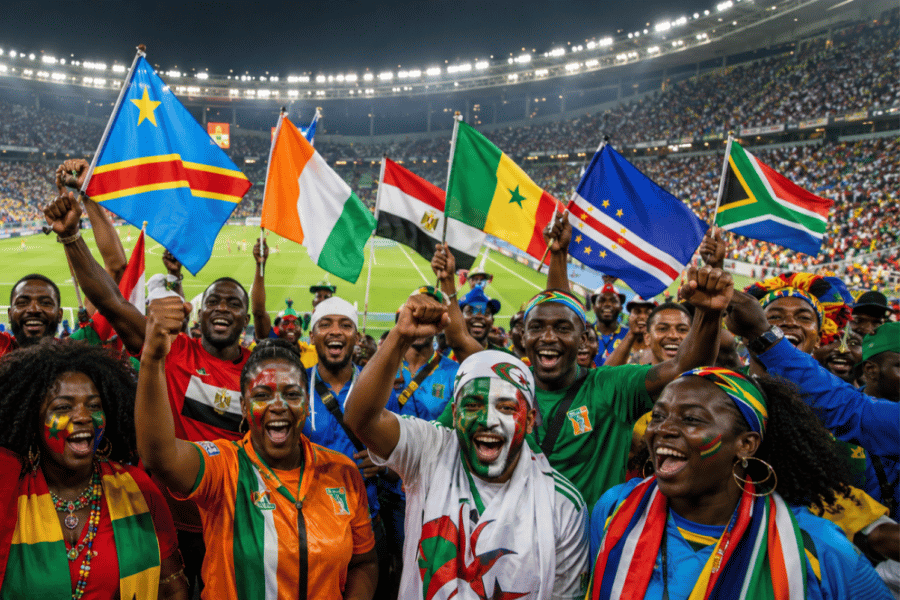
The 2926 FIFA World Cup dust is slowly fading, and while no African nation managed to lift football’s biggest prize, the continent once again demonstrated that it belongs among the world’s elite.
For the first time, Africa had 10 representatives at the expanded 48-team tournament. Several nations progressed beyond the group stages, producing memorable performances that highlighted the rapid growth of African football. However, the dream of becoming the first African nation to reach the FIFA World Cup final remains alive for another four years.
Morocco Once Again Leads Africa
Morocco emerged as Africa’s standout nation for the second consecutive World Cup after reaching the quarter-finals.
The Atlas Lions continued where they left off in Qatar in 2022, displaying defensive discipline, tactical awareness and confidence against some of the world’s strongest teams. They eliminated hosts Canada and knocked out the Netherlands in a dramatic penalty shootout before eventually bowing out to France.
Goalkeeper Yassine Bounou once again proved to be one of the world’s finest, making crucial saves throughout the tournament, while Achraf Hakimi was outstanding both in defence and attack. Midfielder Sofyan Amrabat controlled the midfield with his tireless work rate and leadership.
South Africa Wins Hearts
South Africa also emerged as one of the continent’s success stories after qualifying for the knockout stages for the first time in the country’s history.
Despite opening the tournament with a defeat to Mexico, Bafana Bafana recovered impressively by drawing against Czechia before defeating South Korea to book a place in the Round of 32.
Coach Hugo Broos assembled a disciplined and hard-working team that competed bravely against higher-ranked opponents. Although South Africa narrowly lost 1-0 to Canada in the Round of 32, the team earned respect for its fighting spirit.
Young winger Thapelo Maseko impressed with his pace and decisive goal against South Korea, while captain Ronwen Williams once again proved why he is regarded as one of Africa’s best goalkeepers.
Egypt and Cape Verde Impress
Egypt also enjoyed a memorable campaign by progressing to the knockout stages before suffering a heartbreaking penalty shootout defeat to Australia.
Veteran captain Mohamed Salah continued to inspire the Pharaohs with his experience and leadership, while goalkeeper Mohamed El Shenawy made several outstanding saves.
Cape Verde exceeded expectations on their World Cup debut by reaching the Round of 32. Their fearless performances demonstrated that smaller football nations can compete with the world’s traditional powerhouses.
Disappointment for Other African Nations
Not every African representative enjoyed success.
Senegal, despite boasting a talented squad, were eliminated in the Round of 32 after losing to Belgium in a thrilling encounter.
Algeria and Tunisia failed to advance from the group stages despite entering the tournament with high expectations.
Ghana also disappointed after suffering defeat to Colombia in the Round of 32, while Côte d’Ivoire were knocked out by Norway. DR Congo celebrated their return to the World Cup after decades away but exited in the first knockout round following defeat to England.
For many of these teams, inconsistency, missed scoring opportunities and costly defensive mistakes proved to be their downfall.
Africa’s Outstanding Players
Several African players enhanced their reputations during the tournament.
Morocco’s Yassine Bounou once again established himself among the world’s elite goalkeepers with a series of remarkable saves.
South Africa’s Ronwen Williams produced several match-winning performances, while Thapelo Maseko announced himself on the global stage.
Morocco’s Achraf Hakimi and Sofyan Amrabat delivered consistently excellent performances, while Egypt’s Mohamed Salah continued to demonstrate his quality despite his team’s elimination.
Lessons for African Football
Although Africa enjoyed its strongest overall World Cup showing, important lessons remain.
Many African teams created numerous scoring opportunities but struggled to convert them when it mattered most. Greater emphasis must be placed on developing clinical finishers capable of deciding matches against the world’s strongest nations.
Tactical discipline remains another key area. Teams that remained organised, such as Morocco and South Africa, progressed further than those that lost concentration during crucial moments.
Investment in youth development, coaching education and modern football infrastructure will also be essential if Africa hopes to produce more world-class players and compete consistently with Europe and South America.
Looking Ahead
The 2026 FIFA World Cup proved that African football continues to close the gap on the world’s traditional giants.
With young talent emerging across the continent, experienced coaches guiding national teams and more African players competing in Europe’s top leagues, there is every reason to believe that the dream of an African nation reaching a FIFA World Cup final is becoming increasingly realistic.
While the trophy will once again leave African shores, the continent departs the 2026 tournament with renewed confidence, valuable experience and the belief that even greater achievements lie ahead at the next FIFA World Cup.