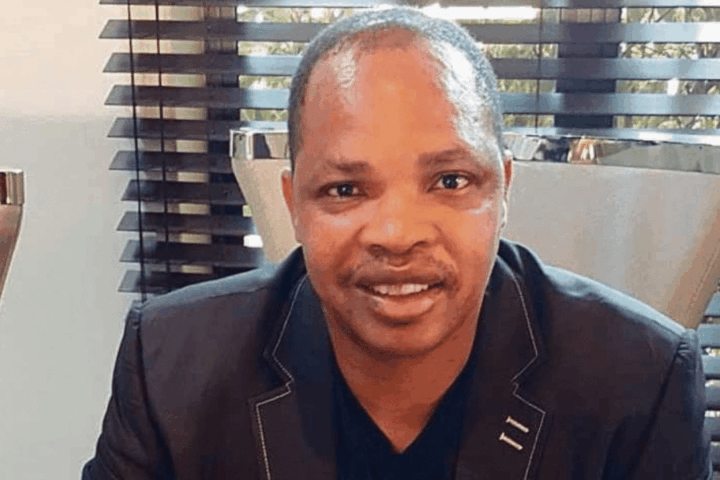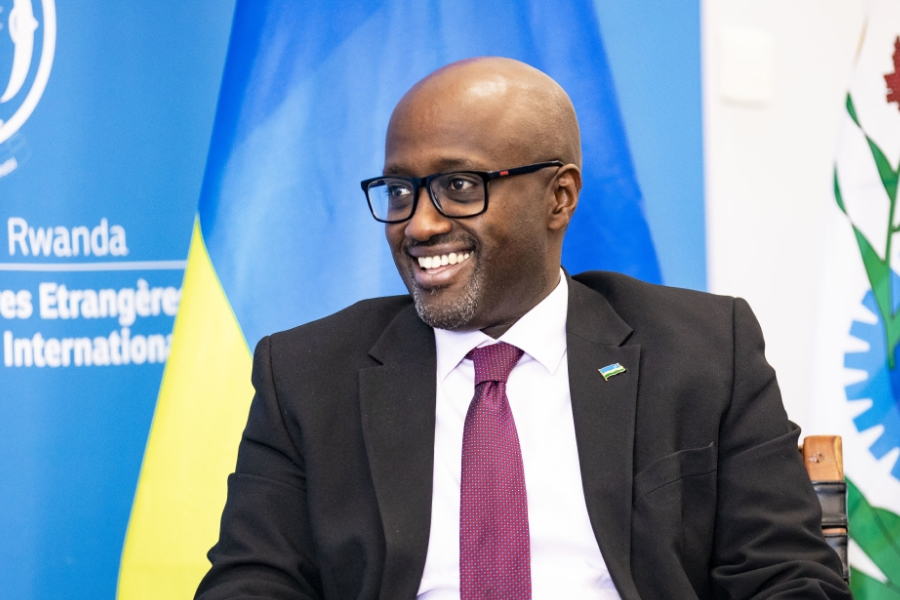
Bilateral talks between South Africa’s Minister of International Relations and Cooperation, Ronald Lamola and Rwanda’s Minister of Foreign Affairs and International Cooperation, Olivier Nduhungirehe are underway as the two countries seek to enhance diplomatic engagement and strengthen cooperation in key areas including trade, tourism, health, education and security.
The discussions come as Pretoria and Kigali continue efforts to rebuild and normalise relations following years of diplomatic strain, while also seeking to deepen economic cooperation and strengthen collaboration on continental peace and security challenges.
Addressing the media at the start of proceedings, Lamola stressed the importance of expanding trade and investment relations between the two countries, noting that Rwanda already hosts several South African companies.
“It is important that trade relations are increased in the interest of our two countries,” Lamola said.
“Rwanda hosts numerous South African companies, and it is therefore important that the presence of Rwandan companies in South Africa is also increased.”
Lamola also praised Rwanda’s progress in several sectors, including digital technology, tourism, health, education and agro-processing, saying South Africa looked forward to sharing expertise and learning from Rwanda’s experiences.
“We commend Rwanda for the major strides your country has been making in e-commerce, digital technology, agro-processing, tourism, health, education and other sectors,” he said.
The minister further highlighted Rwanda’s growing reputation as a host of major international sporting events and conferences, describing the country’s development trajectory as an example of what could be achieved through innovation and strategic planning.
Beyond economic cooperation, Lamola said peace and security remained critical priorities for both countries, warning that ongoing conflicts across Africa continued to undermine the continent’s development aspirations.
“The state of peace and security on our continent needs utmost attention,” he said.
“Conflicts and wars in various parts of our continent continue to be a threat to the fulfilment of Agenda 2063 and the Africa we want.”
Lamola said South Africa and Rwanda would continue playing a leading role in strengthening the African Union’s peace and security architecture, including efforts to operationalise the African Standby Force.
He also thanked Rwanda for its continued collaboration in supporting peace efforts in South Sudan through the African Union Committee of Five.
“We look forward to continuing these efforts to support South Sudan towards its first democratic elections,” Lamola said.
The minister also used the occasion to call for reforms of global governance institutions, arguing that Africa and the broader Global South remain underrepresented in international decision-making structures.
“The voice of the developing world, represented by the Global South and the African continent, should find permanent expression in the United Nations Security Council,” he said.
According to Lamola, African countries should have a greater say on matters ranging from debt relief and development financing to climate change, health security and food security.
“We should not be marginal players in this regard,” he added.
Lamola further pointed to the importance of regional integration, noting that South Africa would assume the chairship of the Southern African Development Community (SADC) in August.
He said Pretoria looked forward to working with members of the East African Community, including Rwanda, to deepen regional cooperation and share lessons on integration and development.
The latest engagement builds on efforts launched several years ago to repair relations between the two countries.
In 2021, South Africa and Rwanda reaffirmed their commitment to normalising diplomatic relations following high-level talks in Pretoria between then Ministers of Foreign Affairs Naledi Pandor and Vincent Biruta.
At the time, both governments acknowledged existing challenges in the relationship and agreed to support a structured process aimed at restoring trust, strengthening diplomatic engagement and expanding cooperation in areas of mutual interest.
Speaking after Lamola, Nduhungirehe said Rwanda remained committed to advancing that process and opening what he described as a new chapter in relations between the two countries.
“It is a pleasure to be here today as we continue our engagement to strengthen mutual understanding, rebuild trust and advance the normalisation of relations between our two sister countries,” he said.
The Rwandan minister also reflected on South Africa’s Youth Day commemorations, having earlier visited Soweto, the Hector Pieterson Memorial and Vilakazi Street.
He said the visit had reminded him of the sacrifices made by young South Africans during the struggle against apartheid and drew parallels with Rwanda’s own history.
“This experience also resonates with Rwanda’s own history, where many young men and women played a crucial role in putting an end to the 1994 Genocide against the Tutsi and liberating the country,” he said.
Nduhungirehe said African countries still had work to do in ensuring younger generations understood the continent’s own history and liberation struggles.
“I should not be learning about the history of Soweto when I visit the memorial. I should have learned that in school,” he remarked.
“We still have work to do on the continent to learn African history instead of learning history from other regions beyond our continent.”
He described South Africa and Rwanda as influential African nations united by a common commitment to peace, security, economic development and the aspirations outlined in the African Union’s Agenda 2063.
Nduhungirehe also acknowledged South Africa’s support for Rwanda’s reconstruction following the 1994 genocide, highlighting cooperation in education, healthcare and investment.
One example, he said, was MTN’s investment in Rwanda, which has become one of the country’s leading telecommunications companies.
“Whatever the challenges that happened between our two countries, we believe that the bond between Rwanda and South Africa is unbreakable,” he said.
“Today’s meeting reflects the commitment of our heads of state to open a new chapter in Rwanda-South Africa relations.”
Nduhungirehe said the two countries stood to benefit significantly from deeper cooperation in trade, investment, tourism, education, innovation, peace and security.
He also welcomed progress towards the resumption of visa arrangements between the two countries, saying discussions were moving forward pending the resolution of technical matters.
“I’m happy to note that we will move forward regarding the normalisation and the resumption of a visa from Rwanda, pending working on technical issues that will make it happen,” he said.
Proceedings were still underway at the time of publication.
At the conclusion of the talks, Lamola and Nduhungirehe are expected to address a joint media briefing where they will outline the outcomes of their discussions and provide an indication of the next steps in strengthening relations between South Africa and Rwanda.