I am a politician and the leader of a political party. But before I occupy any political position, I am a South African citizen and a patriot who cares deeply about the future of this country and, in particular, about the future and interests of Black South Africans.
It is in this personal capacity that I want to express my appreciation for the initiative being advanced by Dr Muzi Sikhakhane and those who are working alongside him to build a movement focused on the interests and advancement of Black people in South Africa.
I believe Vuka Azania is a good initiative, and frankly, it is long overdue.
I have followed Dr Sikhakhane’s work for some time. I have read his book, and I consider myself a great follower of his thinking and his vision, mission and objectives for this movement. While I may not agree with every individual position or approach, I strongly believe that the fundamental conversation he is trying to initiate is one that Black South Africans cannot afford to ignore.
We must begin to have honest conversations about our position in the South African economy, our ownership of productive assets, access to opportunities, education, entrepreneurship, employment and the future economic prosperity of our communities.
Black South Africans must take this initiative seriously. We must support it. We must engage with it. We must challenge its leadership where necessary. Most importantly, we must fund it.
If Black South Africans believe that the protection and advancement of their interests matter, then we cannot expect someone else to build and sustain organisations that will do this work on our behalf. We must be prepared to contribute financially, intellectually and through our participation.
We have seen other communities organise themselves around their interests. Organisations such as AfriForum have demonstrated the importance of building institutions that are capable of defending and advancing the interests of the people they represent.
There is nothing inherently wrong with Black South Africans doing the same.
Supporting Vuka Azania, which seeks to advance the interests of Black South Africans, does not automatically mean hatred or discrimination against other races. It does not mean that we want to take anything away from anyone else. It means recognising that Black South Africans have legitimate interests and challenges that deserve organised representation.
We must ask ourselves a difficult question: Why is it that whenever Black South Africans organise themselves around issues that affect their advancement, there are immediately accusations of racism, hatred or discrimination?
Why are Black people expected to remain silent about their own interests? Why is it acceptable for other communities to organise, mobilise resources and advocate for their interests, yet when Black South Africans attempt to do the same, the initiative is immediately viewed with suspicion?
South Africa belongs to all who live in it. But this principle does not mean that Black South Africans must abandon the responsibility of organising themselves to address the economic and social inequalities that continue to affect them.
We should be able to do both: build a South Africa that works for everyone while unapologetically protecting and advancing the legitimate interests of Black South Africans.
That is why I believe the leadership of Vuka Azania must be courageous.
They must be courageous enough to stand up for Black South Africans without turning their organisation into a platform for hatred of other people. They must ensure that this movement is driven by a constructive vision for the future and not by anger, resentment or hostility.
The movement must be about building. It must be about economic empowerment. It must be about ownership. It must be about education and skills. It must be about entrepreneurship and job creation.
It must be about ensuring that Black South Africans are not permanently trapped on the margins of the economy of their own country. It must be about protecting the interests of Black South Africans while respecting the dignity and rights of every other South African.
The organisation must be unapologetic about representing Black people. There is no shame in that.
But being unapologetic does not require hatred.
Strength does not require hostility.
Advocacy does not require discrimination.
The test of this movement will be whether it can transform legitimate grievances into constructive action and build an institution that can stand the test of time.
For that reason, I appeal to Black South Africans to engage with this initiative seriously. If you believe in its objectives, support it. If you disagree with aspects of its approach, engage constructively and help improve it. If you have the means, contribute financially.
We must not sit on the sidelines and complain about the state of Black South Africans while refusing to support organisations attempting to address these challenges.
The leadership of this movement must also understand the enormous responsibility that comes with the task they have undertaken.
Their success will be a success for Black South Africans. Their failure will, in many respects, be a failure for Black South Africans.
This is why they must lead with courage, discipline, integrity and a clear vision. They must build an organisation that is transparent, accountable and focused on results. They must ensure that every rand contributed by ordinary South Africans is used responsibly and in pursuit of the movement’s stated objectives.
As a political leader, I have my own responsibilities and political commitments. But today, I am speaking as a South African citizen and patriot.
I believe that Black South Africans have every right to organise themselves, to advance their interests and to build institutions that will secure a better future for generations to come.
I believe in the vision, mission and objectives that Dr Sikhakhane is advancing. I have followed his work, and I believe the conversation he is initiating deserves serious attention.
We cannot continue to complain about the state of Black South Africans while refusing to take ownership of the responsibility to change it.
The time has come for Black South Africans to organise, to participate, to contribute and to build.
We should not apologise for wanting progress for our people. We should not be ashamed of protecting our interests.
And we should never confuse the advancement of Black South Africans with hatred of anyone else.
Our future is ultimately in our own hands. Let us build institutions that are strong enough to represent us, courageous enough to speak for us and responsible enough to build a better South Africa for everyone.
But let us be unapologetic about one thing: Black South Africans must be at the centre of the conversation about their own future.
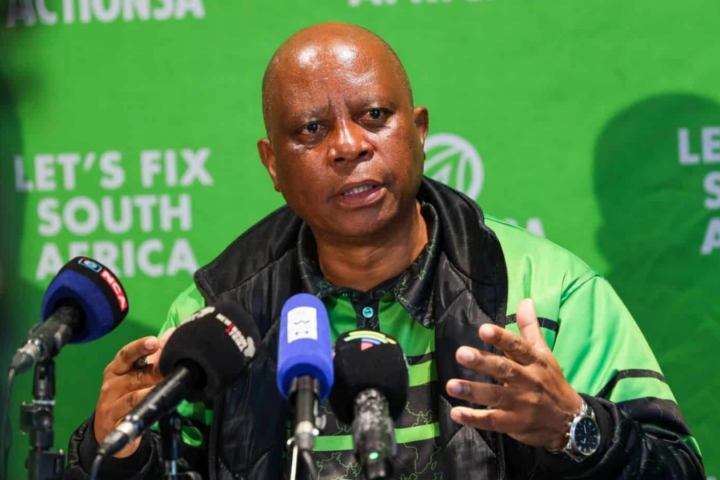
Herman Mashaba is the leader of ActionSA. He writes in his personal capacity, and the views expressed are not necessarily those of ActionSA.