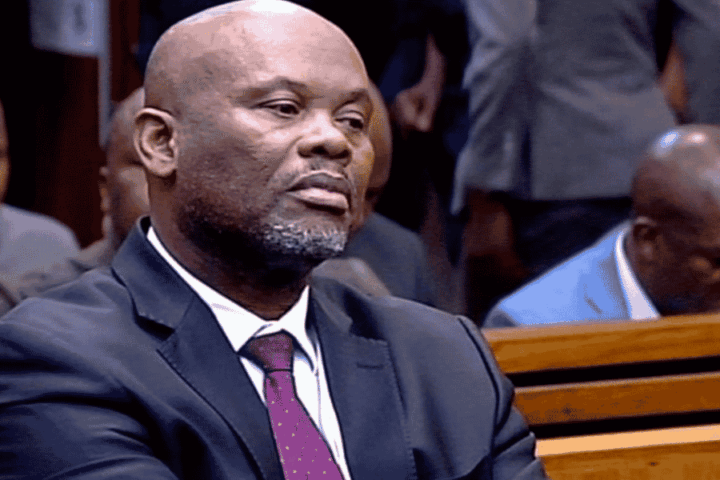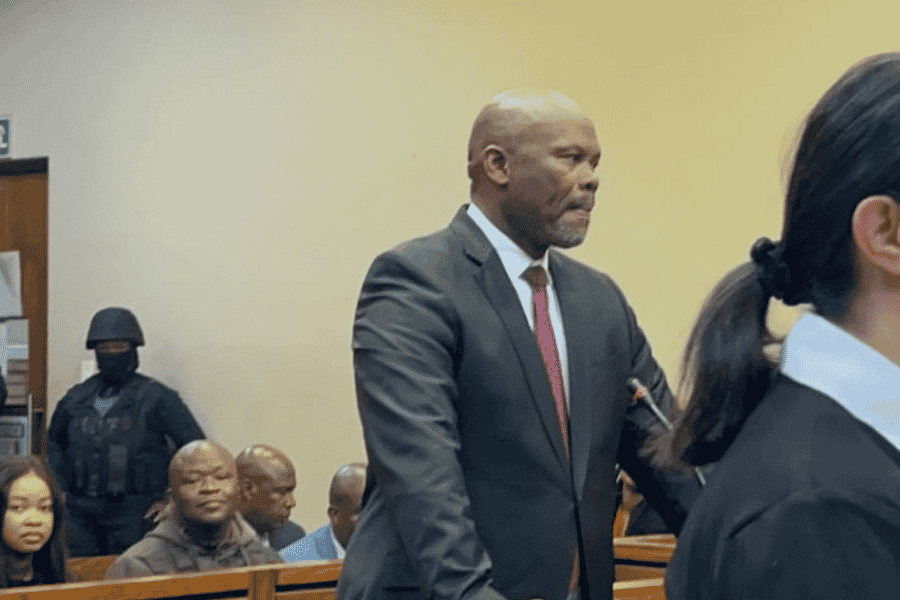
Disgraced former deputy national police commissioner Shadrack Sibiya has offered R20,000 bail, with his lawyer Amanda Nel insisting that the prosecution’s case is weak and that strict conditions would be sufficient to prevent possible witness interference.
Nel presented the argument in the Randburg Magistrate’s Court on Wednesday during the ongoing bail proceedings, which have stretched over three weeks.
Sibiya is accused of raping an 18-year-old woman and sexually grooming a 16-year-old girl.
The court earlier heard statements from the two alleged victims, identified as ZM and MC, who outlined their concerns about the prospect of Sibiya being released.
Nel accused the state of abusing its powers, questioning both the charges brought against her client and the way the prosecution had handled the matter.
She challenged the inclusion of a human trafficking charge, arguing that it had subjected Sibiya to the more stringent bail requirements applicable to Schedule 6 offences under the Criminal Procedure Act.
The lawyer also criticised the prosecution for allegedly disclosing its evidence in stages, saying this had hampered the defence’s efforts to prepare for the bail hearing.
Nel told the court that the state’s conduct had strengthened the defence’s contention that the charges were fabricated.
“Allegations pertaining to the fact that the charges are trumped up … have been fortified by the respondent’s [state’s] modus operandi in presenting this case, and I include selecting a charge of human trafficking,” she said.
The magistrate sought clarity on whether the defence was disputing the legitimacy of every charge levelled against Sibiya.
Nel confirmed that the defence considered the entire case to be fabricated.
When pressed to explain whether this position applied specifically to the rape and grooming allegations, she said the defence was challenging the broader handling of the matter, from the arrest to the presentation of the case in court.
She maintained that the proceedings formed part of what she described as an abuse of power.
Nel called on the court to rule that the stringent Schedule 6 bail provisions were not applicable.
Alternatively, she submitted that if the court decided to treat the matter as a Schedule 6 application, the alleged weaknesses in the prosecution’s evidence should count in Sibiya’s favour when considering whether exceptional circumstances warranted his release.
She also referred to her earlier arguments concerning the grooming allegations.
Section 60(11)(a) of the Criminal Procedure Act requires an accused facing a Schedule 6 charge to prove that exceptional circumstances exist which make bail permissible in the interests of justice.
The court must also consider concerns surrounding the complainants’ protection and whether Sibiya’s release could expose witnesses to interference.
Nel argued that the prosecution should provide evidence supporting its concerns that Sibiya might interfere with witnesses rather than rely on the possibility of such conduct occurring in the future.
She said the complainants were already under protection, or arrangements would be made to safeguard them, and argued that appropriate bail conditions could address the risks raised by the state.
As part of the proposed conditions, Nel suggested that Sibiya be barred from communicating with the complainants and other individuals linked to the case.
She told the court that violating any of the restrictions could lead to his arrest and the cancellation of his bail.
The defence also questioned how a ban on contacting witnesses could be monitored and enforced while their identities remained confidential, arguing that the prosecution should explain how such a condition could work in practice.
On the possibility of Sibiya fleeing, Nel said he had offered to surrender his passport and could face additional restrictions to ensure that he remained available to stand trial.
In closing, the lawyer maintained that the state had not demonstrated adequate grounds to justify keeping her client in custody.
The prosecution continues to oppose bail, maintaining its position amid concerns about the complainants’ safety and the potential for witness interference.