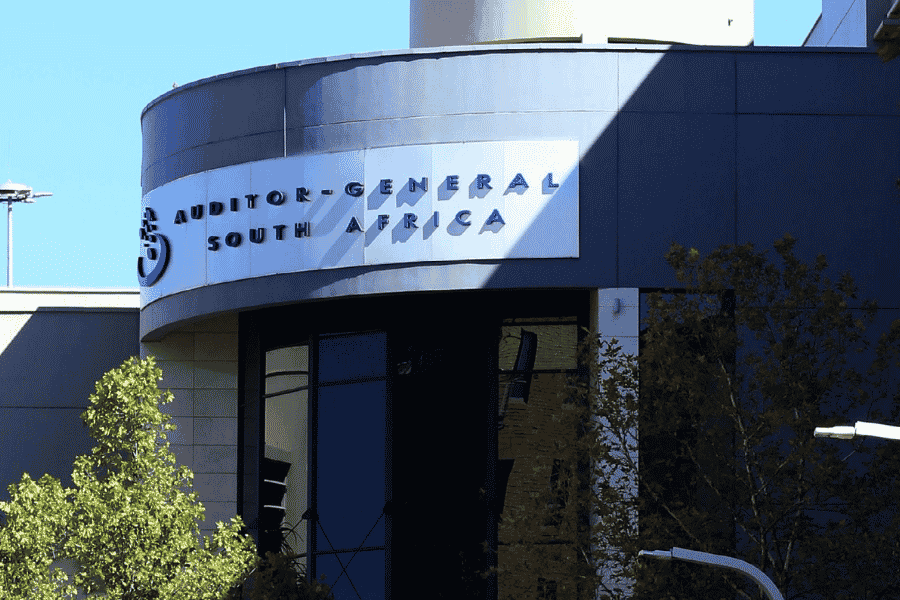
MPs from the DA, ANC and MK Party have questioned the Auditor-General of South Africa’s (AGSA) handling of the Department of Correctional Services’ disastrous audit, raising concerns about how the department’s audit opinion changed from unqualified to a disclaimer.
The criticism puts the Auditor-General under pressure a week after the institution defended its findings before Parliament’s Portfolio Committee on Correctional Services.
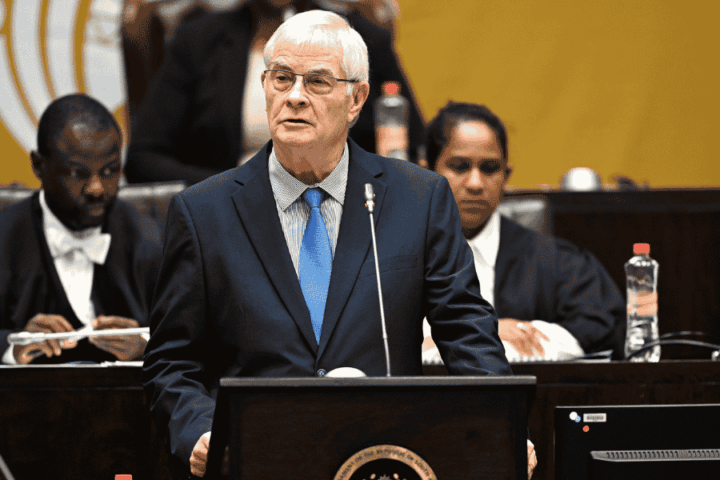
DA MP Janho Engelbrecht, who had previously condemned the department over the audit, said he had arrived at Tuesday’s meeting prepared to grill Correctional Services Minister Pieter Groenewald and his officials.
But after hearing their account, he questioned the credibility and procedural fairness of the Auditor General General’s report.
“For the first time in my political career, I am forced to publicly express serious doubt regarding the intentions, credibility, and procedural fairness of a report issued by the Auditor General,” Engelbrecht told the committee.
Engelbrecht had taken a different position on 6 October, when he issued a DA statement condemning “the collapse of financial management and executive integrity” at the department under Groenewald.
That statement relied on the Auditor-General’s findings and cited a media report, alleging that senior DCS officials had tried to pressure the Auditor-General to withdraw the disclaimer before the report was finalised.
On Tuesday, however, Engelbrecht said the department’s account had raised serious questions about the audit process.
“In preparing for this meeting, I watched the YouTube recording of our engagement with the Auditor General meeting a few times since we had that meeting. And similar with my line of questions I posed during that meeting, I was thoroughly prepared to grill DCS today.
“However, now after listening to DCS’s side of the story, for the first time in my political career, I am forced to publicly express serious doubt regarding the intentions, credibility, and procedural fairness of a report issued by the Auditor General. This is a very serious statement and not one I make lightly.
“As public representatives, our duty of constitutional oversight relies entirely on the integrity and objectivity of the information presented to us by Chapter 9 institutions. I, like many members in this committee, fully trusted the findings presented in the AG’s report and made public statements based entirely thereon. Only to discover now that critical context-defining facts were omitted from the public narrative.
“The minister in his opening remarks revealed that the management team tasked by the Auditor General with auditing correctional services initially arrived at an unqualified opinion with findings. Yet, this was overridden at the leadership level and altered to a disclaimer of opinion.
“What makes this shift deeply concerning is that the suspected core driver behind this disclaimer, specifically the coal contract, that saw decisive, immediate and aggressive corrective action by the department, the moment that they were informed of the irregularities by the AG, was not mentioned even once in the portfolio committee engagement with the Auditor General.
“How can a department that acts swiftly, enforces consequence management, and refers corruption to law enforcement completely ignore these immediate corrective steps?
“By withholding this crucial context, the Auditor General’s report presents a one-sided picture that leaves public representatives feeling misinformed and undermines the genuine efforts of management to root out corruption.
” While we must remain firm on financial accountability, oversight cannot be built on incomplete stories. So now we have to attempt to complete an incomplete story, ” said Engelbrecht.
ANC MP Mzwanele Major Sokopo also questioned how the department’s audit outcome had deteriorated so sharply.
“For it to go to its lowest level with no serious things picked up, that on its own is an indication that there’s something that did not go well,” Sokopo said.
He said he had questioned the Auditor-General’s business leader about when she first met the department’s national commissioner.
“I was specific in asking the business leader of AGSA last week, when was this meeting with the DG of Correctional Services? And she confirmed that it was on the 27th of July, a few days before the last day, which is the 31st. And nothing before that.
“In that, there is some correlation between what Ms Magaman has said and what the National Commissioner has raised here on the miscommunication,” Sokopo said.
He also questioned the Auditor-General’s explanation of the alleged fraud identified during the audit.
“When somebody says there is risk of fraud, it is just a suspicion or something that could be. I did not hear the AG saying that here are the elements of fraud. It’s unfortunate that they did not answer that,” he said.
However, he cautioned against prematurely deciding who was right or wrong.
“From where I’m sitting, it’s not even to say who’s right, who’s wrong,”Sokopo warned.
Another MP questioned whether politics influenced the audit
The member said that the department’s account raised concerns about the Auditor-General’s handling of the process.
“From the briefing that we received, it seems fairly obvious that something went wrong, which is concerning because the AG’s office is supposed to be above reproach.
“And the way that they have gone about this particular audit, I don’t know if this is personal gripes or if this is playing politics, but quite clearly something was off in the handling of this process,” the member said.
MK Party MP Glen Taaibosch expressed frustration that the Auditor-General was not present to respond to the allegations.
“It’s just a pity that the AG’s office was not here to defend themselves.
“Something like this, it’s he said, he said to me at the moment. I don’t like what I’m hearing here,” Taaibosch said.
But he also challenged the department over its own response to the audit process.
“When you notice this, why did you not stand up, raise your hand and say, hold on. Why did you let it run?” he asked.
Committee chairperson Kgomotso Ramolobeng said the Auditor-General should have acknowledged the dispute when presenting its findings.
“Even when the Auditor-General presented its findings, it should have acknowledged that a dispute existed while maintaining that its audit opinion remained unchanged,” she said.
She suggested that future committee meetings could involve both the Auditor-General and the department, allowing MPs to question the two sides directly.
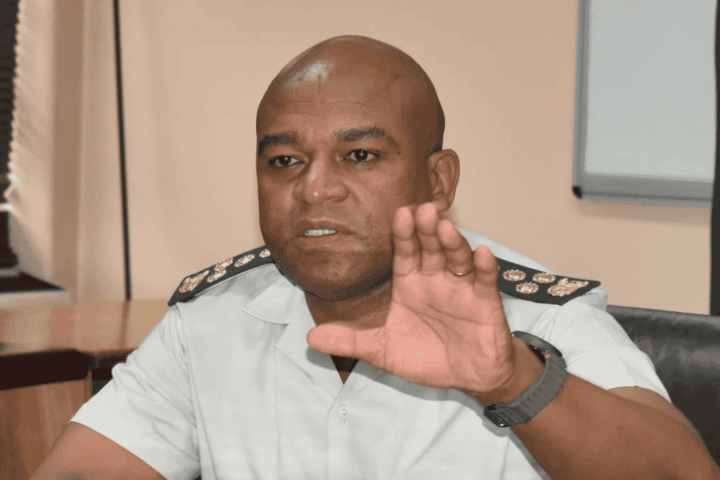
National Commissioner Makgothi Thobakgale confirmed that the unqualified opinion discussed by Groenewald had been a draft report.
Thobakgale also said the Auditor-General first raised a finding about the coal-supply tender with the department’s chief financial officer on 30 January. The CFO and three other officials were suspended in September.
Engelbrecht questioned whether the coal tender was responsible for the disclaimer and why the Auditor-General’s report had allegedly failed to acknowledge the department’s corrective action.
“Do you believe the AG’s final report gave the department a disclaimer as a result of the coal tender? If not, for what reason then? Why do you believe the Auditor General report failed to reflect or credit these immediate corrective actions and criminal referrals?” Engelbrecht asked.
Despite his criticism of the audit, Engelbrecht said the department’s procurement practices remained a serious concern.
He described the food-supply contracts as “the real big issue” and called for an independent forensic audit and lifestyle audits of the department’s entire supply chain.
“I know you will probably answer that this is a very expensive exercise, but the bleeding of funds from this department has to be stemmed somehow,” he said.
Groenewald told MPs: “I do not regard the Auditor-General as an enemy.”
The Auditor-General told the committee on 6 October that the department received a disclaimer because of “systemic record-keeping failures and falsified or altered supporting documentation that compromised management integrity”, according to a parliamentary statement.
The allegations of procedural problems raised by MPs have not established that the Auditor-General acted improperly or that the disclaimer was unwarranted.
The department must still account for the audit findings, including concerns about its records and procurement controls.
The dispute has nevertheless raised questions about how the audit was conducted, how the findings were communicated and whether Parliament received the full context needed to hold the department accountable.