A senior Department of Agriculture legal official has suggested taking land from owners who are not farming it and giving it to black farmers.
She said expropriation could help address the legacy of apartheid land dispossession.
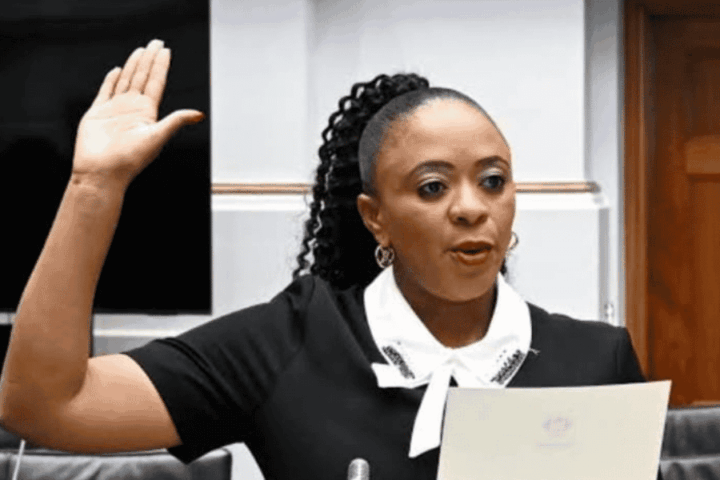
Kanthi Nagiah, the department’s head of legal services, made the suggestion during Parliament’s Portfolio Committee on Agriculture on Tuesday.
She stressed that she was expressing her personal view, not announcing government policy.
“From my own perspective, we need to redress the unfortunate past, and that is why we’ve had the Expropriation Act promulgated,” Nagiah said.
She suggested the new Preservation and Development of Agricultural Land Act (PDALA) could provide mechanisms for putting unused agricultural land into the hands of people willing to farm it.
“And it is hoped with PDALA, if farmers are not keen to farm, we will have mechanisms in place where we could either lease or I don’t want to be controversial but perhaps expropriate land and give it to farmers who are interested, and hopefully black farmers that would progress,” Nagiah said.
She immediately qualified the suggestion.
“But that is shared from my own personal perspective, Chair.”
Nagiah’s remarks came in response to MK Party MP Zwelakhe Elija Mthethwa, who challenged the department on how its new agricultural legislation would address the historical dispossession of black South Africans.
Mthethwa argued that black people entered democracy at a profound disadvantage because colonial and apartheid laws had stripped them of land and economic opportunities.
“How do we ensure that those who were dispossessed are brought on board and restored in their land, so that when we start talking about the new order of laws we are on equal footing?” he asked.
He argued that existing laws continued to favour those who had benefited from the previous political order.
“These laws are still preserving the old order, more especially when you look at section 25, which says protection of the property of the minority. Where is the protection clause of the majority?” he asked.
Mthethwa cited colonial and apartheid-era legislation, including the 1913 Natives Land Act, which restricted black land ownership and entrenched racial inequality.
Section 25 of the Constitution protects property rights generally, while also allowing expropriation for a public purpose or in the public interest, subject to constitutional requirements. It further obliges the state to take reasonable measures to enable citizens to gain access to land on an equitable basis.
The Expropriation Act, signed into law in January 2025, establishes a framework for expropriation. It does not mean that land can automatically be taken simply because its owner is not farming it.
Nagiah’s suggestion also went beyond the position presented by other departmental officials about the purpose of the new agricultural land law.
Earlier in the meeting, deputy director-general Dipepeneneng Serage told MPs that the Preservation and Development of Agricultural Land Act was intended to protect agricultural land and regulate its use, not redistribute ownership.
“It does not matter who owns the land. For as long as the land has been classified as agricultural land and is of high value, that land cannot be used for anything else other than agriculture,” Serage said.
He was explicit about the distinction between agricultural regulation and land redistribution.
“PDALA is an agricultural law, not a land law,” he told Mthethwa.
The law was assented to in December 2024 but has not yet come into force. The department has said it hopes to finalise the necessary regulations and bring it into operation by the end of March 2027.
The legislation is intended to strengthen the protection of agricultural land and prevent valuable farmland from being converted to other uses. It does not itself establish a programme for transferring ownership from existing farmers to prospective black farmers.
Nagiah’s comments therefore raised a question the department’s presentation did not resolve, whether mechanisms for protecting productive agricultural land could also be used, under separate legal authority, to address the country’s unequal land ownership.
Her suggestion was not presented as a formal departmental proposal, and the committee was not told that the government had adopted a policy of expropriating idle farms.
But the intervention placed land redistribution squarely back on the table during a discussion ostensibly focused on agricultural land management and exposed the distinction between protecting farmland and deciding who should own it.