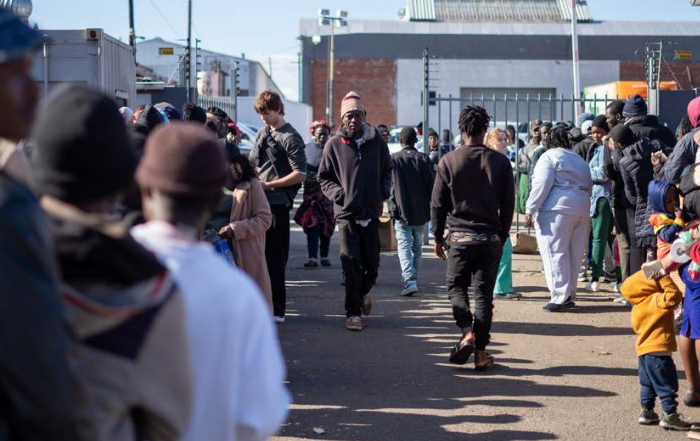
Homeowners who rely on rental income from backyard rooms, commonly known as “bomma stands”, are feeling the pinch as growing numbers of foreign nationals continue leaving parts of South Africa amid anti-illegal immigration protests.
Many landlords say their once fully occupied rental rooms now stand vacant after tenants packed their belongings and returned to their home countries or moved to what they considered safer areas.
For years, many foreign nationals rented backyard rooms while working as builders, motor mechanics, electricians, plumbers, hairdressers, farm workers, domestic workers and owners of spaza shops. Their departure has left some homeowners struggling to pay municipal bills, school fees and home loans.
“I had eight rooms, and every one of them was occupied,” said Maria Mokoena, a landlord from Seshego.
“Today, only two are occupied. The rental money helped me buy groceries and pay for electricity. I don’t know how I will survive if this continues.”
Another landlord, Thomas Mashaba from Lebowakgomo, said the exodus has had an immediate financial impact.
“People think only foreigners are losing, but many South Africans are also losing income. Those rooms are now empty and there is no one to rent them.”
In Diepsloot township in Joburg north, a landlord, who did not want to be named for fear of victimisation, said although most of his rooms are occupied by foreign nationals , he was worried that they will soon leave as they fear for their safety.
“ I collect a total of about R23 000 a per month as my rental income and if they leave I will be badly affected,” he said.
Another landlord,who owns rooms in Cosmo City,north of Joburg ,said he has lost three of his tenants as a result of the anti illegal immigrants protests in South Africa.
“ They were each paying me R1500 per month and that means R4500 loss of income because the rooms are now standing empty,” he says.
The effects are being felt beyond the rental market.
Construction companies and homeowners have also reported shortages of experienced artisans as many skilled foreign workers have left the country.
A Lebowakgomo builder Pieter Maseko said finding experienced bricklayers has become increasingly difficult.
“Some of the people who have left were highly skilled. They worked alongside South Africans and helped complete projects on time. We now have delays because we are struggling to replace those skills.”
The motor repair industry has also been affected.
A Lebowakgomo workshop owner Samuel Nkosi said several experienced mechanics had disappeared almost overnight.
“Some specialised in engine overhauls and vehicle diagnostics. Losing skilled workers affects our turnaround time and, ultimately, our customers.”
The informal retail sector has also experienced disruptions.
Many township residents say foreign-owned spaza shops were known for their long trading hours, competitive prices and reliable stock levels.
“I used to buy bread and milk at 9 p.m.,” said community member Grace Mohlala.
“Now some shops are closed, and we have to travel further to buy basic groceries.”
Economists warn that while concerns over undocumented immigrants and poor law enforcement remain legitimate public policy issues, the sudden departure of large numbers of migrant workers can also create unintended economic consequences.
Many migrants are employed in sectors where employers often struggle to recruit enough workers, including construction, agriculture, hospitality, retail, transport and the informal economy. Research has also found that migrant-owned businesses support wholesalers, landlords and South African employees while contributing to local economic activity.
South Africa hosts millions of migrants, many of whom contribute to the country’s economy through labour, entrepreneurship and consumer spending. Economists argue that the focus should be on enforcing immigration laws while protecting lawful businesses and workers from intimidation.
Community leaders have called on the government to strike a balance between addressing illegal immigration and protecting economic stability.
“There must be law and order,” said one civic leader. “But we must also recognise the important role that many legally documented foreign nationals play in our economy. The challenge is to deal firmly with illegal immigration without damaging businesses, livelihoods and community relations.”
As South Africa continues debating immigration, unemployment and crime, many backyard landlords are hoping new tenants will soon fill the empty rooms that once provided a vital source of household income.
Editor’s note: The names of the landlords, business owners, residents and community leader quoted in this article have been changed to protect their identities. They requested anonymity for fear of victimisation.