There is an international campaign portraying South Africa as intolerant, xenophobic, Afrophobic, antisemitic, Islamophobic and morally compromised. This campaign includes the domestic escalation of identity politics, and the increasingly sophisticated mobilisation around genuine grievances and the rapid expansion of successive “others”.
I have found myself unable to separate my instincts from my emotional response. I have spent my career studying how narratives shape public opinion. As a South African I find myself filled with despair because I believe we have become participants in our own narrative defeat without even recognising it.
We are not witnessing a series of unrelated controversies. We have watched disinformation alleging a white genocide. We have defended ourselves against accusations of antisemitism because our government took a principled position before the International Court of Justice. We have watched the Trump administration dismantle HIV funding while elevating a handful of Afrikaners to refugee status in the United States. We have watched legitimate concerns about undocumented immigration evolve into increasingly toxic debates about fellow Africans, and Islamophobia enter our public discourse following the appointment of Deputy Minister Yusuf Cassim. Tribal identities, largely dormant in our democratic era, have once again become objects of political mobilisation. We have treated each development as though it emerged independently, requiring its own explanation and outrage.
The conclusion I have reached is that South Africa is living through a process I have come to describe as synthetic othering. It is a communications strategy that does not invent grievances because genuine grievances are infinitely more valuable than manufactured ones. It appropriates real frustrations, strips them of complexity, assigns them a human face and repeats the association until that person, community or nation becomes synonymous with the problem. The identity of the target is almost incidental. What matters is that society becomes conditioned to understand itself through the exclusion of successive “others”. Once that process succeeds, the “other” can be changed at will.
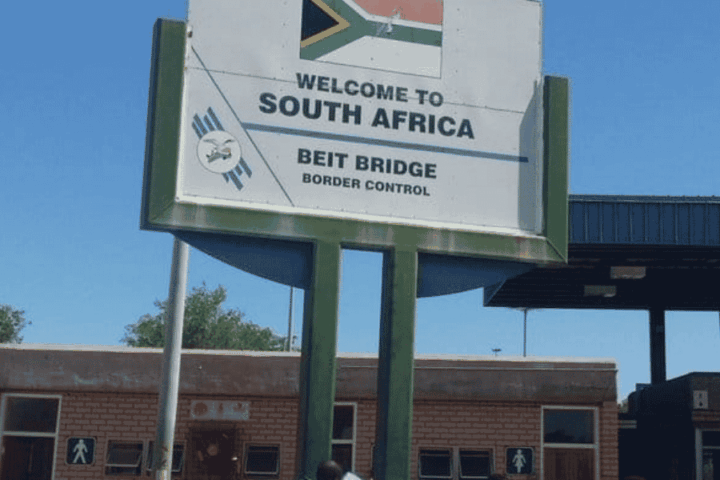
This is why I no longer regard the domestic, continental and international conversations about South Africa as separate phenomena. Every successful communications campaign requires an audience and in this instance there are three. Domestically, the audience comprises South Africans whose legitimate frustrations about unemployment, border management, corruption and inequality are redirected towards carefully selected human targets. In the rest of the African continent we are framed as rabid Afrophobes. In the rest of the world, South Africa itself becomes the “other”: a country supposedly defined by hypocrisy and intolerance, thereby diminishing the moral authority it acquired through its principled positions on Palestine, international law and an increasingly independent foreign policy. The Trump administration and the Netanyahu government are central protagonists in that international narrative, repeatedly portraying South Africa as morally compromised while amplifying claims that reinforce domestic identity politics. The two arenas are mutually reinforcing.
The remarkable feature of synthetic othering is that it exploits people’s lived realities. It does not invent unemployment, weak border enforcement, corruption or violent crime because it does not need to. Those realities already exist. Propaganda gaslights the truth. It detaches people’s legitimate experiences from their structural causes, reassigns blame to carefully selected identities and repeats that association until the target becomes synonymous with the problem. Reality remains. Causality is inverted.
The conversation shifted away from systems and towards identities.
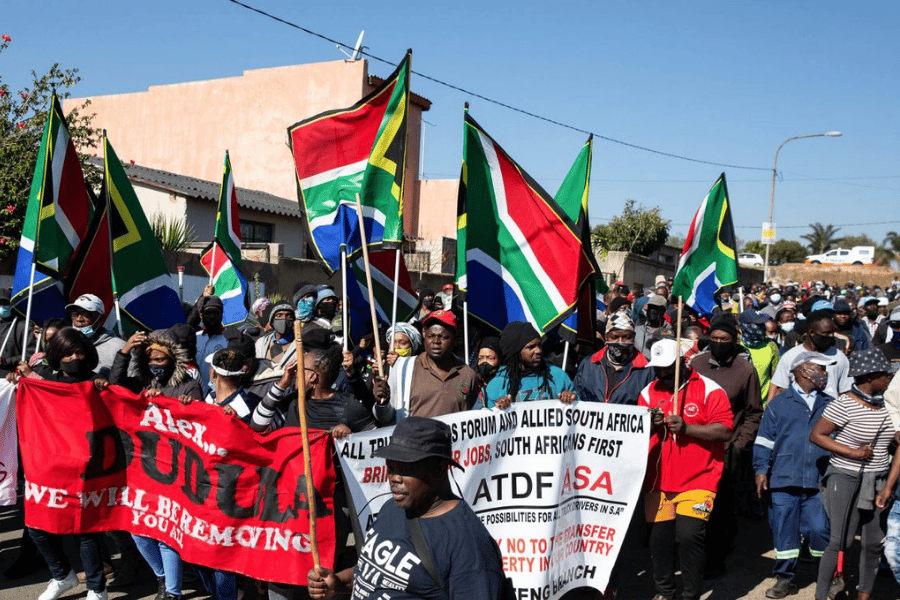
While South Africans argued passionately about undocumented migrants, comparatively little attention was paid to those who profit from employing them or to those responsible for enforcing our immigration laws. That transition is rarely accidental because identity is the most powerful organising tool available to propaganda. South Africans should recognise this because we have lived through Bell Pottinger. It manufactured an alternative reality.
The reality is inconsistent immigration enforcement. The propaganda is that foreign nationals become the cause of unemployment. The reality is that South Africa approached the International Court of Justice over Gaza. The propaganda is that South Africa is therefore antisemitic. The reality is growing social anxiety. The propaganda is that Muslims, migrants or whichever community is politically convenient become the threat. The anxiety is real. Only the object changes. Before long, society begins doing the propagandists’ work for them.
It is at this point that iconography assumes an importance many people underestimate. Images are not passive records of politics. Jacinta Ngobese-Zuma’s public imagery illustrates how modern propaganda works. Constantly draped in the national flag, photographed from carefully selected angles and positioned before emotionally charged slogans and crowds, she is transformed from political activist into national symbol. The visual language tells the audience that she does not merely speak for a constituency. She speaks for South Africa. That is propaganda’s oldest trick. It elevates individuals into embodiments of the nation and invites citizens to mistake political movements for patriotism.
I have watched this process unfold with increasing concern because South Africans are not merely consuming these narratives. We are reproducing them. Every repost, every recycled slogan, every simplified explanation and every new identity declared responsible for our national frustrations extends the life of the narrative. We become volunteers in a communications campaign without ever asking whose objectives it ultimately serves. The tragedy is that most participants genuinely believe they are acting independently. They seldom pause to ask why so many people, in so many different places, arrived at precisely the same emotional destination at precisely the same moment.
I know South Africans are capable of far more rigorous thinking than we currently demand of ourselves, and my despair deepens. We are heirs to a liberation struggle that required extraordinary political consciousness. We learnt to question propaganda, interrogate power and distinguish between manufactured narratives and lived reality. That intellectual discipline protected previous generations from propaganda. If we surrender it, we leave ourselves vulnerable to domestic opportunists and foreign actors alike, each seeking to organise our frustrations into political outcomes that serve interests other than our own. It would be a profound irony if the democratic generation surrendered that intellectual inheritance by embracing increasingly simplistic explanations for increasingly complex problems.
We also have a responsibility to recognise when our legitimate demands are reorganised into narratives that encourage us to define ourselves through the exclusion of successive “others”. Once that habit takes hold, the category of the outsider never stops expanding. Yesterday it was undocumented migrants. Today it is Muslims. Tomorrow it will be another community. Eventually, South Africa itself becomes Nazi Germany and Israel.
I sometimes wonder what stories we will tell ourselves when this moment has passed. White South Africans often speak today as though apartheid was always someone else’s crime. Europeans often speak as though colonialism was always someone else’s crime. White Americans often speak as though slavery was always someone else’s crime. History has a way of cleansing consciences once the moral verdict is settled.
I hope we do not one day pretend that we never participated in the synthetic othering of our fellow South Africans and other Africans. Our liberation struggle was many things. It was a struggle for dignity, justice and human equality. It was never a struggle to replace one hierarchy with another or to organise society around new identities to fear and exclude. If we forget that, we will one day tell ourselves we never participated in the hatred either. History suggests we will even believe it.
Sexwale is a communications strategist and social commentator.