Minister in the Presidency Khumbudzo Ntshavheni described the presence of South Africa’s High Commissioner to India alongside former president Jacob Zuma and alleged state capture mastermind Ajay Gupta as a ‘disgrace’, saying the diplomat and Zuma had shown a middle finger to South Africans.
The criticism follows reports in Indian media showing South Africa’s High Commissioner to India, Anil Sooklal, attending a religious ceremony with Zuma and Gupta at the Sidipeeth Shri Dakshin Kali Temple in Haridwar, India.
The images sparked questions over the presence of the senior South African diplomat alongside Gupta, who has long been regarded as one of the central figures in the state capture scandal that dominated Zuma’s presidency.
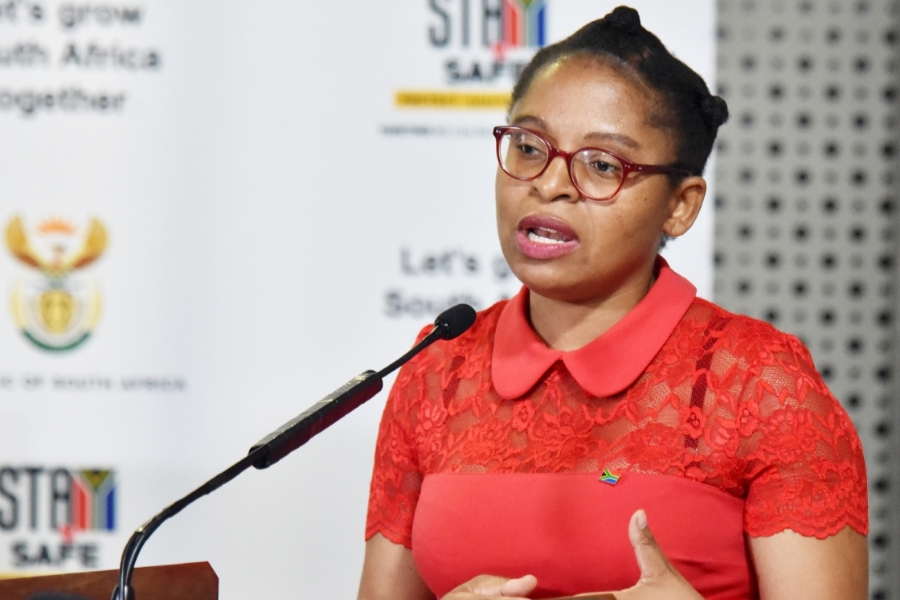
Briefing the media on Friday , on the outcomes of the Cabinet meeting held this week, Ntshavheni said South Africa remained committed to securing the return of the Gupta brothers to face justice.
“South Africa has applied for mutual assistance to bring the fugitive Gupta brothers back into the country,” she said.
“Therefore, it’s a level of disgrace that our own employee, the representative of the Government of South Africa, hobnobs with the criminals instead of doing his work to ensure that the fugitives are brought back into South Africa so that they can face their criminal acts.”
Africa Daily understands that minister of international relations and co-operation Ronald Lamola has requested an internal report into Sooklal’s presence at the religious ceremony attended by Zuma and Ajay Gupta.
Ntshavheni also confirmed that Lamola requested a report from Sooklal and indicated that decisive action would follow.
“It is for that reason that the Minister of International Relations and Cooperation has not only requested a report from the official but has indicated that drastic steps will be taken to make sure that nobody undermines the laws of this country whilst representing this country,” she said.
Ntshavheni also suggested that government could review the privileges afforded to former presidents if they were used in a manner that undermined South Africa’s laws and foreign policy.
“There are privileges extended to former state presidents, but government is entitled to review such privileges if they are abused to undermine the laws of this Republic,” she said.
She accused Zuma of repeatedly undermining both the country’s foreign policy and legal processes.
“This is not the first instance in relation to this particular former state president that he undermines not only the foreign policy of the country but also the laws of the country.”
Ntshavheni said for both Sooklal and Zuma, their conduct sent the wrong message to South Africans.
“The messaging is very wrong both from Ambassador Sooklal on his conduct because he’s directly undermining the criminal justice system of this country and showing a middle finger to South Africans who are paying his salary instead of him performing his tasks as required by the laws of this country.”
Sooklal is a career diplomat with more than three decades of diplomatic experience and previously served as South Africa’s BRICS Sherpa before his appointment as High Commissioner to India.
His appearance alongside Zuma and Gupta has raised concerns over the optics of a senior South African diplomat being seen with one of the country’s most wanted fugitives, particularly as authorities continue efforts to secure the Gupta brothers’ return.
Ntshavheni added that Zuma’s public appearance with Gupta was equally troubling.
“It is also very disturbing that a former state president can openly and unapologetically show the middle finger to South Africans.”
“We have lost a lot of money through the Gupta brothers’ shenanigans in our country and he continues to show a middle finger and claims that he wants to run this country again. It shows the type of person he is, and it’s for South Africans to judge.”
During his visit to India, Zuma told Indian media he had travelled to visit his “brother and friend”, referring to Ajay Gupta, who had lived in South Africa for many years before leaving the country.
Zuma described Gupta’s departure from South Africa as “unfortunate”, claiming authorities had objected to what they had been doing together and had attempted to pursue him “even to the wrong places”.
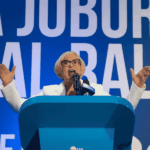
Speaking at the temple while dressed in traditional religious attire, Zuma also declared his intention to return to power.
“I had led the country at one point, but they put me aside,” Zuma said.
“I realised that they were messing up the country. They were not taking the country forward. I decided to take a decision to retake the country forward.”
He expressed confidence that he would win the next election, saying “people of God have been with me”.
Ajay, Atul and Rajesh Gupta fled South Africa for the United Arab Emirates in 2018 after Zuma resigned and President Cyril Ramaphosa took office.
The United Arab Emirates rejected South Africa’s extradition request for Atul and Rajesh Gupta in 2023.
Although South African authorities have not sought Ajay Gupta’s extradition, he is widely regarded as the central figure behind the Gupta family’s influence over the state during the state capture era.