The murder trial involving Hope of Achievers Rehabilitation Centre owner Watson Luandi and his six co-accused could get off to a rocky start after their legal representatives indicated that they may withdraw from the matter, citing what they described as conflicts arising from materially different versions allegedly being advanced by the accused.
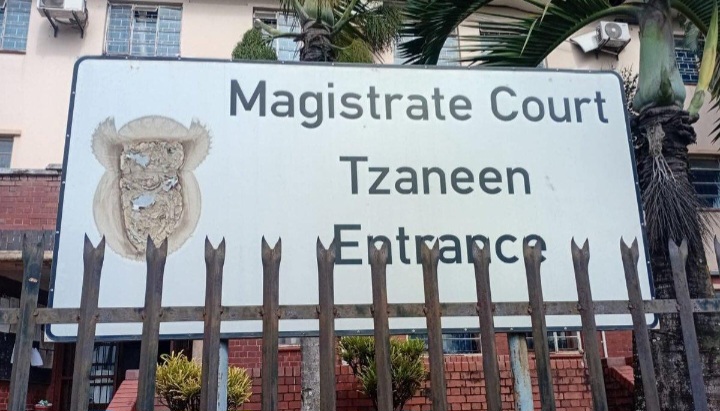
The development unfolded on Wednesday, August 19, when the accused appeared before the Tzaneen Regional Court, where the matter is being presided over by Regional Magistrate Lamina.
The case stems from the death of 22-year-old Thato Dikgwatlhe, who allegedly died after being assaulted at the Hope of Achievers Rehabilitation Centre in Segwashe outside Polokwane on November 3, 2025.
Luandi and his co-accused are facing serious charges arising from the death, including murder, defeating the ends of justice and assault with intent to cause grievous bodily harm. The State has also added an immigration-related charge against Luandi.
Defence raises concerns over conflicting versions
Wednesday’s proceedings took an unexpected turn when the defence teams raised concerns about their continued representation of the accused.
The legal representatives indicated that the versions provided by the different accused were conflicting, creating a potential conflict of interest for lawyers representing more than one accused in the same trial.
The defence position was that the conflicting versions could make it difficult for the lawyers to properly represent all of their clients.
The court was told that, in the circumstances, the accused may each require separate legal representation.
The legal representatives indicated that they were not prepared to continue representing accused persons whose respective versions could potentially place their clients in conflict with one another.
The issue is particularly significant in a criminal trial because each accused is entitled to independent legal advice and representation where their interests diverge.
The defence teams are expected to engage with the accused before the next court appearance and determine how the conflict should be resolved.
The issue will also require consideration by the Legal Practice Council/Legal Aid structures, depending on the basis on which the respective accused are being represented.
Magistrate lashes out over delays
The legal representation dispute followed a tense exchange earlier in the day when the magistrate expressed her frustration with the pace at which the matter was progressing.
The defence had indicated that they were not ready to proceed with the trial, citing the absence of what they considered sufficient or tangible evidence to enable them to properly prepare.
The court was also informed that one of the accused, Marothi Mawasha, was not present when the matter was initially called.
The magistrate expressed concern about repeated postponements and warned the legal representatives that the matter could not continue to be delayed without proper justification.
«“We can’t go on like this, keep on postponing this case just because you as legal representatives are not doing enough to make sure that this case moves forward,”»
the magistrate told the defence before adjourning the proceedings to 4pm.
Afternoon proceedings produce a twist
When the court reconvened in the afternoon, what initially appeared to be another request for a postponement developed into a more substantial legal issue.
The defence informed the court that there was a conflict of interest among the accused, arising from the different versions allegedly given by the accused to their respective legal representatives.
The defence’s position was that the interests of the accused could no longer necessarily be regarded as aligned.
As a result, the legal representatives indicated that some or all of the accused may need to secure separate legal representatives.
The lawyers therefore sought time to consult with their clients and to deal with the issue through the appropriate legal-aid processes.
September 30 postponement
Regional Magistrate Lamina ultimately postponed the matter to September 30, 2026.
The defence representatives were instructed to meet with their clients before the next appearance in an effort to resolve the legal-representation difficulties.
The September appearance is therefore expected to determine whether the current legal teams remain on record, whether new lawyers are appointed, and whether the matter will finally be in a position to proceed towards trial.
The latest development raises the possibility that some of the accused could eventually enter the trial with separate defence teams, particularly if their respective versions place blame or responsibility on one another.
What the State alleges
The case relates to the death of 22-year-old Thato Dikgwatlhe, who was a patient at the Hope of Achievers facility.
According to evidence previously placed before the lower court, Dikgwatlhe and other patients allegedly escaped from the rehabilitation centre on November 3, 2025.
The State alleges that the escapees were pursued and brought back to the facility, where they were allegedly assaulted.
It is alleged that Dikgwatlhe sustained serious injuries and subsequently died.
The prosecution has further alleged that attempts were made to conceal what had happened after his death.
Previous proceedings heard allegations that blood-stained clothing was allegedly destroyed, that Dikgwatlhe’s body was washed and that it was transported to Mankweng Hospital.
These allegations form part of the State’s case and remain allegations until tested through evidence in the trial.
Who are the accused?
Luandi is accused number two in the matter.
He is joined by Thabang Sello Mokoena, Tshegofatso Mabulane, Jacob Mashishi, Kgomotso Malebane, Lucky Phoka and Jonas Modiba.
The accused have appeared at different stages of the proceedings and their bail positions have not been identical.
Luandi, Mokoena, Mashishi and Malebane have previously been denied bail, while Tshegofatso Mabala — whose name has also appeared in reporting as Mabulane/Mabala — was granted bail of R5,000 but was reported to have remained in custody after allegedly failing to raise the amount.
Phoka and Modiba were released on bail during the earlier stages of the case.
Previous bail proceedings
The matter attracted considerable attention during the earlier bail proceedings in the Tzaneen Magistrates’ Court.
The State opposed Luandi’s release, arguing, among other things, that he posed a flight risk and that there were concerns about possible interference with witnesses.
The court also heard that Luandi is a Zimbabwean national and that questions had been raised about his residential status in South Africa.
During the April bail proceedings, his lawyer Marothi Mawasha argued that Luandi would not evade the trial and that he had family and economic ties in South Africa.
Other defence lawyers also argued that the State did not have sufficient evidence linking their respective clients directly to the alleged killing.
The bail proceedings were ultimately unsuccessful for several of the accused.
From Magistrates’ Court to Regional Court
The matter was subsequently transferred from the magistrates’ court to the Tzaneen Regional Court, marking the next stage in the prosecution.
When the case first appeared before the Regional Court, the State added an immigration-related charge against Luandi.
The Regional Court proceedings are now under the control of Regional Magistrate Lamina.
The move to the Regional Court means the matter is now entering a more formal trial phase, with the parties expected to finalise their legal representation, confirm the charges and prepare for the presentation of evidence.
A trial still to be tested
Despite the seriousness of the allegations, none of the accused has been convicted.
The State will still be required to prove each charge beyond reasonable doubt.
The defence teams, once properly constituted, will have an opportunity to challenge the State’s evidence, cross-examine witnesses and present their respective cases.
The latest dispute over legal representation could therefore have significant implications for the eventual conduct and length of the trial.
If separate lawyers are appointed because of conflicting versions, each accused will be able to advance his own defence without compromising the interests of another accused.
For now, however, the trial remains on hold.
The seven accused are expected back in the Tzaneen Regional Court on September 30, 2026, when the issue of legal representation is likely to take centre stage once again.
The question facing the court will be whether the defence teams have resolved their conflict — and whether the long-awaited murder trial can finally move forward.