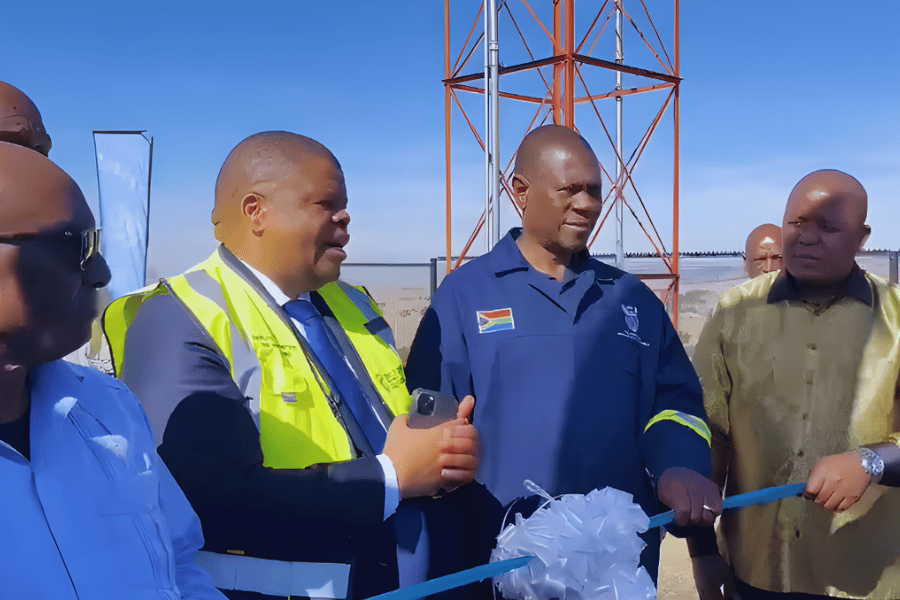
Government has finally launched the long-delayed Babanango Water Supply Scheme in northern KwaZulu-Natal, with Deputy President Paul Mashatile acknowledging that surrounding communities had ‘waited far too long’ for reliable access to clean drinking water.
Speaking during the Mandela Day Water Services Project launch and Acceleration Programme in Babanango on Saturday, Mashatile said the completion of the scheme marked a major milestone in government’s efforts to extend basic services to rural communities and restore dignity through reliable access to potable water.
“Water is a fundamental human right enshrined in our Constitution. When a community has no access to clean and reliable water, it is denied more than a basic service; it is denied dignity, opportunity and the full enjoyment of its constitutional rights,” he said.
The project forms part of government’s Mandela Day programme and the National Water Access Acceleration Programme, which seeks to expand access to safe drinking water in underserved communities across the country.
Mashatile said the Babanango scheme would provide up to 500,000 litres of treated water per day to surrounding communities, including Ngwebeni, Enkanini, Nkonjane, Nhlengile and Nkangala.
The system combines protected spring water sources, boreholes, a water treatment plant, reservoirs and distribution pipelines to ensure a sustainable water supply.
He acknowledged that residents had waited far too long for reliable access to clean drinking water.
“Yes, it has taken longer than we all thought. You have waited far too long to have reliable access to clean drinking water,” Mashatile said.
He described the project as a practical example of government’s District Development Model, which aims to improve coordination between national, provincial and local government in delivering services.
Mashatile said government remained concerned about persistent water challenges across South Africa, citing ageing infrastructure, climate variability, vandalism, population growth and years of underinvestment as key contributors to water shortages.
He said these challenges had elevated water security to a national priority under President Cyril Ramaphosa’s administration.
Government, he said, was responding through the National Water Access Acceleration Programme by accelerating interventions such as borehole drilling, spring protection, rainwater harvesting and the rehabilitation of existing water schemes.
In addition, government has introduced the Water Services Infrastructure Grant to address localised water shortages, reduce infrastructure backlogs and improve water and sanitation services in rural communities.
As part of Saturday’s programme, government also symbolically launched and handed over 27 decentralised water supply interventions across KwaZulu-Natal.
Mashatile called on communities to protect newly built infrastructure, warning that vandalism and neglect could undermine government’s efforts to improve service delivery.
“The sustainability of projects such as this one depends on community ownership and active participation,” he said.
“We must protect this infrastructure against vandalism and misuse so that future generations can continue to benefit from these important investments.”
He said government would continue investing in water infrastructure to ensure every South African had access to safe, reliable and sustainable water services.
Quoting former president Nelson Mandela, Mashatile said the significance of Mandela Day lay in improving the lives of others through practical action.
“Today, through this project, we restore dignity, deliver freedom and honour Madiba’s legacy through action,” he said.