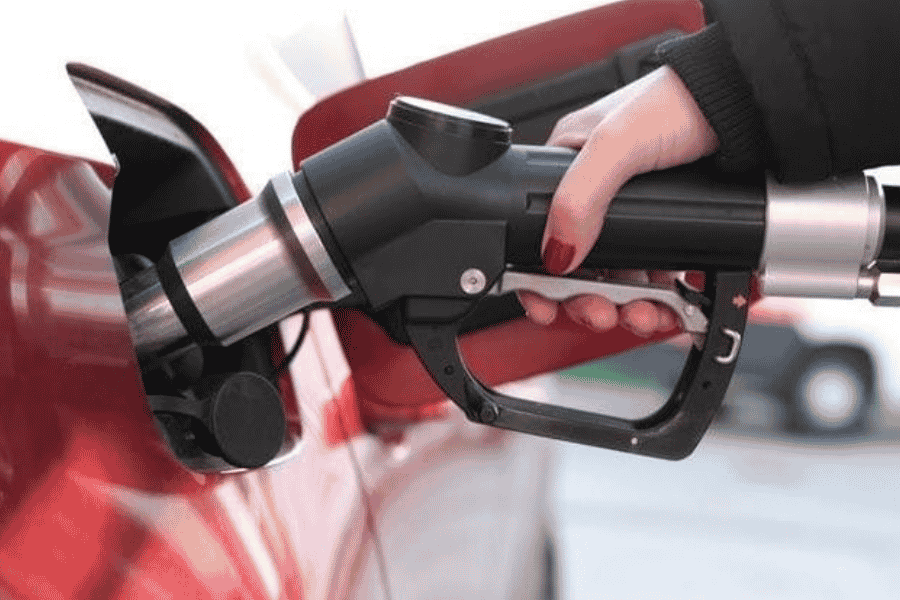
At R30.25 a litre, filling up has stopped being routine and become a calculation. For South Africa’s working class, Wednesday’s fuel hike is not a number on a board – it’s fewer trips, higher taxi fares, less food on the table, and salaries that disappear into the tank.
From Wednesday, 7 October, 95 petrol will increase by R3.33 a litre and 93 petrol by R3.12. Inland, 95 will now cost R30.25 a litre and 93 will cost R29.88. Diesel will rise by between R2.84 and R3.24 a litre. For a 50-litre tank of 95, that’s R166.50 more in one fill.
But beyond the pumps, the increase cuts deep into how South Africans travel, work and survive.
Security guard Zakhele Thembu said working-class households are being pushed out of their budgets.
“I spend a lot that it takes me out of budget, it affects me too much. Especially us the working class,” he said.
For those who drive for a living, the math is brutal.
Taxi driver Peter Lukhele said one litre of fuel now wipes out one passenger’s fare.
“It affects us too much because one litre is basically one person’s taxi fare. We are working to transport passengers with no commission,” he said.
The pain is passed on. For commuters who rely on taxis, higher operating costs mean the threat of fare hikes.
Lerato Molefe, who takes taxis to work daily, said she is already stretched.
“As someone who takes taxis every day to go to work, it is a lot because then now taxi prices will also increase and that affects us already since prices are basically R30,” she said.
Others have simply stopped driving.
Maditaba Thubela said her car now only moves in an emergency.
“Fuel costs are affecting my salary because it is so expensive. I never thought I would reach a point where I could only drive my car in emergencies. It is making my life very difficult. I don’t even enjoy having my car anymore because the cost of fuel puts so many limits on me. These days, it feels like my salary is only going towards petrol,” she said.
For Agnes Bucks, the crisis goes beyond transport. It is the cumulative squeeze of a cost-of-living spiral.
“How does it affect me? I fill my car and it’s R500 more than last year for the same petrol. Taxi is going up. Bread, milk, everything goes up because trucks pay diesel R33 per litre. My salary didn’t go up at all, but electricity alone went up 67% since 2022. So at the end of the month I have R3,000 less to live with than three years ago. I can’t save, I can’t visit family, I just survive,” she said.
Her story points to the hidden tax of a fuel hike. Diesel moves the country’s food. When it rises to over R33 a litre, businesses pay more to move goods and consumers pay more at the till.
That pressure has prompted calls for intervention.
The Congress of South African Trade Unions (COSATU) wants Parliament to urgently pass the Second Special Appropriation Bill to unlock R10 billion for the Central Energy Fund’s Equalisation Fund to cushion motorists.
“With fuel price hikes of at least R2.50 projected for October, it is critical that Treasury and the Central Energy Fund move with speed and utilise this R10 billion to provide badly needed fuel relief for October and November,” said COSATU parliamentary coordinator Matthew Parks.
The Department of Mineral and Petroleum Resources says the hike is driven by global factors. Brent crude jumped from $87.89 to $101 a barrel in the review period on the back of US-Iran tensions, uncertainty over shipping through the Strait of Hormuz, higher freight costs and falling global inventories. The rand strengthened only marginally, offering little buffer.
South Africa’s fuel price is adjusted monthly, linked to international oil prices and the rand-dollar exchange rate. But while global markets set the price, South African households must absorb it.
For Thembu, that means a busted budget. For Lukhele, a shrinking wage. For Molefe, pricier commutes. For Thubela, a car she can no longer enjoy. For Bucks, a life reduced to survival.