The government’s communication agency failed to meet even its own modest target for answering citizens’ queries, while its rapid-response performance collapsed to just 35% against a 100% target.
The Government Communication and Information System (GCIS) presented its 2025/26 annual report to Parliament’s Portfolio Committee on Communications and Digital Technologies on Friday, 2 October.
GCIS acting director-general Nomonde Mnukwa told MPs that the agency had answered only 47% of citizens’ queries within the required time.
“We had targeted a 50% response rate, and we achieved a 47% response rate. The 3% that we did not achieve was more about technology issues, whereby we had to ensure that we provide responses within 24 working hours,” she said.
In other words, GCIS set itself a target of responding to only half of the queries it receives on time — and still fell short.
But its rapid-response performance was significantly worse.
Acting committee chairperson Imraan Subrathie pointed to the agency’s own figures.
“Your rapid response interventions reached 35% against a 100% target, and reputation management 58% against a 70% target. What is your corrective plan for the current year?” he asked.
The rapid-response target required GCIS to communicate within two hours and within six hours of an issue breaking.
GCIS blamed delays by government departments waiting for approvals.
The agency said it now issues holding statements while it waits for departments to finalise their responses.
“As GCIS, we have what we call a standing media statement that shows that, as government, we are aware of the matter and we are working on resolving it,” Mnukwa said.
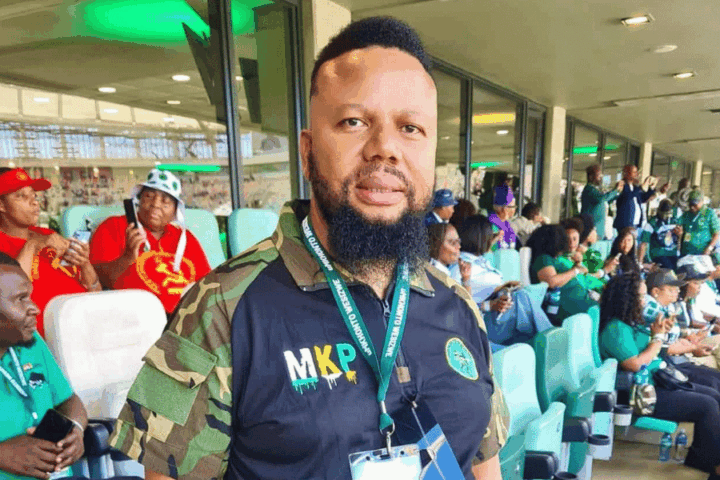
MK Party MP Adil Nchabeleng questioned whether GCIS was doing enough to lead government communication.
“The communication of government should be led by GCIS, but I struggle to see that objective being led by GCIS, because half the time the only time we see GCIS is when there is a Cabinet lekgotla announcement. After that, there’s nothing. No community engagement, no announcements, no programmes,” he said.
“From the ministry’s side, something really radical needs to be done.”
Mnukwa rejected the criticism and defended GCIS’s role in government communication.
“When you see a minister briefing or doing a media interview, 99% of the time it is because we as GCIS picked something up and facilitated the media engagement. When you see media briefings, the majority of them are because GCIS initiated and coordinated them,” the acting director-general said.
The agency also claimed to have reached 79.8 million people through its main campaigns.
That figure immediately raised eyebrows among MPs because South Africa’s population is about 63 million.
“How did you reach 79.8 million, beyond the actual population of the country? I’m subject to your correction, but I’m using ordinary arithmetic,” an MP said.
Mnukwa explained that GCIS’s reach figure counts people across multiple platforms, meaning the same person can be counted more than once.
“When we count reach, we count it through all our platforms. People might have interfaced with our content through broadcast, some through social media, some through face-to-face. So there is duplication,” she said.
GCIS also monitors whether the country’s 31 national departments comply with government communication policy.
Only 44% do.
GCIS nevertheless considered this a success because its target was just 20%.
The compliance measure also includes how much departments spend on community media. GCIS admitted that this spending remains low.
“Because community media buying is low, we need to make sure accounting officers are fully aware of what is expected of them in terms of the policy,” Mnukwa said.
The government’s new media-buying policy, which is supposed to push 30% of government advertising to community media, is still sitting without approval.
The condition was set in July 2025.
“The government media buying policy is still unapproved, despite the July 2025 condition to enforce a 30% community media spend,” Subrathie said.
GCIS said it was still consulting.
“Once it’s approved by Cabinet, it’s going to be binding,” Mnukwa said.
Acting committee chairperson Tsholofelo Bodlani also accused GCIS of failing to keep the government’s gender-based violence and femicide message visible.
“I’ve been going through the GCIS portals and social media. I don’t get a strong sense that there is an amplification of the president’s message on GBVF, a repetition of that message, so that all of us know what the plan is,” she said.
GCIS said it does not have dedicated funding for the campaign and is seeking money through the inter-ministerial committee.
“Unless there is funding, we will not make the impact we would want to make,” Mnukwa said.
The agency has also operated for more than three years without a permanent director-general.
Cabinet has now approved Lloyd Nedohe for the position. His start date depends on paperwork expected after Cabinet’s next meeting on 23 October.
GCIS retained its clean audit and spent all of its R829 million budget.
But EFF MP Sixolisa Gcilishe questioned how the agency could claim strong performance while falling short on critical communication functions.
“We’ve got one entity claiming 100% performance while underspending by almost R30 million on its core mandate, and the other spending 100% of its budget while failing on critical communication functions,” she said.
Africa Daily has asked GCIS for comment.