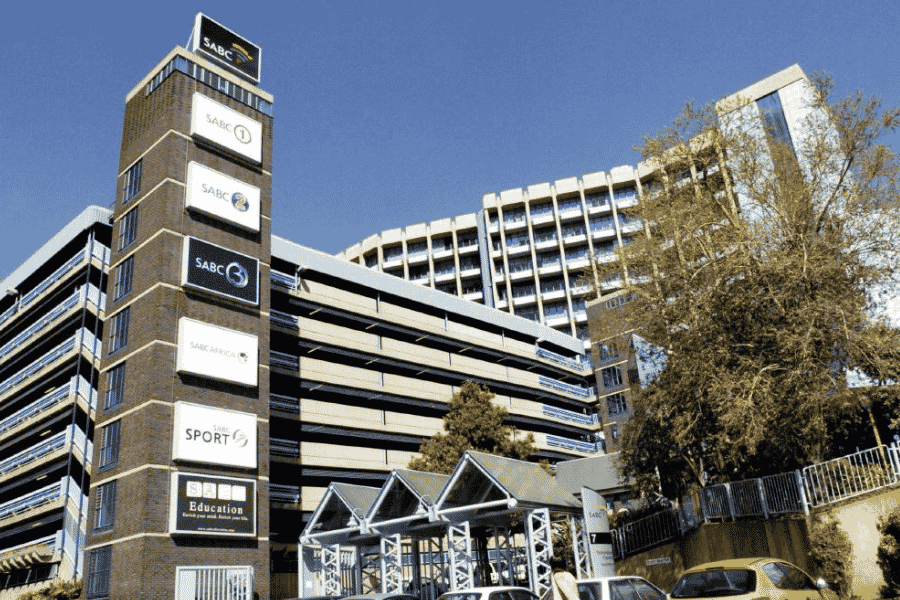
With South Africans set to vote in the local government elections in less than a month, the SABC is still not operationally ready.
The Government Communication and Information System (GCIS) is scrambling for funding and ICASA does not have the technical tools to tackle election misinformation.
The admissions were made to Parliament’s Portfolio Committee on Communications and Digital Technologies on Friday, raising serious questions about the state’s preparedness to communicate with and inform voters ahead of the 4 November election.
The SABC is still waiting for R120 million it says it needs for election coverage.
SABC Group CEO Nomsa Chabeli said the broadcaster had again approached National Treasury for the money through the Department of Communications and Digital Technologies.
“We have resubmitted to National Treasury on the 5th of August our funding ask through the DCDT,” Chabeli said.
But the broadcaster is nowhere near declaring itself ready.
“Our election preparations are active across all our platforms. But I must stress that we have not yet reached final operational readiness. This will probably come towards the middle of October, and the funding and resource allocation decisions remain open,” Chabeli said.
That leaves the SABC with only weeks to resolve its funding and operational requirements before millions of voters head to the polls.
Chabeli warned that the funding shortfall would particularly affect coverage outside major centres.
“These decisions will materially affect our provincial deployment, because unlike the national government elections, where we have one elections operation centre, for the local government elections it is regionalised and, as you know, it goes all the way to municipality level,” she said.
SABC board chairperson Khathu Ramakumba was more blunt about what a lack of money means for election coverage.
“The honest truth is that where there are no resources, it is a lot easier to cover urban centres. Those are the practicalities of what it means when we say that with limited funding, the scale will have to go down,” he said.
In other words, voters outside the major urban centres risk receiving less election coverage simply because the public broadcaster does not have the resources to reach them.
Communications Minister Solly Malatsi said he had met the President and the Minister of Finance about the funding crisis, but the meetings had yet to produce money.
“Because there was no immediate resolution that would release funds as a direct result of that meeting, it spoke broadly about what we needed to understand further in order to continue the discussion with the Minister of Finance, who in a few weeks’ time will be making pronouncements around the adjustments budget,” Malatsi said.
DA MP Tsholofelo Bodlani questioned whether the R120 million would even solve the problem if it was eventually released.
“Previously, the SABC reported to the portfolio committee, I think almost two months ago, that even if the R120 million was made available, it would be too late for them to make any procurements, especially of outside broadcasting equipment. I’m not sure if we are fighting a losing battle,” she said.
The SABC is not the only government institution scrambling.
GCIS acting director-general Nomonde Mnukwa told MPs that the agency has never received dedicated funding for communicating local government elections.
“You don’t see broadcast there, because we’ve never received funding dedicated to the local government elections,” she said.
Instead of having dedicated election funding in place, GCIS has started approaching other government departments for assistance.
“We have now taken a position of checking with other government departments how we can collaborate and how they can finance some of our campaigns,” she said.
The funding gap has already forced the Electoral Commission to step in and pay for some civic education.
“When we couldn’t be given funding for local government election communication, we discussed it with the IEC, who then funded a ten-episode drama,” she said.
According to Mnukwa, the episodes were screened on Skeem Saam.
The contrast with the government’s communication spending on the G20 summit was stark.
GCIS received about R27 million specifically to communicate the summit last year, despite having a much smaller general government communication budget.
“We were given about R27 million as GCIS to communicate the G20, whilst in general we have a total of R24 million for all government communication campaigns,” she said.
Meanwhile, the broadcasting regulator also admitted to a major gap in its ability to police election misinformation.
ICASA chairperson Mothibi Ramusi said the regulator does not have the technical tools needed to deal with the problem.
“With regards to misinformation, the current challenge is that we don’t have technical tools,” he said.
ICASA’s election monitoring officers are only expected to be in place around 15 October, leaving little time before the 4 November vote.
Adding to the concerns, most broadcasters have chosen not to carry the free political party election broadcasts, leaving the SABC as the only broadcaster obliged to air them.
“We had more than 200 broadcasters who attended the workshops, and we currently have 58 participating,” ICASA councillor Ntombiza Sithole said.
MPs from across political parties were clearly unimpressed by the state of preparations.
“We are pressed for time and there’s no coverage yet. Is there going to be any coverage?” PA MP Ernest Hendricks asked.
“From where I’m sitting, I can already see there won’t be coverage in some districts, in some provinces and in some metros.”
MK Party MP Wiseman Ngobese demanded a firm deadline from the SABC.
“By what specific date will the board certify that the SABC is operationally ready?” he asked.
Acting committee chairperson Imraan Subrathie proposed that the SABC report back to the committee on 16 October, its last sitting before the vote.
With less than three weeks between that deadline and election day, the committee is now effectively waiting to see whether the country’s public broadcaster, government communication machinery and election broadcasting regulator can get their houses in order before voters go to the polls.