AfriForum’s recent political grandstanding cannot be left unchallenged. The outcome of the last general elections must partly be blamed for creating the political conditions that have encouraged this behaviour.
For the first time since 1994, the ANC’s electoral support fell below 50%, culminating in a makeshift governing arrangement called the Government of National Unity (GNU). Suddenly, reactionary forces found their voice. The ANC’s declining electoral fortunes – and some of its own failures – must therefore take part of the blame.
The ANC, as the leader of society, must take responsibility for much of what is happening in our country. It cannot be business as usual at Luthuli House. The persistent decline in governance and the rampant corruption must be nipped in the bud.
The 1994 project must be seen to be working for the people. Much has been achieved. We live in a country where criticising the government is not a crime. Even soccer stars, comedians and TikTok personalities can become politicians – and there is nothing wrong with that. Our multiparty constitutional democracy has made this possible.
What South Africans now need is to see the bar being raised higher. Corrupt people must be arrested and exposed, while the unemployed must be given meaningful opportunities to find work.
The renewal of the ANC is therefore not an ANC project alone; it is directly linked to the future of this country. This organisation promised our people a better life. We want to see a better organisation – one that is disciplined, accountable and properly managed internally. If it fails to renew itself, it will represent a great betrayal of the black majority.
Look at what is happening in the Western Cape. The City is reportedly planning to build a wall that will separate the rich from the poor. Behind this lies a dangerous narrative that the poor are a nuisance and criminals who disturb the peace of the wealthy. Such thinking is rooted in the mentality of those who still miss apartheid-era spatial planning.
Those who believe the ANC must die are in for a rude awakening. We should try by all means to save it from those who have hijacked it, rebuild it and ensure that it continues with the liberation project.
Let me start from the beginning.
A South African government delegation visited the White House in an attempt to mend diplomatic relations following the election of Donald Trump as President of the United States. The Trump administration has been a thorn in the side of many countries, introducing tariffs and making all sorts of controversial pronouncements. Denmark, for example, has had to resist Trump’s ambitions concerning Greenland.
Donald Trump is well known for not beating around the bush. He speaks from the hip, often leaving many people questioning what kind of leadership the so-called free world has.
We saw it with the arrest of the President of Venezuela. No one dared to speak about it. As we speak, that country is being led by an unelected individual whom we are told is friendly to the West, yet the world is carrying on as though nothing has happened.
We have also witnessed a major threat to the sovereignty of Cuba. For many years, the Cuban people have endured immense suffering caused by harsh economic sanctions, imposed with the clear intention of provoking them to revolt against their own government. That has not happened. They have even resorted to spreading lies and propaganda – the same tactics they employed against Venezuela.
With these constant threats, many are predicting that Cuba could be next on Trump’s radar. I must admit that, as a reality television enthusiast, I used to be a fan of Trump during his days on The Apprentice, particularly his famous words: “You’re fired!” That was until he was elected to the White House. Some of his critics even believe he never graduated from the show – and his conduct sometimes confirms this.
With him in charge, one can only hope that the mid-term elections might save us from his excesses. How do you ban or intimidate the free press on the grounds that it is spreading fake news, while you are the one spreading misinformation and accepting false and fabricated narratives?
One finds comfort in the words, “It is only five years” – but five years can be a very long time indeed.
When South Africa took Israel to the International Court of Justice, diplomatic fallout was inevitable. We saw detractors running amok, questioning the authority of a country situated at the southern tip of Africa to challenge what had become accepted as the norm.
At some point, they even questioned South Africa’s mandate to take such a decision. They later realised that the government was standing on solid ground and that a significant section of the population supported the defence of Palestinian lives.
The people of Palestine also deserve peace. Their children deserve to grow up like all other children – to attend school and return home without fearing whether they will survive the day.
We knew that, after everything else had failed, someone would eventually be found to try to destabilise and distract us. In some countries, it may be easy to manufacture conditions for the overthrow of an elected government. Fortunately, South Africa remains a solid constitutional democracy founded on the rule of law.
It is within this broader political context that AfriForum’s activities must be examined.
In 2014, the South African Human Rights Commission investigated safety and security challenges facing farming communities, following complaints of human rights violations and farm-related crimes.
The report concluded that violence in farming communities remains a serious concern and a continuing human rights problem. Importantly, the problem is not confined to one province, race or socio-economic group.
We should never discount the fact that people of various races living and working in farming communities have been murdered. Their pain should inspire all South Africans to confront crime head-on. However, exploiting their suffering to undermine a democratically elected government – or to create conditions for its overthrow – is deeply problematic. The parading of 3,000 crosses in Washington is one such example.
The 2006 minority project to destabilise South Africa has now taken shape. Since the loss of the City of Cape Town and the emergence of AfriForum, these fellows have been travelling to the United States, claiming there is a genocide in South Africa.
In one of the documentaries, the late Archbishop Desmond Tutu explains the chant “Gibela phezulu kwezindlu.” He recalls how, during the 1980s, young and old sang such chants. Yet, these words were never interpreted literally to mean people should climb onto their roofs to celebrate the defeat of the white minority government.
Therefore, to allege that the song “Kill the Boer, Kill the Farmer” encourages killings or genocide is to assume South Africans are incapable of understanding the historical and political context of struggle songs. Such an allegation risks shifting attention away from criminality and the criminals who terrorise our communities.
It has been proven repeatedly that criminals do not care about the consequences of their actions. How, then, can their crimes simply be attributed to the influence of a song? I am pleased that the courts were wise enough to see through this argument.
They have spread gossip and lies for so long that they have started believing their own propaganda, aided by reactionary forces in the United States. We have seen many of them leaving the country as a result. If an honest survey were conducted, it would reveal that some feel betrayed after being told life outside South Africa would be better. They thought their minority privilege would guarantee them first-class tickets and VIP treatment. Unfortunately, this has not been the case.
Hence, some have opted to return to South Africa for medical treatment, thereby risking the loss of their refugee status. By allowing themselves to be used by those opposed to the South African government, they have contributed to the word “refugee” losing its original meaning.
Black South Africans endured serious hardships for more than 200 years. They were displaced from their ancestral land and are often told they do not know how to farm. The question is: how did our forebears survive before the arrival of the so-called experts in farming?
You take people’s land and farming knowledge, and later claim they know nothing. Africans had been farming and breeding cattle for generations to sustain themselves. Their land and herds were not taken peacefully or through negotiations. People died because they refused to be bulldozed and dispossessed.
I am pleased that progressive groups have condemned this kind of political posturing. However, the fundamental question must still be asked: What exactly does AfriForum expect the United States to do?
Does it want the United States to interfere in the democratic affairs of South Africa? Does it expect a foreign government to impose its will on our people or even take over the running of our country by force? What, precisely, is AfriForum asking the United States to do?
Whatever challenges South Africa may face, they must be confronted by South Africans through democratic institutions, the Constitution and the rule of law. Our crime problem must be addressed decisively, and the suffering of farming communities must never be ignored. However, that suffering must not be exploited as a political weapon to invite foreign interference or undermine the sovereignty of our democratic state.
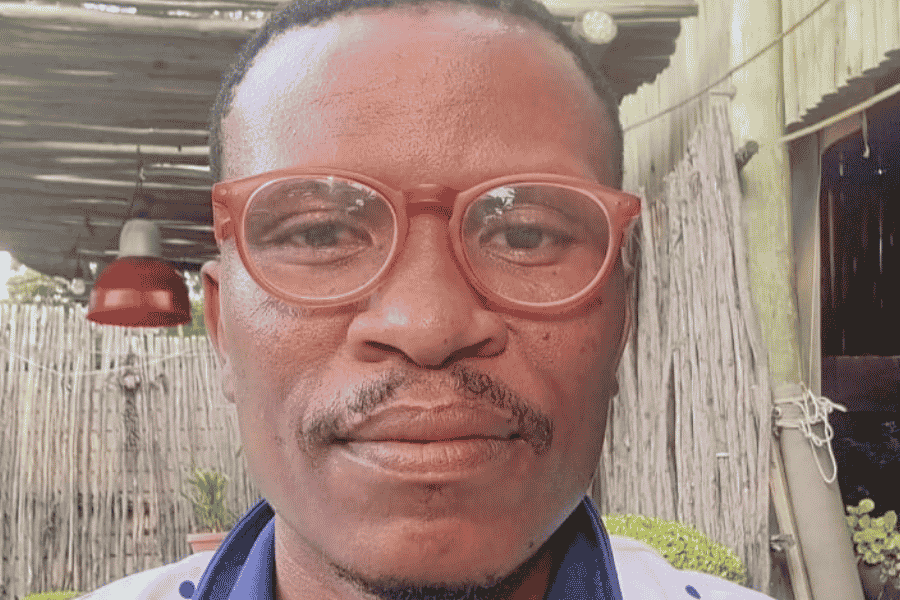
Thabiso Teffo is a former spokesperson of the Limpopo Health department and he writes on his personal capacity.