A bitter social-media row has exposed the dangerous point where influencer culture, unregulated wellness products and intimidation meet.
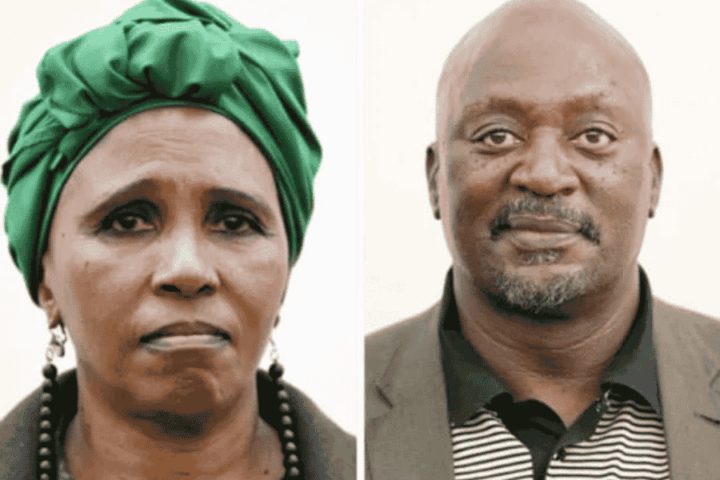
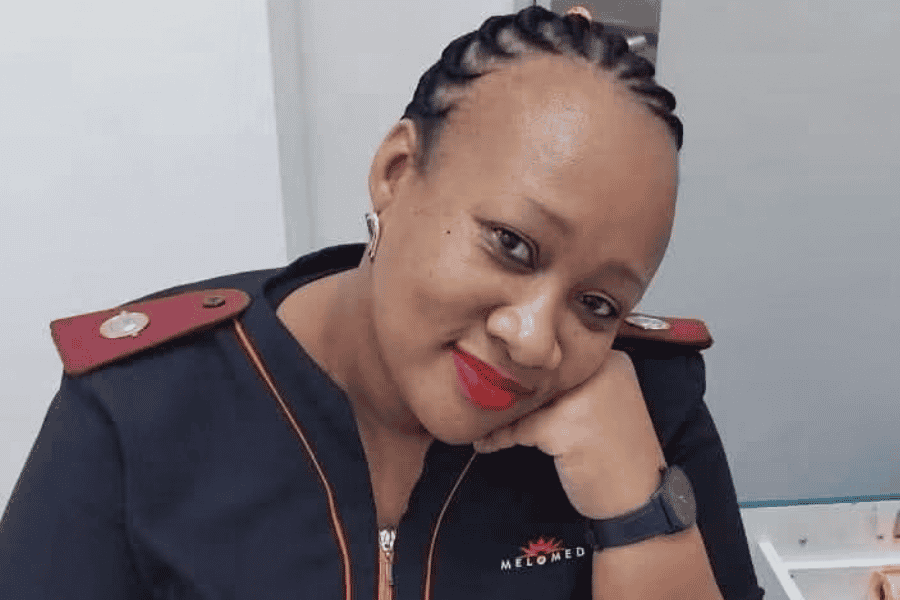
On one side is Mvelwenhle Omuhle kamaGumede wakwaDlamini, a registered nurse whose professional duty compelled her to sound the alarm.
On the other is Zimiphi “Zimdollar” Biyela: Ukhozi FM presenter, actress, organic-products entrepreneur, and a woman whose past includes a very public, bitter clash with former police minister Bheki Cele.
It began with video clips in which Biyela advertised slimming injections, boasting that she could even send them via PEP. The clip has since been removed.
A screenshot shows Biyela holding pre-filled syringes. The isiZulu text on the image reads:
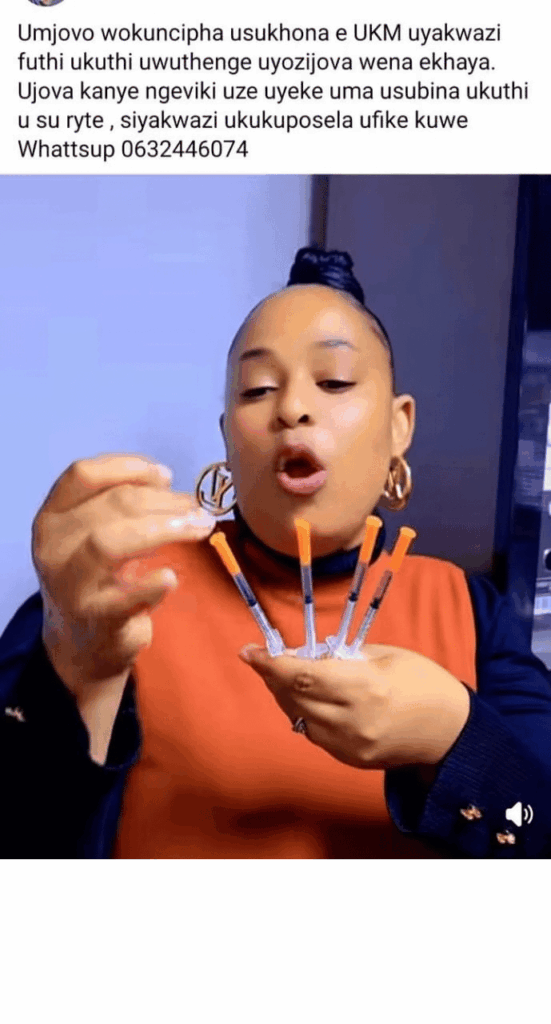
“Umjovo wokuncipha usukhona e UKM uyakwazi futhi ukuthi uwuthenge uyozijova wena ekhaya. Ujova kanye ngeviki uze uyeke uma usubona ukuthi usu-ryte, siyakwazi ukukuposela ufike kuwe.”
Loosely translated as, “The slimming injection is now available at UKM. You can buy it and inject yourself at home. Inject once a week, and stop when you feel you’re right. We can post it to you.”
This is not subtle, and it is not a doctor’s advice. It is a radio personality and business owner openly selling injectables for home use, with a WhatsApp line for postal orders and the syringes held up to the camera.
She followed it with promotions of muthi she claimed strengthens vaginal muscles.
Neither pitch came with any sign of laboratory testing, SAHPRA approval or cold-chain handling.
Both were sales pitches for her herbal stores, which are concentrated in KwaZulu-Natal.
The public has no way of knowing what is in these products or whether they are safe.
Nurse Mvelwenhle did what any ethical health professional should, she raised a red flag. She warned that there was no evidence the injections had been lab tested, and that such products need refrigeration and professional oversight.
She also warned that untested muthi used on intimate areas carries risks no one has measured.
People tagged the Department of Health. The clips spread.
Instead of producing evidence about the injections, Biyela deleted the advert and insisted she does not personally inject anyone.
Then she turned on the nurse.
In a follow-up video, she said (translated from isiZulu):
“…listen, I was merely using my following to sell the injections; otherwise I don’t personally inject people. Besides, I’ve used the injections myself, people knew me when I was slim, and I never had a problem. Your friends are also telling me they are getting the jabs from you. You are blocking my clients because you see me as competition, Fuhlu.
“NgingowasoBuka mina, ungangilokothi [I am from Obuka, don’t you dare]. Otherwise I’d start with you so you can get the glow.”
Read that slowly, a public figure with a national radio platform and a chain of herbal stores says, in her own words, that she used her following to sell injections.
She offered nothing about what is in them, how they are stored or whether they are registered.
This is not a professional rebuttal. It is intimidation dressed as hometown bravado, aimed at a health worker whose only public act was a safety warning.
Her claim that she used the injections herself and “never had a problem” is beside the point.
One person’s experience is not clinical evidence. Most buyers have no medical training and many have no reliable refrigeration. None of them can know what is in a vial ordered through a WhatsApp number.
When a nurse flags that risk and is met with insults, accusations of rivalry and “don’t you dare”, the message to the public is plain, profit and ego come first.
This is the same Biyela whose on-air accusations against police in 2023 drew a public rebuke from Cele, after which the SABC apologised on Ukhozi FM.
Now that combative energy is aimed at a nurse for putting patient safety ahead of a side hustle.
The Department of Health and SAHPRA do not regulate the strength of a presenter’s personal experience or hometown threats.
They regulate evidence, testing and accountability.
Biyela’s own words give them a starting point, an admission that she sold injections through her following, followed by an attempt to intimidate the person who questioned them.
Mvelwenhle did her professional duty.
Biyela, in her own voice, has admitted selling the jabs, accused the nurse of being a competitor, and issued a threat.
The mask is off. The question now is whether the authorities, and Ukhozi FM, will treat this as the serious public-health and intimidation matter it is.