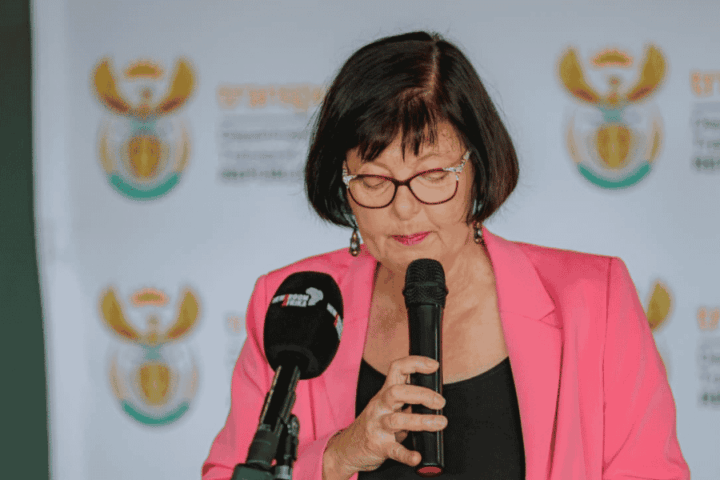
Transport Minister Barbara Creecy says South Africa cannot afford to normalise the deaths of nearly 12,000 people on the country’s roads each year.
Creecy was speaking on Wednesday at the inaugural Road Safety Practitioners’ Colloquium at the Birchwood Hotel in Ekurhuleni, where she outlined government’s efforts to reduce road crashes and fatalities.
She said the country had set a target of halving annual road deaths by 2030, in line with the United Nations Sustainable Development Goals.
According to Creecy, South Africa recorded more than 6% fewer crashes and fatalities in 2025 compared with 2024.
She said the 2025/26 festive season also recorded a 5% reduction in both crashes and fatalities, with five provinces reporting fewer deaths than during the corresponding period the previous year.
During the 2026 Easter long weekend, the Road Traffic Management Corporation recorded the second-lowest number of crashes and fatalities over the past four Easter periods.
Creecy said that compared with the peak recorded in 2024, crashes during this year’s Easter period fell by 24%, while fatalities dropped by 39%.
“While these statistics are commendable, the numbers remain too high,” Creecy said.
She said every person killed on the roads represented the loss of a loved one, parent or breadwinner, adding that existing interventions needed to be intensified.
Fatalities down 9% in first eight months
Creecy said data collected by the RTMC and provinces showed that 6,457 people had died on South African roads between 1 January and 23 August 2026.
This represented an overall 9% reduction in fatalities compared with the same period in 2025.
Pedestrians accounted for 48% of all road deaths, while more than a third of fatalities were recorded in Gauteng and KwaZulu-Natal.
The Eastern Cape, KwaZulu-Natal, Mpumalanga and North West had all met or exceeded the 10% target for reducing fatalities in their respective provinces.
Creecy said the trends identified through weekly briefings with provincial transport authorities had helped inform the deployment of Metro Police and national traffic officers across the country.
She said the deployment was aimed at ensuring that law enforcement resources were available not only during peak periods such as Easter and the festive season, but also during sporting events, long weekends, religious pilgrimages and month-end periods.
The minister said the decline in crashes and fatalities was the result of coordinated law enforcement, partnerships with civil society and greater awareness among road users.
However, she warned that the country could not become complacent.
Focus on pedestrian deaths
Creecy said government had placed particular emphasis this year on preventing pedestrians from walking or crossing highways.
Traffic authorities have also increased patrols around entertainment areas located near highways to prevent intoxicated pedestrians from attempting to cross major roads.
She said visibility and public education remained critical to reducing pedestrian deaths.
The RTMC and provinces have conducted more than 14,000 road safety education and awareness interventions this year, involving communities, civil society, traditional leaders and faith-based organisations.
The Department of Transport and RTMC have also run a coordinated media campaign involving more than 50 media outlets, focusing on weather and traffic advisories as well as roadworthiness and vehicle compliance inspections.
Calls for more traffic officers
Creecy said efforts to improve road safety would not be sustainable without sufficient human resources to enforce traffic laws.
She said additional traffic officials were needed to strengthen roadblocks and other law enforcement operations.
The department is also continuing efforts to establish 24/7 traffic policing through a flexi-shift system, particularly because many crashes occur late at night or during the early hours of the morning.
“Visible policing remains one of the greatest deterrents against reckless and negligent driving,” Creecy said.
Zero-alcohol policy being pursued
Creecy said government was also using legislative measures to tackle dangerous driving.
More than 18,000 people were arrested for drunk driving between March and the end of August 2026, accounting for about a third of all traffic arrests during that period.
She said government was pursuing amendments to Section 65 of the National Road Traffic Act to further tighten restrictions on driving under the influence of alcohol.
The proposed changes are intended to move South Africa towards a strict zero-percent blood alcohol policy.
Creecy said the department was working to obtain approval from the Chief State Law Adviser and the Socio-Economic Impact Assessment System before seeking Cabinet concurrence for the amendment by the end of 2026.
She also highlighted the implementation of the Administrative Adjudication of Road Traffic Offences system.
The second phase of AARTO was launched on 1 July 2026 and is currently operational in 62 municipalities.
The third phase will extend the system to the remaining 151 municipalities in 2027, followed by the introduction of the demerit system.
Creecy said AARTO was intended to encourage motorists to comply voluntarily with traffic laws by offering discounts for the early payment of infringement notices while reducing the burden on the courts.
The system will also create greater consequences for habitual reckless drivers through the possibility of having their licences suspended.
Scholar transport operators face tighter requirements
Creecy said the RTMC and provincial authorities had also been tasked with enforcing provisions of the National Land Transport Amendment Act relating to scholar transport.
Under the requirements, scholar transport operators must be registered, hold Professional Driving Permits, provide proof that their vehicles undergo annual roadworthiness inspections and complete an advanced driving course.
She said the requirements were introduced to strengthen passenger safety.
Creecy called on delegates attending the three-day colloquium to share experiences and identify practical solutions that could be implemented by institutions and communities.
She said the ultimate goal was to make South African roads safer for everyone.