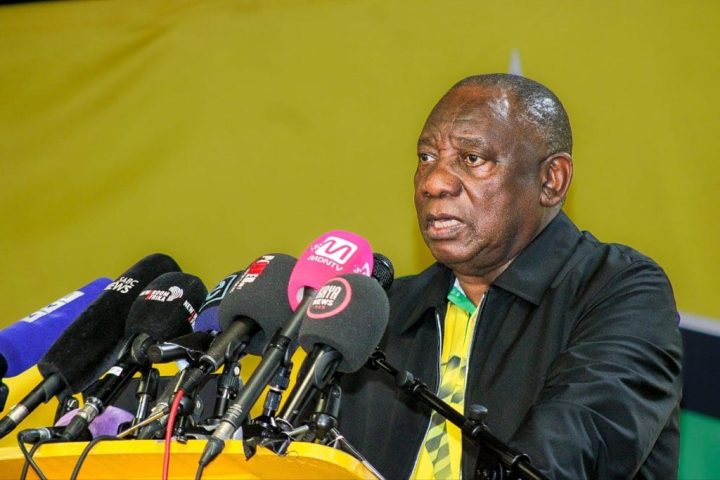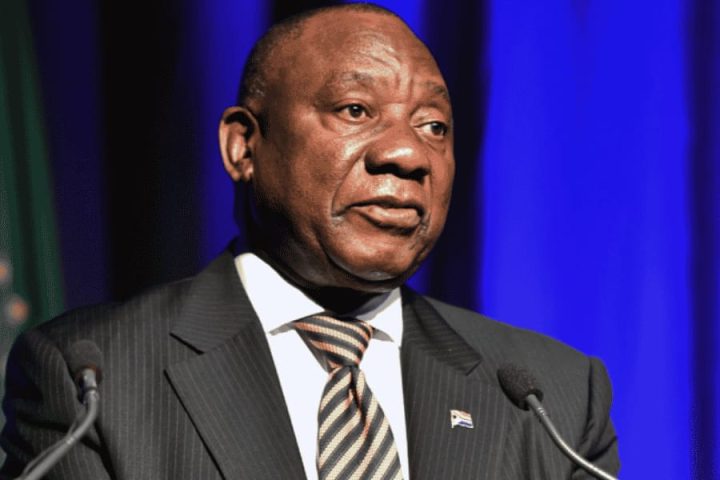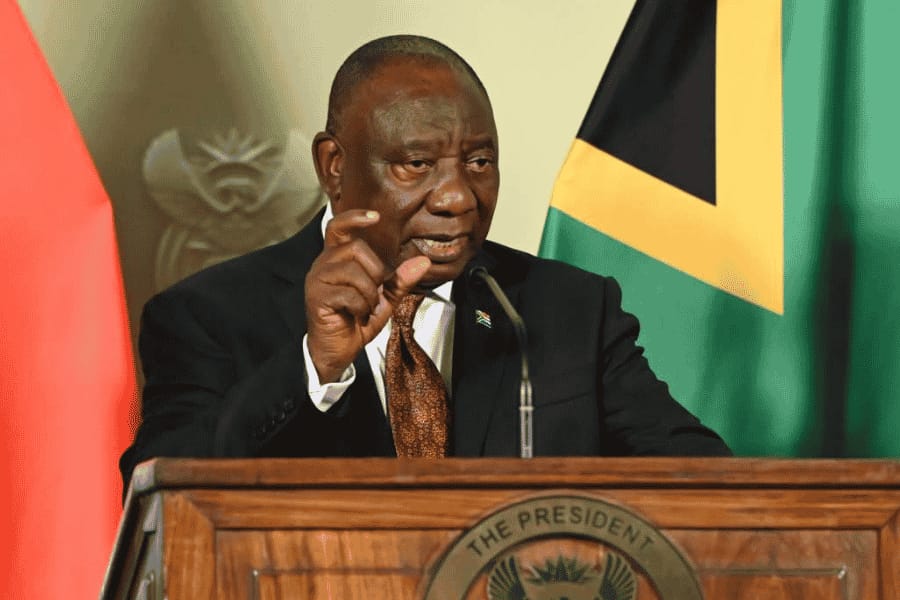
President Cyril Ramaphosa says national government is effectively locked out of municipal water management by the law. He argues that this prevented officials from intervening before contaminated water poisoned more than 800 people in Tshwane.
Ramaphosa made the admission in the National Council of Provinces (NCOP) on Tuesday, 24 November responding to DA delegate Dennis Ryder, who questioned whether the National Water Action Plan had failed.
Ryder pointed out that just three months after the plan was released, more than 800 people in Tshwane had fallen ill after drinking municipal water.
“Mr President, three months after the release of the plan, over 800 South Africans living in Tshwane were poisoned by drinking the water that their government supplied to them. Our metro should be in the vanguard of implementation of the plan. Is the plan a failure, or are metros refusing to implement the plan?” Ryder asked.
Ramaphosa blamed the City of Tshwane but also pointed to the legal framework governing water management, saying it places primary responsibility on local government while restricting national government’s ability to intervene.
“The reasons for what happened with the water in Bronkhorstspruit have been published already. It was failure at the local government level. And this is precisely what I’m talking about. There is a clear disjuncture between water stewardship at national level and at local level. Currently the law says local government is the key steward of water, and it tends to lock out national,” he said.
He cited the water crisis in Hammanskraal as another example of national government warning local authorities about an impending disaster without being able to ensure corrective action.
“I personally went to Hammanskraal, where there was a water crisis. National had already said to the local government there, there is a crisis looming in Hammanskraal. Attend to it. Attend to it in terms of the powers that you have. That was not done. And then it led to all sorts of challenges. People were poisoned and all that,” Ramaphosa said.
He argued that national officials would have identified the failure to chlorinate the water had they been able to exercise more direct oversight.
“National officials would have been able to see long ago that chlorine had not been delivered or added to the water resource in that area. But because it was the responsibility of the local, the disaster that then occurred happened,” he said.
Ramaphosa also blamed the constitutional division of powers between national, provincial and local government, saying overlapping responsibilities had created institutional barriers and allowed officials to resist intervention.
“It has to do, of course, with our constitutional construct, where provinces or local government have concurrent powers. And when they do have concurrent powers, they often believe that they have proprietorship over that area of work. Officials will say, we will do it on our own. And quite often it is not done, to the detriment of our people,” he said.
He called for national government to be given greater scope to intervene when municipalities fail to perform their responsibilities.
“If local doesn’t act, national should be able to intervene more directly. It’s not a process of taking any powers from any level of government. It’s to ensure that we break down the pillars and the walls to enable all of government to work together in the interests of our people.”
However, Ramaphosa did not identify the specific law that supposedly prevents national government from intervening directly in municipal water management.
The explanation raises questions about why national government did not use its existing oversight and intervention mechanisms despite the Department of Water and Sanitation reportedly warning Tshwane about its water quality for years.
Tshwane failed to chlorinate water at its Bronkhorstspruit plant for nearly three weeks, between 24 September and 14 October, following disruptions involving its supplier.
The number of people who sought medical assistance for illnesses linked to the contaminated water reached 833.
The City of Tshwane’s failure to chlorinate the water has been described as a serious breakdown in its responsibility to protect residents. Mayor Nasiphi Moya told MPs that the failure was “indefensible, especially the issue of chlorine”.
Moya suspended the plant manager pending an investigation.
The EFF subsequently lodged a complaint with the Public Protector, calling for an investigation into Moya and city manager Johann Mettler.
In October, Ramaphosa himself publicly accused the City of Tshwane of dereliction of duty over its handling of the crisis.
Africa Daily has asked the Presidency to identify the law that prevents national government from intervening directly in municipal water management and explain why it did not exercise its oversight powers before chlorination at the Bronkhorstspruit plant stopped.