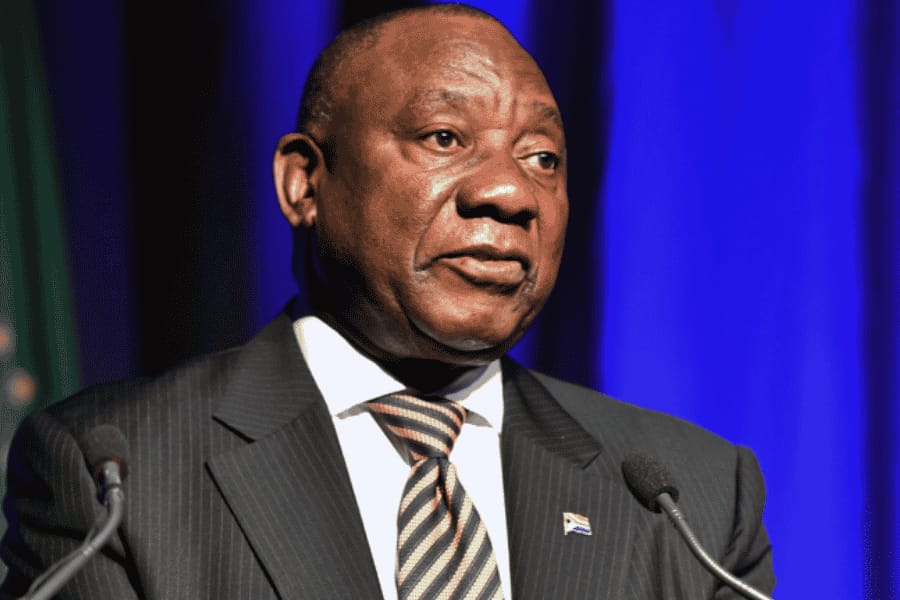
President Cyril Ramaphosa did not say whether poor households will be protected from steep price increases as private companies move into electricity, rail and ports.
EFF delegate Makuduele Mampuru put the question to him directly in the National Council of Provinces (NCOP) on Tuesday.
“Mr President, your replies celebrate promises of private sector investment and economic modelling, while our people continue to face mass unemployment and collapsing basic services under Operation Vulindlela Phase 2. Your government is splitting up Eskom, bringing private companies into ports and freight rail, and turning municipal water and electricity departments into profit-driven entities.
“Will the President admit that Operation Vulindlela is simply privatising our key state-owned entities through the back door? And how can you guarantee working-class families that handing our power grids, railways and municipal services over to private companies will not lead to steep price increases that leave poor households unable to afford basic services?” Mampuru said.
Ramaphosa answered the privatisation part. He never mentioned prices, tariffs or affordability.
“I have said this over and over and over again that our objective is not to privatise any of our state companies. Our objective is to institute reforms that are going to enable our economy to work a lot better in the interests of the people of South Africa,” he said.
He also rejected the word “unbundling”.
“Some people say we’ve been unbundling Eskom. We’re not unbundling Eskom. Unbundling means that you’re taking one section of a company and selling it off. We’re not doing that. We are restructuring Eskom. We are actually saying Eskom must focus on generation and we must have a transmission entity that will focus on transmission. And there will be other generators of electricity who will work side by side with Eskom. In fact, they will even compete, as others are doing with renewable energy,” Ramaphosa said.
“Generation and transmission are owned by the state. Distribution is owned by the state as well, as in Eskom and in our municipalities. So there is no selling of assets there. All we’re seeking to do is to make our assets work better. In fact, we want to sweat our assets to ensure that they work a lot better and create even more jobs with investment being brought in,” he said.
He confirmed that a private company will run the iron ore rail line.
“Our iron ore rail line should be run by a private company, which will ensure that it invests more money, money that we don’t have at the moment. That company will invest more money. It runs the rail. It is profitable and we tax it. The rail remains the ownership of the people of South Africa. All we are really doing is to bring in efficiency,” he said.
He described the ports the same way.
“A number of countries have invited the private sector to come and run some of their harbours. The harbours remain state-owned entities. The private sector invests money to make the ports efficient and to run them in a way where they make money, and the government then taxes those companies that are profitable,” Ramaphosa said.
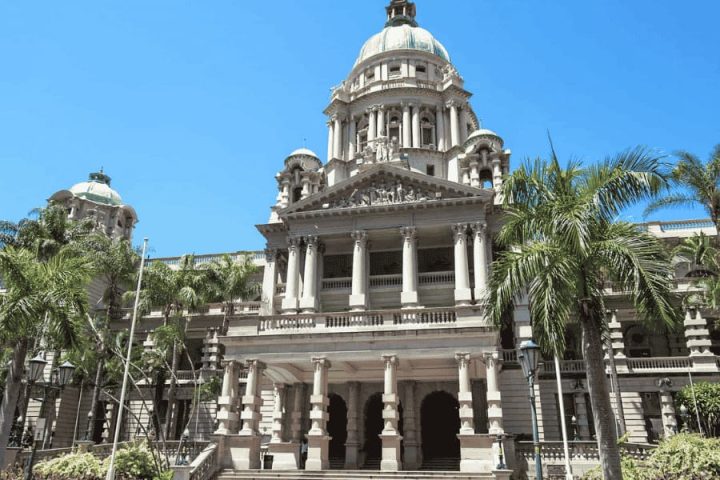
He said he wants the Durban port “to once again become one of the highly rated ports in the world”.
Ramaphosa first announced in his 2019 State of the Nation Address that Eskom would be split into three entities. In February 2026, he announced that the new independent Transmission System Operator would own the grid assets.
National Treasury has told Parliament before that it separates privatisation, which it describes as the permanent sale of state assets, from private sector participation, which it says does not transfer ownership.
Africa Daily has asked the Presidency whether it can guarantee that household tariffs will not rise because of private sector participation.