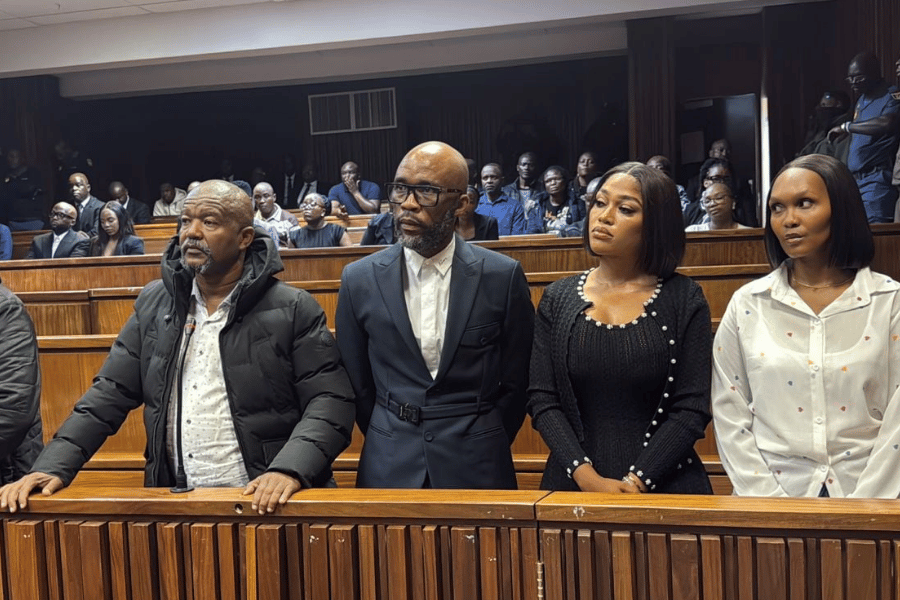
There was something unusual about Friday’s proceedings, 31 July 2026 in the Johannesburg High Court, and it goes to the heart of what the trial-within-a-trial is really about.
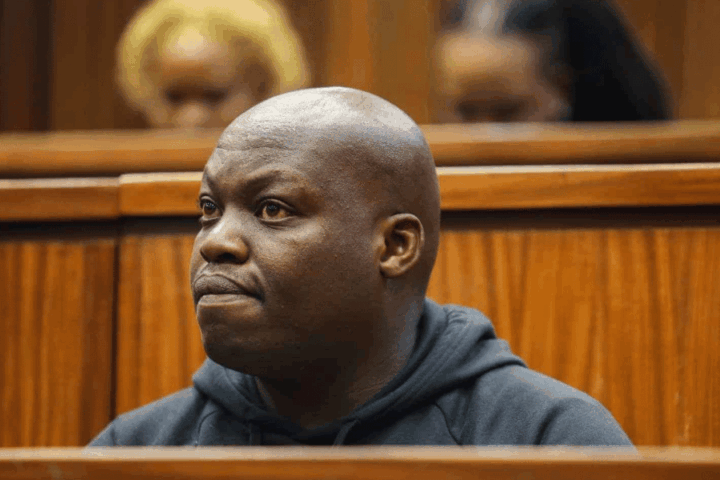
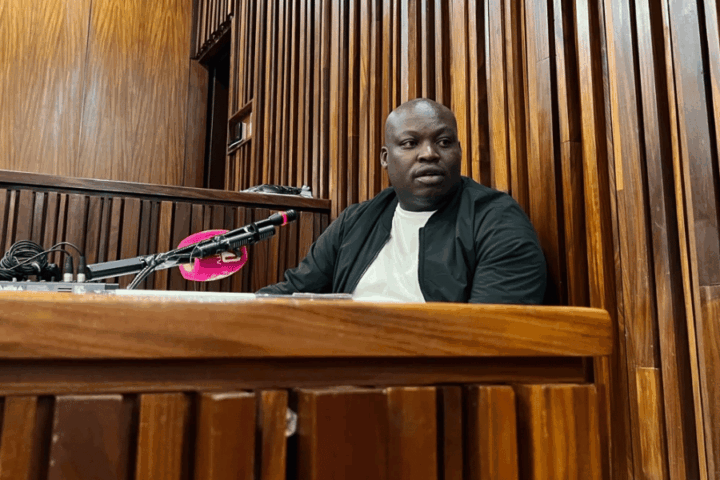
The advocate who spent the day dismantling the arrest of accused No. 1, Musa Kekana, does not represent him.
Advocate Annelene Van der Heever acts for accused No. 3 and 4, Vusimuzi “Cat” Matlala and his wife, Tsakani Matlala.
Neither was present at the Kew house. Neither was at the scene where Kekana was arrested.
On the face of it, whether the police had authority to arrest another man in another suburb is none of her clients’ business.
It is very much their business, and the reason lies in the structure of the indictment.
What follows summarises the State’s case as it currently stands.
These are allegations only. None of it has been proven and all five accused are presumed innocent until the State proves their guilt beyond a reasonable doubt.
The indictment is built around a single central allegation.
In relation to the attempted murder of Madoda Johannes Sibanyoni, and the attempted murder charges arising from the same events, the State alleges that Kekana and Tiego Floyd Mabusela carried out the shootings “with the knowledge and on the instruction of” accused No. 3, Matlala.
That wording is significant. The State’s case against Matlala is not that he was present at the scene or that he personally fired a weapon. It is that he directed the conduct of others who allegedly carried out the shootings.
A case framed in this way has a structural vulnerability.
An allegation that Matlala instructed Kekana depends on the State first proving what Kekana did.
If the evidence against Kekana is weakened or excluded, the instruction allegation may become more difficult to sustain.
That is why Matlala’s counsel, Van der Heever, spent Friday litigating the arrest of the man the State alleges carried out the shooting.
Her client’s alleged role in those counts runs through him.
The point sharpens when you consider what the challenged search is said to have yielded.
The State’s case is that firearms were recovered from house number 34, 5th road Kew. The search without warrant is now under attack.
Sekgobela’s own evidence is that the firearms charge was added after those items were found, the arrest itself was made on a murder allegation circulated over the police radio.
On the State’s own case, the search produced evidence said to link Kekana, the man alleged to have carried out the shooting to the offences under investigation.
If that evidence is excluded, the allegation that Matlala instructed the shooting does not disappear.
But the State would have to establish the alleged role of Kekana through other admissible evidence.
This also explains why Van der Heever devoted so much time to what might have appeared to be little more than housekeeping.
Sekgobela confirmed that he kept no attendance register recording who entered and left the crime scene and said he was unaware of any SAPS standing order requiring one.
Judge Cassim Moosa considered the issue significant enough to adjourn proceedings so counsel could produce the document, directing that it be placed before the court on Monday.
A crime scene attendance register is not administrative paperwork for its own sake. It forms part of the chain of custody.
It records who was present when exhibits were discovered, who handled them, and who had access to the scene.
Where physical evidence is later relied upon in court, those details can become critical to establishing the integrity of the recovery.
If the State intends to rely on the firearms recovered from house number 34, 5th road at Kew, the integrity of that recovery is already a live issue.
An attendance register is one of the ordinary means by which that integrity is tested.
That is why the challenge is about more than a missing register. It is an attack on the integrity of the search itself.
And because the State relies on the items recovered during that search as part of its case against Kekana, any successful challenge to their recovery may also affect the case it seeks to advance against Matlala through the allegation that he instructed the shootings.
Now there are two distinct challenges running, and they are not the same case.
Advocate Riaan Gissing, for Kekana contends that the police acted unlawfully towards his client, that his constitutional rights were never explained, that he never consented to the search, and that he was assaulted.
Those issues largely turn on findings about police conduct and, ultimately, on which version of events the court accepts.
Van der Heever’s challenge is different. Her focus is on legal authority.
She questions whether the officers had the power to do what they did at all.
She is focussing on arrest without warrant, no clearly articulated jurisdictional basis for it, an arrest triggered by a police radio broadcast of which no record has been produced, the handcuffing of a man who was not a suspect, and the management of a crime scene without an attendance register.
The two challenges are related, but they are not the same. A court could reject Gissing’s version of events yet still conclude that one or more of the legal prerequisites for the exercise of police powers had not been established.
Equally, it could accept that the officers had lawful authority while rejecting parts of their account of what occurred. They do not stand or fall together.
Section 35(5) of the Constitution requires a court to assess the admissibility of each item of evidence on its own merits.
A finding that an arrest or search was unlawful does not automatically mean that every piece of evidence obtained thereafter must be excluded.
Nor does the State’s case depend entirely on what was recovered at House No. 34, 5th Avenue, Kew.
The indictment also relies on eyewitness testimony, surveillance evidence and an alleged financial trail that, according to the State, runs from Matlala through accused No. 5, Nthabiseng Zandile Nzama, to her father who is accused No. 2, Mabusela as payment for the alleged killing.
Those allegations remain to be proved and do not stand or fall solely on the outcome of the search.
What a successful challenge is more likely to do is narrow the State’s case rather than end it.
That is often the practical effect of a trial-within-a-trial, it determines what evidence the court may consider, not whether the prosecution succeeds.