The government has declared that 30 June will be a normal working day across South Africa, warning that any acts of vigilantism, intimidation or violence targeting foreign nationals during planned nationwide protests will be met with the full force of the law.
The warning comes as several civic organisations prepare to march across the country on Monday, demanding that undocumented foreign nationals leave South Africa.
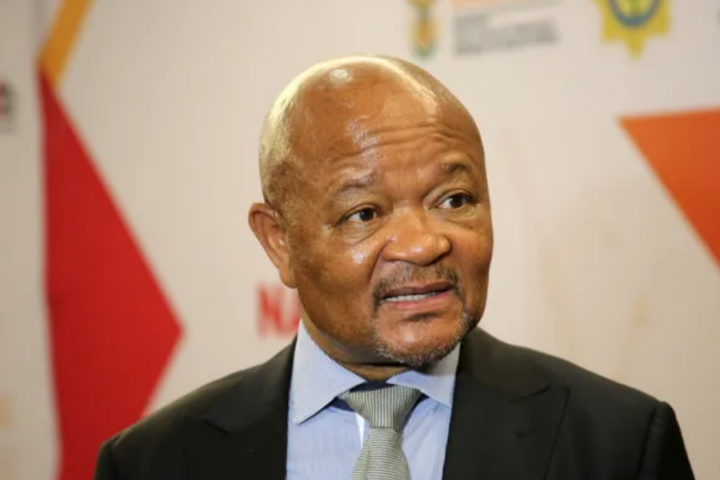
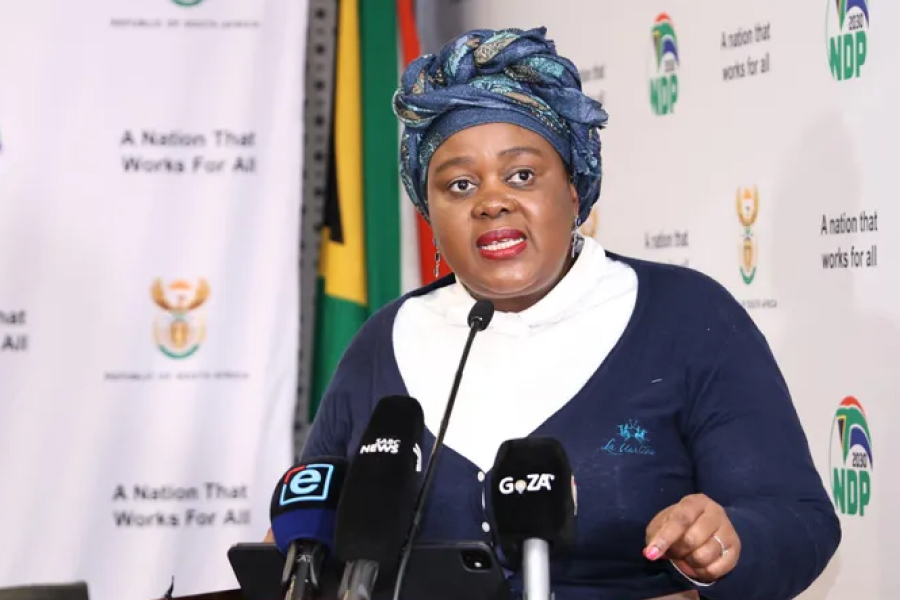
Briefing the media on Friday, chairperson of Inter-Ministerial Committee (IMC) on Migration , Justice and Constitutional Development Minister Mmamaloko Kubayi , said while government recognised concerns around irregular migration, law enforcement remained the responsibility of the state.
“We are ready as a State to protect every person, citizens and foreign nationals, against any form of abuse and intimidation. We therefore declare that the 30th of June 2026 as a normal day for the country,” Kubayi said.
“We do not recognise the 30th as a shutdown day or an off day. So those who are working, if you are not going to work ,you will not get paid. You would have absconded from work.”
She stressed that no unauthorised individual may demand identification documents or proof of nationality from members of the public.
Kubayi also warned that blocking access to clinics, hospitals, schools and other public services was unlawful, while violence, intimidation, xenophobia, Afrophobia, racism and hate speech would be prosecuted.
Government further warned that misinformation and fake news circulated on social media with the intention of inciting violence would also attract criminal prosecution.
The IMC said it had intensified intelligence-led and prosecutorial-guided law enforcement operations across the country ahead of the planned demonstrations.
According to Kubayi, by 21 June authorities had registered 89 public order and incitement-related criminal cases, up from 53 reported the previous week.
A total of 164 people have been arrested for offences including incitement to violence and contraventions of the Regulation of Gatherings Act. Thirty-six cases are already before the courts while another 40 remain under investigation.
She added that SAPS, through Operation Shanela, arrested 5,056 people for immigration-related offences during the week ending 15 June alone.
Kubayi also confirmed that multidisciplinary operations involving the Departments of Home Affairs, Police and Employment and Labour had continued across several provinces.
One recent operation in Tshwane resulted in the arrest of 35 people, including two employers accused of employing undocumented foreign nationals.
The minister said government also condemned recent anti-immigration protests in the Free State that were accompanied by the looting of foreign-owned shops.
“We reiterate that vigilantism, looting and the targeting of individuals based on nationality are criminal acts that will be met with the full force of the law,” she said.
More than 15 000 Malawian nationals processed
Kubayi said government had made significant progress in processing undocumented foreign nationals for deportation and voluntary repatriation.
She said several countries, including Malawi, Ghana, Nigeria, Mozambique, Zimbabwe, Kenya and the Democratic Republic of Congo, had offered to facilitate the voluntary return of their citizens.
According to Kubayi, 15 162 Malawian nationals had been processed for deportation and repatriation by the close of business on 25 June, with additional people still undergoing verification.
She said government would establish a Temporary Repatriation Processing Centre outside Musina to speed up verification processes, ease pressure on the Lindela Repatriation Centre and facilitate faster movement through the Beitbridge border post.
The existing temporary repatriation centre in eThekwini would be closed once logistical arrangements had been completed.
Kubayi said the Musina facility would operate in partnership with organisations including the United Nations High Commissioner for Refugees, the International Organization for Migration, the Red Cross and the Malawi Consulate.
Borders and business registration
Kubayi said government had also strengthened border security, with the Border Management Authority, SAPS and the South African National Defence Force maintaining heightened operations across land, air and sea ports of entry.
She said mapping of vulnerable border areas had been completed and satellite monitoring, drones and other technologies would be used to monitor illegal crossings.
Government rejects vigilantism
Kubayi acknowledged public concerns around irregular migration but said these could not justify unlawful conduct.
She reiterated that South Africa remained constitutionally obliged to provide essential services to all children within its borders while government worked to strengthen migration controls.
“We must not allow anyone to exploit the genuine concerns of South Africans to incite violence, spread misinformation or destabilise our country,” she said.
Kubayi called on undocumented foreign nationals to comply with South African immigration laws while urging employers to stop exploiting undocumented workers.
She reiterated government’s position that Monday would proceed as normal.
“We repeat that the 30th of June 2026 will be a normal day for the country. Economic and social activities will not be disrupted.”