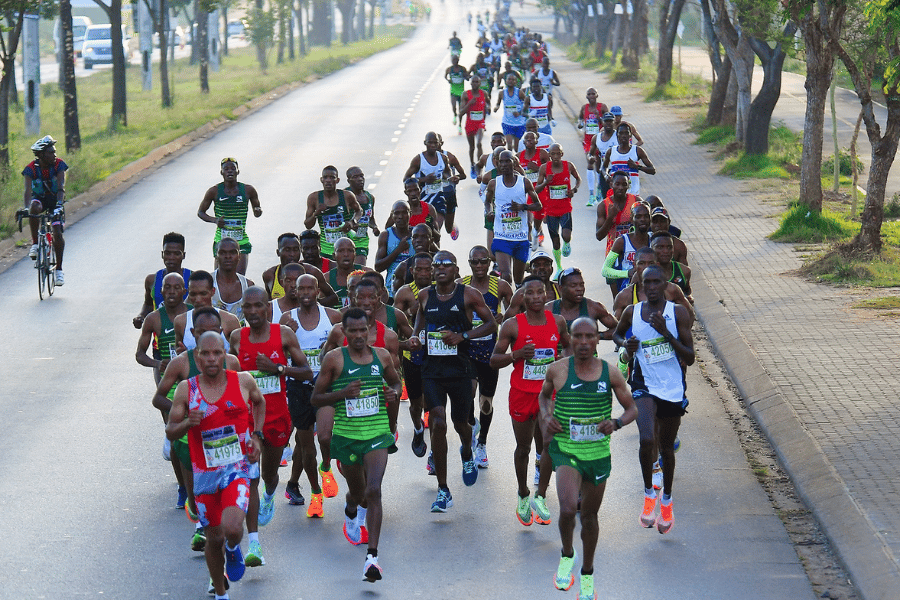
A fresh dispute over the history, ownership and future of the Soweto Marathon has erupted after co-founder Thulani Sibisi accused Gauteng MEC for Sport, Arts, Culture and Recreation Lebogang Maile of sidelining him from efforts to rescue the embattled race.
The development comes as the iconic “People’s Race” continues to grapple with longstanding governance and financial problems, including reported money owed to athletes and service providers.
The latest controversy was triggered by a video posted on Maile’s Facebook page in which the MEC is seen meeting with a group of men who identify themselves as founders of the Soweto Marathon.
In the accompanying statement, Maile said the parties had agreed to document the origins of the race and address the problems threatening its future.
“We have agreed to write and document the origins of the Soweto Marathon as one of South Africa’s most iconic races that celebrates the history and spirit of Soweto while promoting social cohesion, active lifestyles and economic activity,” Maile wrote.
He described the marathon as an “iconic township event” and an important driver of sport tourism in Gauteng, saying the province could not ignore the challenges facing the race.
“We are therefore committing to resolve all the bottlenecks they face,” Maile said.
In the video, Maile also said he would meet with all Soweto Marathon stakeholders as part of efforts to “save” the marathon.
But Africa Daily has reliably established that a stakeholder meeting took place on Thursday, 13 August and Sibisi was not invited.
The exclusion has raised questions about who is being regarded as a legitimate stakeholder in discussions concerning the future of an event whose origins are closely associated with Sibisi.
Sibisi, who has repeatedly been publicly identified as a co-founder of the Soweto Marathon, confirmed that he was aware of Maile’s video and the meeting.
“I’m aware of the clip and I know those gentlemen but I don’t want to comment about them,” Sibisi said.
“All I can say is that, if people want to know who are the founders of the Soweto Marathon Trust they must go and check the records of the Trust Deed, then they’ll see whose name appears there as the founder of the Trust.”
Sibisi said he had not been invited to Thursday’s meeting and questioned why he had been excluded from discussions about the future of the race.
“I’m not sure why the MEC left me out, I simply was not invited. I am treated unfairly and I don’t know why,” he said.
However, Sibisi suggested that his exclusion may ultimately have spared him an uncomfortable encounter.
“I think it’s a blessing in disguise because I’d have been uncomfortable being amongst people who are still owing athletes,” he said.
The dispute is particularly significant because the Soweto Marathon is not simply another road-running event.
The event was conceived, amongst other things, to address the lack of road-running opportunities in Soweto and surrounding townships.
Sibisi has also previously spoken about the difficult circumstances surrounding the race’s creation, recalling that apartheid-era opposition made establishing a major race in Soweto particularly challenging.
The first race attracted hundreds of participants and was initially held at Orlando Stadium. Old Mutual later became a major sponsor, helping the event expand substantially.
By the 1990s, the race had developed into a major spor and symbolicspor event, with the 1994 edition becoming particularly associated with the country’s transition and the message of peace and reconciliation.
Over the years, the event grew into one of South Africa’s best-known road races, attracting tens of thousands of runners and international competitors.
The marathon was eventually placed under the Soweto Marathon Trust, with the Trust established to organise the race on behalf of Soweto’s running clubs.
But from 2023, the People’s Race became increasingly embroiled in internal disputes, some of which ultimately spilled into the courts.
The turmoil continued into 2024 when Central Gauteng Athletics placed Trust spokesperson Thokozani Mazibuko on leave amid controversy surrounding the establishment of a separate company to act on behalf of the Trust.
At the time, Sibisi raised concerns that the marathon had been hijacked by some Trust members.
More recently, winners of the previous Soweto Marathon have remained unpaid, with prize money still outstanding.
Against this backdrop, Maile’s intervention appears to signal a renewed attempt by the Gauteng government to address the marathon’s troubles.
His stated intention to document the race’s origins and bring stakeholders together could potentially provide an opportunity to resolve longstanding disputes over governance, accountability and the marathon’s institutional history.
But Sibisi’s exclusion from Thursday’s stakeholder meeting has introduced another layer of tension.
It also raises a fundamental question, who gets to speak for the Soweto Marathon and determine its future, the government, the athletics authorities, the Soweto Marathon Trust, the clubs that underpin the event, or those who established the race in the first place?
For a race whose identity is inseparable from Soweto’s history, the battle over its origins is therefore more than a dispute about names.
It goes to the heart of who controls the legacy of one of South Africa’s most iconic sporting events.
Africa Daily sent questions to Maile’s office seeking clarity on why Sibisi was not invited to the stakeholder meeting, who attended the meeting, how the participants were selected and what steps the provincial government intends taking to address the marathon’s governance and financial problems.
At the time of publication, no response had been received.
This article will be updated should the MEC’s office respond.