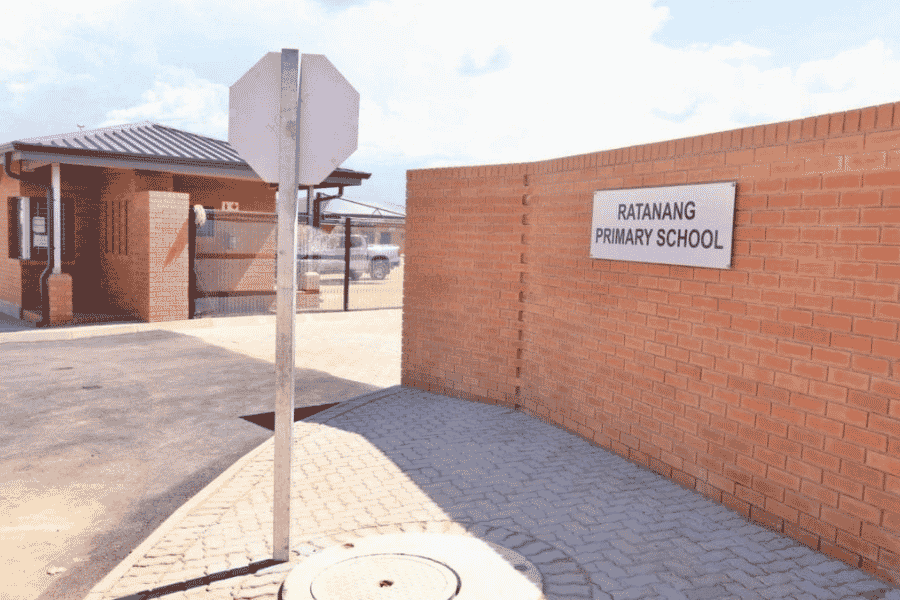
It has 28 classrooms, space for more than 1 100 learners from Grade R to Grade 7, modern facilities, and a brand-new coat of paint. But Ratanang Primary School in Kanana, Hammanskraal, north of Pretoria, remains a white elephant – closed, empty, and unused months after it was supposed to welcome its first learners.
The school was supposed to be a symbol of progress for the Kanana community, built to relieve overcrowding and give children in Hammanskraal access to decent education infrastructure.
Instead, it stands as a monument to bureaucratic failure.
In his State of the Province Address on 24 February 2026, Gauteng Premier Panyaza Lesufi proudly announced that Ratanang Primary would open in March.
March came and went. The gates stayed locked.
At first, the explanation was a missing occupation certificate. In February, officials admitted that learners could not move in because outstanding safety and compliance documentation had not been finalised. The school was not legally compliant to be occupied.
By August 2026, six months after Lesufi’s promise, the story had changed. The Gauteng Department of Education now said the real problem was an administrative issue – the property had not yet been transferred from the City of Tshwane to the department.
According to the GDE, without that transfer, no occupation certificate could be issued. Without that certificate, no learner could legally sit in a classroom.
The school has been in planning for more than seven years. Building plans were first submitted in November 2018. Seven years later, children who were in Grade R when those plans were drawn are now in high school, and the school built for them has never taught a single lesson.
The City of Tshwane has maintained that national legislation and regulatory processes must be followed and that learners can not occupy the facility until compliance is resolved.
But on the ground in Kanana, parents are left confused and angry.
One parent from Kanana said they had understood that the school had finally received its compliance certificate but still could not understand why learners were not allowed in.
The parent had tried to register their child at Ratanang Primary School, believing it would finally open, but ran into difficulties with the registration process. Eventually, they were forced to enroll their child at another school in the area, about three kilometres away from Ratanang.
It is a reality facing dozens of families in Kanana. While an R100 million-plus facility stands empty, learners are crammed into neighboring schools or forced to walk long distances to access education – the very problem Ratanang was built to solve.
The continued closure raises serious questions about intergovernmental coordination and accountability. How does a school get fully built, announced by a Premier for opening, and then remain closed because the land it sits on does not legally belong to the Education Department?
And who is responsible for the delay in transferring ownership between two organs of state – the City of Tshwane and the Gauteng Department of Education – while children pay the price?
For now, neither the GDE nor the City of Tshwane has provided a confirmed opening date. Both have been approached for clarity on the current status of the property transfer, the occupation certificate, and when the community can expect the school to finally become operational.