South Africa’s judiciary has resolved to review the handling of reserved judgments and the timeframes for delivering them.
The move forms part of a broader package of reforms aimed at strengthening judicial accountability, modernising the courts and advancing plans for a single, institutionally independent judiciary.
This decision comes against the backdrop of mounting concern over delays in reserved judgments across South Africa’s courts.
Judicial norms require judgments to be delivered within three months, yet recent reports show more than 1 600 reserved matters remain outstanding, including more than 300 that have been pending for longer than six months.
The backlog has been attributed to growing caseloads, limited judicial capacity and delays involving acting judges, leaving litigants waiting months, sometimes years— for decisions affecting their businesses, livelihoods and constitutional rights.
However, resolutions were adopted on Thursday at the 2026 Judiciary Conference held in Umhlanga, KwaZulu-Natal, where judges, magistrates and judicial officers from across the country gathered under the theme “Towards a Single, Institutionally Independent and Accountable Judiciary.”
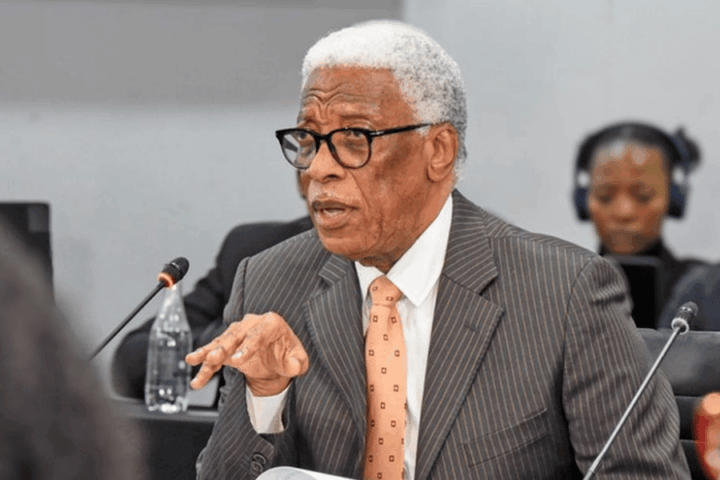
Announcing the conference resolutions, Deputy Chief Justice Dunstan Mlambo said delegates had reaffirmed the judiciary’s long-standing commitment to creating a unified judicial system that includes both judges and magistrates under a single institutional framework.
“The establishment of a single unified and institutionally independent judiciary remains incomplete and requires an appropriate legislative and governance framework,” Mlambo said while reading the conference resolutions.
The conference resolved that a judiciary technical committee should develop a judiciary-led court administration and governance model, together with legislative proposals required to establish a fully institutionally independent judiciary.
The judiciary also called for a coordinated implementation plan, with clear milestones and funding, to guide the transition, including the migration of magistrates’ courts and their administrative functions to the Office of the Chief Justice.
As part of that process, delegates agreed that functions not requiring legislative amendments should be transferred immediately through memoranda of understanding and service-level agreements.
The conference further resolved that a sustainable funding model should be developed to strengthen the judiciary’s financial independence while ensuring accountability for public resources.
Recognising that judicial independence is closely linked to adequate resources, the judiciary also reaffirmed a 2023 resolution calling for the salaries, allowances and benefits of judicial officers to be determined by an independent statutory body specifically designed for the constitutional position occupied by the judiciary.
Delegates agreed that remuneration reviews should be transparent, evidence-based and conducted within clear timeframes, while also taking into account workload, inflation, recruitment and retention challenges.
The conference also resolved to establish a committee to investigate extending employment-related benefits to the dependants of judges after death, reviewing pension arrangements applicable to magistrates, and assessing the implications of a unified pension framework across the judiciary.
Concerns over unequal support across different courts also featured prominently during the conference.
The judiciary resolved that the Office of the Chief Justice should develop a national law researcher model to provide more equitable research support across all levels of the courts, while the South African Judicial Education Institute should be strengthened to meet the training needs of judicial officers.
Delegates also resolved to finalise a review of the Code of Judicial Conduct and the norms and standards governing judicial performance in an effort to establish a harmonised ethics, accountability and performance framework for a unified judiciary.
The review is also expected to address concerns around reserved judgments and the time taken to deliver them.
“It was noted that the review committee is engaging with these issues and conference urges members of the judiciary to actively participate in the work of the committee,” Mlambo said
The conference further resolved that legislation governing the appointment and discipline of judges and magistrates should ultimately be aligned under a single legislative framework.
Recognising the growing role of technology in the administration of justice, the judiciary also adopted several resolutions on digital transformation and artificial intelligence.
The conference resolved that court modernisation should be accelerated through integrated case management systems, electronic filing and improved information and communication technology infrastructure.
A draft AI policy will now be finalised to regulate how artificial intelligence may be used within the judiciary.
According to the adopted resolutions, the policy will clearly distinguish between administrative and adjudicative functions and define both the permissible and prohibited uses of AI.
Mlambo said the judiciary intended to retain full control over the development and use of artificial intelligence within the courts.
“The judiciary should retain ownership and governance over the development, procurement and use of AI systems to ensure that human oversight, judicial reasoning and judicial determination remain central to their use,” he said.
Initially, AI is expected to be deployed to improve administrative efficiency through functions such as court recording, transcription, translation, document summarisation and case management.
Delegates also agreed that judicial officers should receive ongoing training on the responsible use of AI while continuing to develop the legal research, analytical reasoning and judgment-writing skills that underpin judicial decision-making.
The conference concluded by recognising judicial wellness as a permanent institutional programme, calling for preventative support measures, mentoring and wellness assistance to help judicial officers manage professional and personal pressures that may affect their work.
The resolutions build on commitments adopted at the 2023 Judges Conference and are intended to guide the judiciary’s continued efforts to strengthen institutional independence, accountability and the administration of justice.