The Gauteng provincial government has admitted it owes service providers R7.5 billion in unpaid invoices and accruals, with the Department of Health accounting for almost half of the outstanding amount as thousands of suppliers continue waiting months for payment.
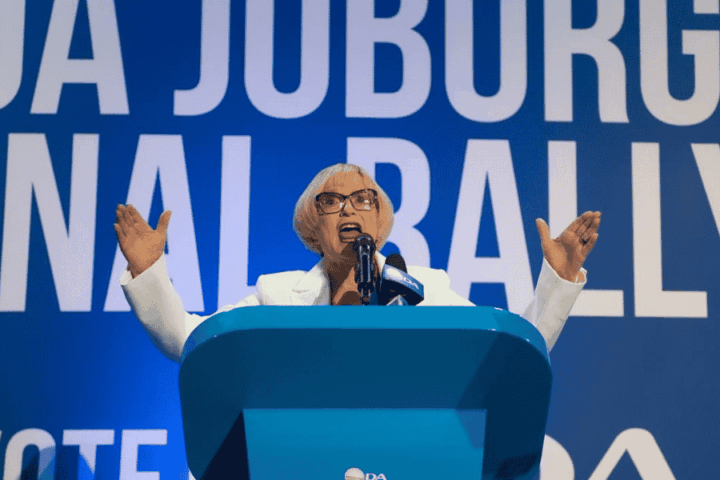
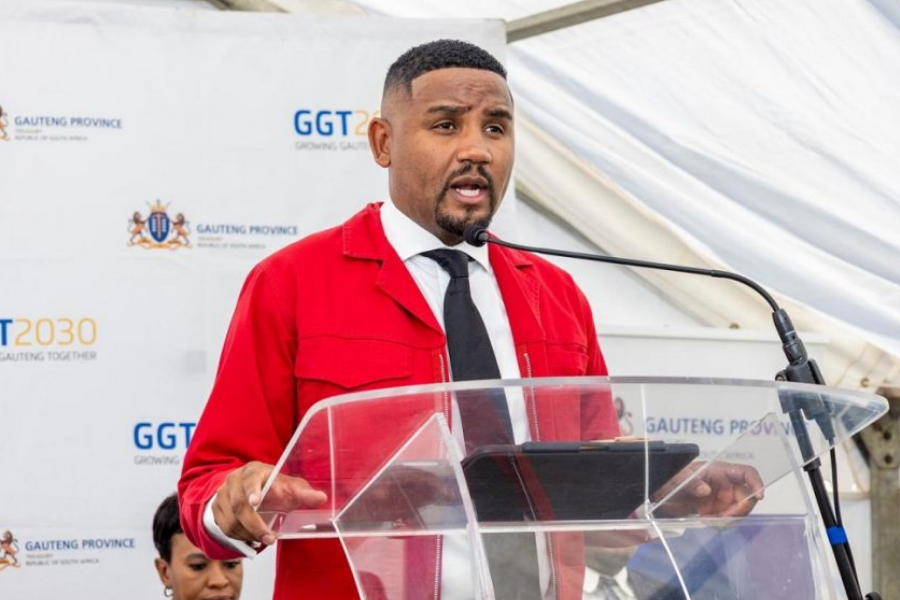
Addressing service providers during a provincial payment imbizo on Thursday, Gauteng Finance MEC Nkululeko Dunga described the situation as “embarrassing”, saying government should never have reached a point where businesses had to be gathered in a hall to explain why they had not been paid.
“We should not need to gather service providers in a hall to explain why they have not been paid on time. Payment for goods and services rendered should be routine and timeous. That it has become necessary to account to you in this manner should embarrass all of us who carry public office,” Dunga said.
“We are not proud of where we find ourselves. But we would rather stand before you and be honest than hide behind reports and statistics while your businesses suffer in silence.”
Dunga said unpaid invoices, or accruals, were one of the first and most pressing challenges brought to his attention after assuming office.
“This was not a footnote in a briefing document. It was flagged to me as one of the most serious risks facing this province, both fiscally and in terms of our credibility with the people who keep our government running, you, our service providers.”
As at 31 May 2026, Gauteng’s total accruals and payables not yet recognised stood at R7.5 billion.
The amount includes goods received but not yet invoiced, invoices still outstanding and transactions still being processed.
Of the total, R4.2 billion falls within the 30-day payment period, while R3.3 billion, representing 44%, has already exceeded the legally prescribed payment period.
Although the figure remains significant, Dunga said it reflects an improvement from R12.6 billion recorded in March last year and R9.4 billion in March this year.
“So while R7.5 billion remains an enormous number, one that should trouble every one of us, it does represent an improvement of roughly 40% compared to where we were a year ago.
“I share this not to congratulate ourselves, but so that you understand, progress is happening, but it is far too slow, and it is nowhere near where it needs to be for you to feel the difference in your businesses,” he said.
The MEC identified the Gauteng Department of Health as the biggest contributor to the province’s payment crisis.
Health alone accounts for R3.6 billion of the province’s outstanding accruals, almost half of the total, while the Department of Education owes a further R1.4 billion.
“These two departments, more than any others, are where service providers are waiting longest and hurting most,” Dunga said.
The province recorded 65% compliance with the legislated 30-day payment requirement during May, while year-to-date compliance stood at 55%, up from 15% during the same period last year.
However, Dunga said the figures mask the scale of the problem within Health.
“When we strip out the Department of Health, provincial compliance actually rises to 67% for the month and 59% year to date. This confirms what many of you already know from bitter experience: Health is the single biggest source of delay in this province, driven by over-commitments and cash constraints that have placed enormous strain on its ability to honour its obligations.”
He added that once Health’s accruals are factored into its compliance rate, the department’s payment performance falls to below 1%.
The ageing profile of unpaid invoices paints an even bleaker picture.
According to Dunga, Health accounted for 97% of all invoices older than 30 days and 87% of their total value.
Of invoices outstanding for more than 120 days, the department alone was responsible for 8,158 invoices worth just over R2 billion.
“These are not new bills. Some of these invoices have been sitting unpaid for four months or longer,” he said.
“I do not say this to shift blame away from the collective failure of this administration, but to be specific about where the crisis is most acute, because a general statement that government is slow to pay does little to help us fix the actual bottleneck.”
Dunga said the crisis was not driven solely by cash shortages but also by weaknesses in government’s internal financial management systems.
He said several departments continued issuing manual purchase orders outside the normal procurement system or only generated purchase orders after suppliers had already submitted invoices.
Fourteen provincial departments and three public entities were found to have issued purchase orders after invoice dates during the review period.
“This is a process failure that is entirely within our control to fix and it has nothing to do with a lack of budget.
“It reflects poor discipline in how orders are placed, tracked and reconciled, and it is one of the more frustrating causes of delay because service providers are sometimes left waiting not because the money is unavailable, but because the paperwork behind the payment was never properly set up in the first place,” he said.
He said Treasury has introduced interventions, including budget blocking and greater automation of reconciliation processes, to improve payment performance.
Dunga also warned that delayed payments have far-reaching consequences beyond government finances.
“When government fails to pay on time, the consequences ripple outward in ways that are sometimes invisible to us as officials but are devastatingly visible to you.
“Contractors who are not paid cannot pay their own suppliers, and so the delay cascades down the value chain, hitting smaller and more vulnerable businesses the hardest.”
He said payment delays contribute directly to stalled infrastructure projects, disruptions to health services, mounting borrowing costs for businesses and job losses.
“We have seen credible businesses, built over years, collapse simply because government did not honour its side of the contract.
“And every business that closes, every job that is lost, is a direct hit to the Gauteng economy, an economy that we, as this province’s government, are meant to be nurturing and growing, not undermining through our own inefficiency.”
Dunga said small and medium enterprises, particularly black-owned and township-based businesses, bear the brunt of government’s payment failures because they lack the financial reserves to absorb months of delayed payments.
“When a large corporate is paid late, it is an inconvenience. When a small township-based supplier is paid late, it can be the difference between staying open and shutting down permanently, between keeping five employees on payroll and retrenching all of them.
“So this is not only a fiscal management issue for us. It is an economic transformation issue.”
The MEC said the provincial government convened the imbizo to hear directly from affected suppliers and identify practical solutions, rather than simply defending government.
“We are not here to defend the indefensible.
“We are here to understand it fully, so that when we speak again later today, our commitments are not empty promises but practical, implementable steps with clear timelines and clear accountability. That is the only kind of commitment worth making to you, and it is the only kind I intend to make,” he said.