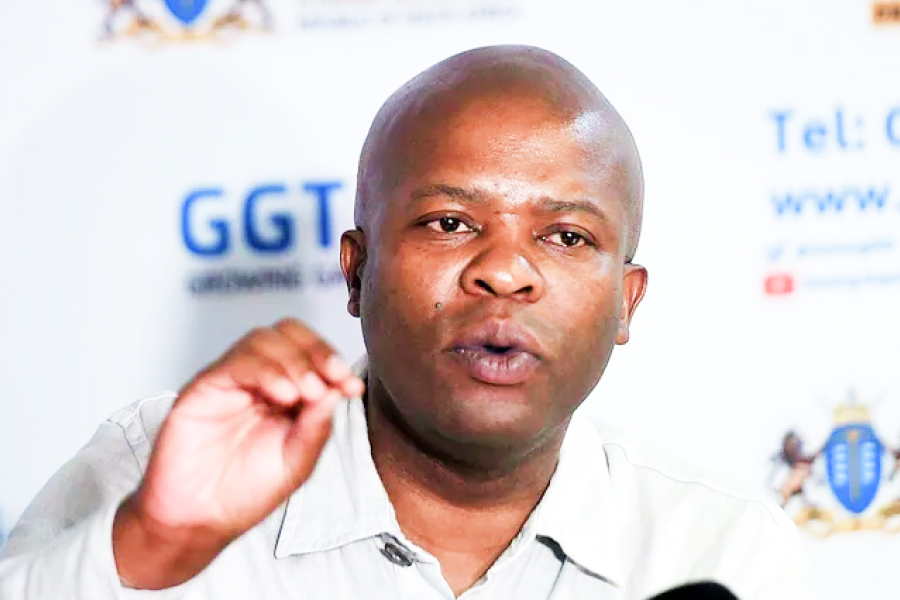
Gauteng MEC for Education and Sports, Arts, Culture and Recreation Lebogang Maile has announced a R70.9 billion education budget for the 2026/27 financial year, saying the province is under increasing pressure from overcrowded classrooms, rapid urbanisation and growing learner demand.
The budget, tabled in the Gauteng Provincial Legislature on Tuesday, represents an increase of R2.9 billion from the previous year’s allocation of R68 billion.
Maile said the province’s education system continues to face significant challenges as Gauteng remains a destination for families seeking economic opportunities.
“Gauteng currently serves over 2.86 million learners across 3 320 schools,” Maile said in a preview of the department’s Budget Vote speech.
According to the department, more than 2.43 million learners are enrolled in public schools, placing growing strain on infrastructure and resources.
“We continue to face enormous challenges arising from rapid in-migration, urbanisation, overcrowding, infrastructure backlogs and growing learner demand, particularly in township, informal settlement and inner-city schools,” Maile said.
He said these realities require government to rethink education delivery, infrastructure planning and long-term sustainability.
The additional funding comes as Gauteng’s education system continues to battle severe overcrowding pressures. In May, the department revealed that 1 021 of the province’s 2 111 public schools were operating above capacity, while an estimated 200 additional schools would be required to meet growing learner demand.
The department also warned that without significant intervention, mounting infrastructure pressures could leave some learners without school placements by the 2027 academic year, particularly as Gauteng continues to attract families from across South Africa and neighbouring countries in search of economic opportunities.
The budget is built around four strategic priorities, with early childhood development receiving significant attention.
The department has allocated R994 million towards expanding access to Grade R and improving school readiness among young children.
Maile said strengthening early childhood development remains critical because educational success begins before learners enter formal schooling.
Improving learner performance remains another key focus area, with R1.2 billion earmarked for interventions in Mathematics, Science, Technology, literacy and technical education.
The department said the funding would support programmes aimed at improving learner outcomes, particularly in gateway subjects that are often linked to future employment and higher education opportunities.
A substantial portion of the budget will also go towards addressing infrastructure challenges.
Against the backdrop of overcrowded schools and growing learner demand, the department has allocated R2.7 billion for infrastructure projects and a broader R3.7 billion towards education modernisation initiatives, including school reorganisation, district support programmes, principal development and the expansion of Schools of Specialisation.
The allocation follows years of concern over classroom shortages, delayed school placements and overcrowded learning environments that education experts and teacher unions have warned are affecting teaching and learning outcomes across the province.
Maile acknowledged that infrastructure remains one of the biggest obstacles facing public education in Gauteng.
“While these allocations will not resolve all historical backlogs immediately, they represent an important step towards easing overcrowding and improving learning conditions in some of our most affected communities,” he said.
The province has also committed R3.3 billion towards learner wellness programmes, psychosocial support services, anti-drug initiatives, school health interventions and sports, arts and cultural development.
Maile said safe learning environments were essential for educational success.
“We understand that learning cannot thrive where violence, bullying, trauma, gangsterism and substance abuse are left unattended. Safe schools remain non-negotiable,” he said.
The department will further receive R3.9 billion in conditional grants to support infrastructure delivery, school nutrition, early childhood development, Mathematics and Science programmes, HIV and AIDS Life Skills education, and support for learners with profound intellectual disabilities.
Education personnel continue to account for the largest share of spending, with R54.6 billion allocated to compensation of employees, representing 77.1% of the department’s total budget.
The allocation covers educators, therapists, specialists and support staff across Gauteng’s education system.
The department has also allocated R288 million to the Sci-Bono Discovery Centre and R383 million to the Matthew Goniwe School of Leadership and Governance to strengthen science education, innovation and educator development.
Tabling the budget under the theme “it takes a village to raise a child”, Maile said government alone could not carry responsibility for education.
He called on parents, communities, business, labour and civil society to play a greater role in shaping the future of Gauteng’s learners.
“Education is the most powerful instrument through which we can confront poverty, inequality and unemployment, and through which we can build a more prosperous Gauteng,” he said.