The Supreme Court of Appeal (SCA) has ruled that the Pretoria High Court was wrong to find that the Zambian government had a legal right to have former Zambian president Edgar Lungu’s body returned to Zambia for a state funeral.
In a judgment handed down on Tuesday, the SCA upheld an appeal lodged by Lungu’s widow and children, setting aside the earlier high court ruling that permitted the repatriation of his remains.
Lungu travelled to South Africa in January 2025 to undergo medical treatment and died on June 5, 2025.
His death sparked a dispute between his family and the Zambian government over the arrangements for his funeral and the country in which he should be buried.
Following his passing, representatives of the family and the Zambian government held a series of meetings in an attempt to resolve the disagreement.
In the majority judgment, Judge of Appeal Raylene Keightley said the Zambian government wanted Lungu to be accorded a state funeral in Zambia, complete with official ceremonies and the participation of current President Hakainde Hichilema.
The family, however, maintained that Lungu had repeatedly expressed a wish, including in a deathbed declaration, that Hichilema should play no role in his funeral arrangements.
When efforts to reach an agreement collapsed, the Zambian government approached the Pretoria High Court for relief.
The matter was heard by a full bench of the court on August 4, 2025, and four days later the judges ruled that the government could repatriate Lungu’s body for a state funeral and burial at Embassy Park in Lusaka.
After the high court refused the family’s application for leave to appeal in September 2025, the SCA granted them permission to challenge the ruling on December 11, 2025.
Keightley said Lungu’s widow stated in her court papers that, while receiving palliative care in South Africa, the former president consistently made it clear that he did not want the Zambian government, and particularly Hichilema, to be involved in his funeral.
According to the judgment, Lungu believed he had been mistreated by the government and did not want those he felt had abandoned him in life to participate in his burial.
Keightley noted that South African common law has long recognised that, in the absence of instructions from the deceased, the responsibility for burial decisions rests with the heirs in line with the principles of succession.
She added that this position is consistent with constitutional protections of privacy and human dignity.
The judge further held that the right of a family to determine how a loved one is buried falls within the private sphere of family life.
She said decisions relating to burial represent the final act of kinship performed by family members and that interference with those decisions affects their dignity and sense of self-worth.
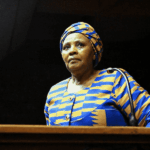
In a dissenting judgment, Judge of Appeal Thandi Norman found that the family and the Zambian government had reached a clear and binding agreement on the repatriation, funeral and burial arrangements.
She said the agreement was supported by documents and public statements, including media briefings in which the family’s spokesperson announced that a deal had been reached.
Norman concluded that burying the former president in South Africa would be contrary not only to the agreement between the parties but also to Lungu’s wishes.
She further found that the Zambian government had respected the family’s autonomy by sending several delegations to negotiate with them over the burial arrangements.